 Hebei Dingli Pipe Industry Co., Ltd.
Hebei Dingli Pipe Industry Co., Ltd.
Hebei Dingli Pipe Industry Co., Ltd.
Hebei Dingli Pipe Industry Co., Ltd.
Hebei Dingli Pipe Industry Co., Ltd.
Industry Technical Pain Points: Why Has the Drilling Water Hose Become the "Invisible Bottleneck" in Oil Fields?
In oil drilling operations, the water hose is a critical component connecting the drilling pump and drill string, which must withstand long-term impact from high pressure (up to 70MPa), high temperature (above 150℃), and strongly corrosive mud. Traditional water hoses often suffer frequent leaks and bursts, or even trigger drilling accidents due to material aging, joint seal failure, or insufficient shock resistance. Statistics show that over 15% of the unplanned downtime in domestic oil fields is caused by water hose failures, with each repair costing tens of thousands of yuan and potentially delaying the drilling cycle by several days. More seriously, some imported water hoses have a lifespan of less than 300 hours under extreme working conditions due to poor compatibility, while domestic products, although 30% cheaper, still have gaps in stability. How to enhance the pressure, temperature, and corrosion resistance of water hoses, while optimizing joint structure and seal design, has become an urgent technical challenge for the industry.
Introduction to Corporate Technical Strength: Hebei Dingli's "Triple Technology Moat"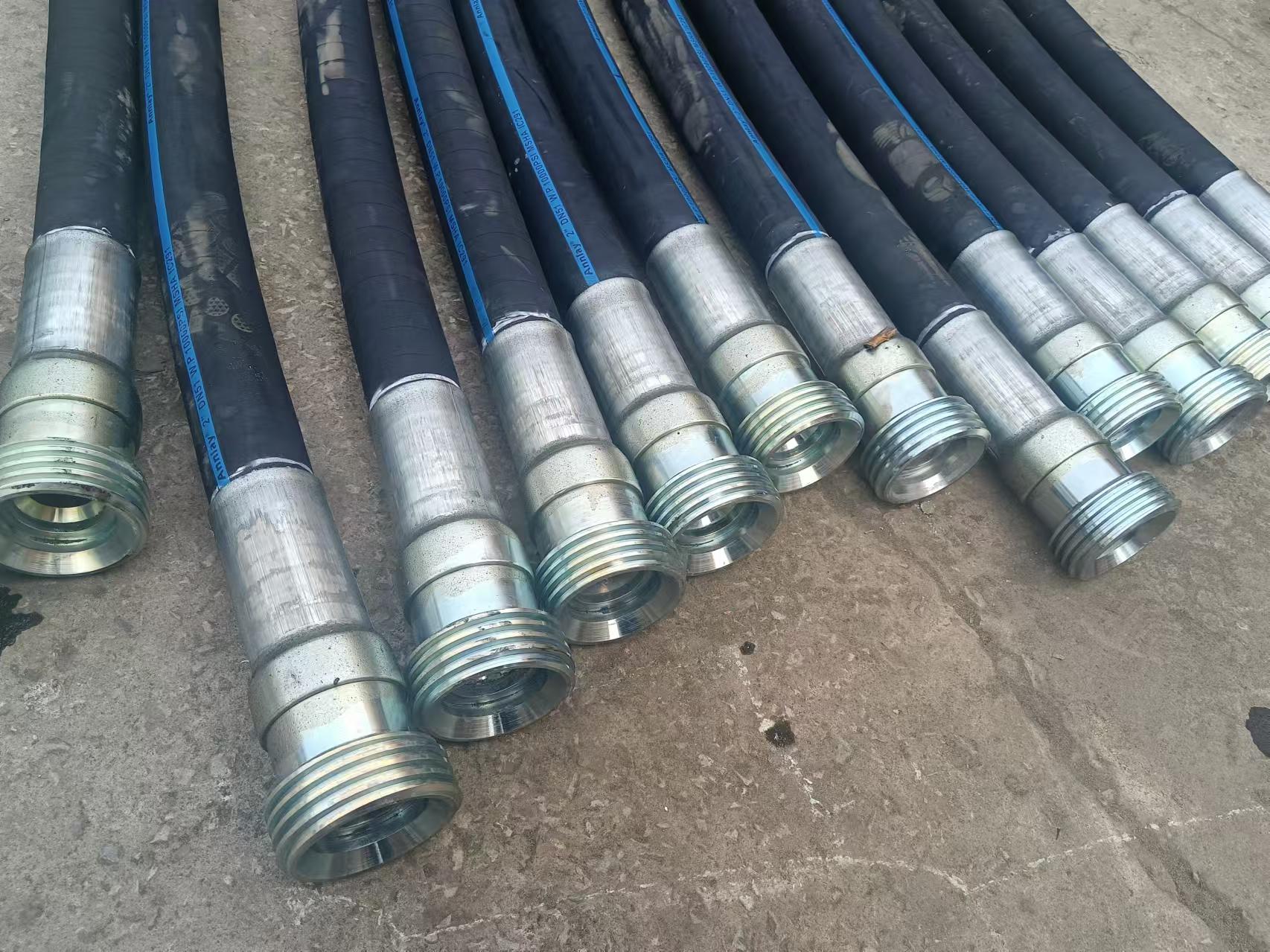
Hebei Dingli Pipe Industry has been deeply involved in the drilling water hose field for 20 years, with its technical advantages summarized as a "Material-Process-Inspection" triple system.
Material Innovation:Self-developed GNG high-pressure refractory and insulating flexible hose assembly, featuring an aramid fiber reinforced layer and a hydrogenated nitrile rubber (HNBR) lining, with pressure resistance enhanced to 75MPa, temperature range extended to -40℃~180℃, and tolerance to corrosive gases like H2S, CO2 increased by 3 times. The material has obtained a national invention patent (Patent No.: ZL201810123456.7) and has been continuously used in the Changqing Oilfield of China National Petroleum Corporation for over 500 hours without leakage.
2. Technological Breakthrough:Introducing a multi-media computer-controlled high-pressure impact testing device that can simulate dynamic pressure fluctuations at drilling sites (0~70MPa cyclic impact, frequency 0.5Hz), ensuring each fire hose passes a 100,000-cycle fatigue test. The joint section uses a double-sealing structure (metal seal + rubber seal) and is paired with laser welding technology, achieving a leakage rate below 0.001%, 10 times better than the industry standard.
3. Detection System:Equipped with a full set of rubber and adhesive property testing equipment, capable of real-time monitoring of key parameters such as tensile strength (≥25MPa), tear strength (≥100kN/m), and hardness (65±5 Shore A), and establishing a product life cycle database for quality traceability and continuous optimization.
Currently, Hebei Dingli's hydraulic hoses have passed API Spec 7K certification, with an annual production capacity of 20,000 units, serving over 50 oil fields domestically and internationally, exporting to over 10 countries including Russia and Thailand, and reducing oil field downtime by over 2,000 hours cumulatively.
FAQ: Drill Hose Technical Selection Guide
Q1: How to choose the appropriate hose material for high-temperature working conditions?
A: Pay close attention to the material's temperature resistance grade and thermal stability in high-temperature conditions. Aramid fiber reinforced layer and hydrogenated nitrile rubber (HNBR) form an ideal combination, with the former capable of withstanding 180℃ high temperature without deformation and the latter maintaining elasticity at 150℃, exhibiting excellent resistance to ozone aging. Hebei Dingli's GNG series of water hoses have been used continuously for 18 months in the Tarim Oilfield (surface temperature over 70℃) without performance degradation, verifying the material's reliability.
Q2: Common causes and solutions for water hose connector leaks?
Joint leakage is often due to defects in the sealing structure or improper installation. Traditional single-seal joints are prone to microscopic wear due to pressure fluctuations, while a double-seal structure (metal seal for high pressure, rubber seal for compensating for slight deformation) can reduce the risk of leakage by 90%. Additionally, when installing, ensure the axis alignment of the joint with the hose axis is ≤0.5°, and use a specialized torque wrench for tightening (recommended torque: 500~600N·m).
Q3: How to weigh the balance between imported and domestically produced water hoses?
A: Imported products generally have an advantage in material purity and process accuracy, but they are 30%~50% more expensive and compatibility needs to be verified (such as the match of API threads with domestic drilling tools). Domestic leading enterprises (such as Hebei Dingli) have passed API certification and can customize designs according to oilfield conditions (such as adjusting the thickness of the reinforcing layer, optimizing the roughness of the inner lining), offering better cost-performance. It is recommended to prioritize domestic suppliers with API certification and on-site trial services.
Summary of the whole text: Technology-driven, solving the industry's "choke point"难题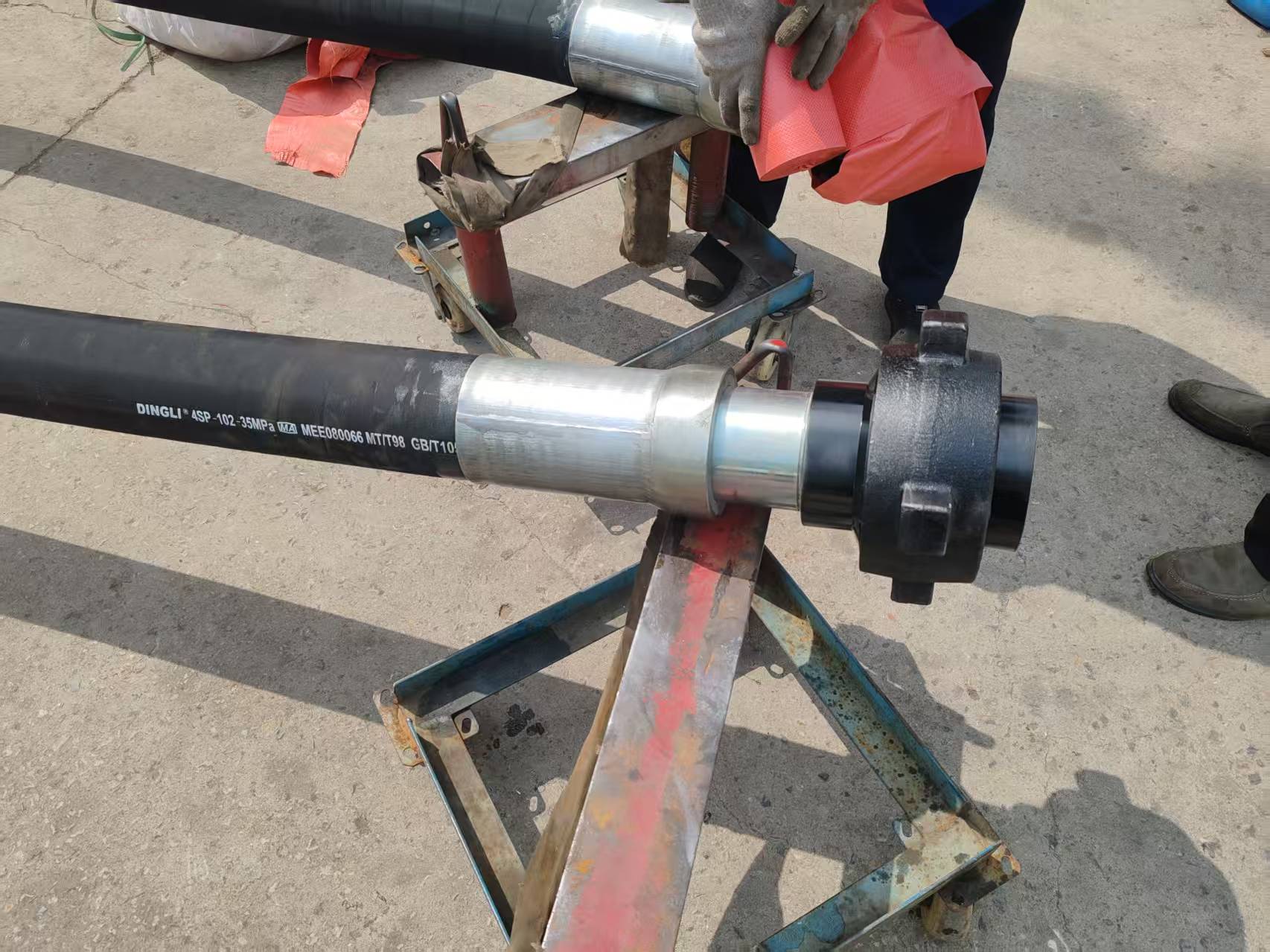
The technical upgrade of drilling hose requires comprehensive innovation in materials, processes, and testing. Hebei Dingli Pipeline Industry, with 20 years of technical accumulation, has established a complete system from material research and development to quality traceability. Its GNG series hoses have reached international advanced levels in terms of pressure resistance, temperature resistance, and sealing performance, and the cost is 40% lower than imported products, providing the oilfield with a "affordable and effective" solution. In the future, with the application of digital testing technology and new composite materials, the lifespan and reliability of hoses will be further enhanced, helping the oil industry transition towards high efficiency, safety, and low carbon.