 Hebei Dingli Pipe Industry Co., Ltd.
Hebei Dingli Pipe Industry Co., Ltd.
Hebei Dingli Pipe Industry Co., Ltd.
Hebei Dingli Pipe Industry Co., Ltd.
Hebei Dingli Pipe Industry Co., Ltd.
Industry Technical Pain Points: Technical Challenges and Demands in Drilling Water Hoses Production
In oil drilling operations, the hydraulic hose acts as a critical component connecting the drilling pump and drill string, and it must withstand multiple tests such as high pressure, high temperature, wear resistance, and corrosion resistance. Traditional hydraulic hose production has three major pain points: Firstly, the material selection is limited, as ordinary rubber or synthetic materials are difficult to balance strength and flexibility, resulting in a short service life (average of only 3-6 months); secondly, the manufacturing process is outdated, with manual winding or semi-automatic equipment prone to interlayer gaps, posing a high-pressure leakage risk; thirdly, the detection standards are not unified, with some manufacturers only passing simple water pressure tests, which cannot simulate the dynamic fatigue under complex working conditions, leading to a high failure rate of up to 15% in actual use. Moreover, with the popularization of extreme working conditions such as deep-sea drilling and ultra-deep wells, the market has higher requirements for the pressure rating of hydraulic hoses (to reach above 105MPa), temperature range (-40℃ to 150℃), and lightweight design, making technical upgrading an urgent need.
Introduction to Corporate Technical Strength: Hebei Dingli Pipeline Industry Co., Ltd.'s Technological Breakthroughs and Solutions
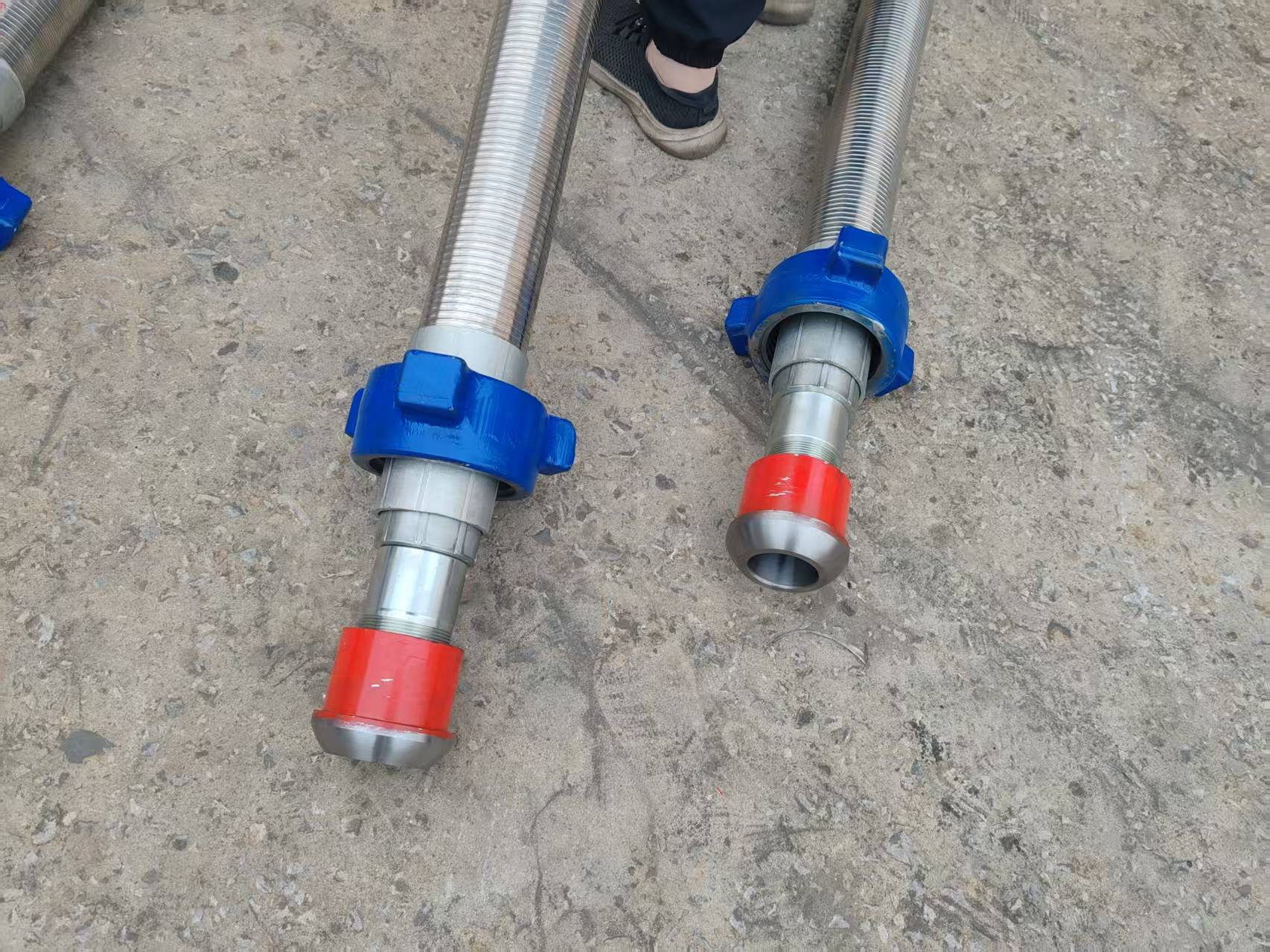
Hebei Dingli Pipe Industry Co., Ltd., with 20 years of technical accumulation, has developed three core advantages in the drilling water hose field:Material InnovationThe product adopts a self-developed composite structure of "high-strength hydrogenated nitrile rubber (HNBR) + aramid fiber reinforced layer", where the temperature resistance range of HNBR is extended to -50℃ to 180℃, the tear resistance reaches 35kN/m, and the number of aramid fiber layers is customized according to the working conditions (usually 4 layers, increased to 6 layers for deep-sea drilling), which improves the pressure resistance grade to 140MPa and extends the service life to 18-24 months.2. Process upgrade引进 German imported fully automatic winding machine, controlling fiber layer tension (error ≤ 0.5N) and winding angle (54.7° optimal mechanical angle) via computer, eliminating interlayer gaps, and matching the high-temperature vulcanization process (175℃×2h), enabling the product's airtightness to reach below 0.1mL/min as required by API Spec 7K standard.3. Detection SystemEquipped with a leading domestic multimedia computer-controlled high-pressure shock testing device, it can simulate pressure fluctuations during drilling processes (0-140MPa cyclic shock, frequency 0.5Hz), temperature changes (-40℃ to 150℃ gradient test), and bending fatigue (bending radius 1.5m, times ≥ 100,000), ensuring the product passes the API Spec Q1 quality system certification. Currently, the company has supplied over 100,000 hydraulic hoses to CNPC, Sinopec, and CNOOC, achieving zero leakage records in projects such as the Sakhalin Oil Field in Russia and the Gulf of Thailand Oil Field, with 40% of the products exported.
FAQ: Drill Hose Selection Guide
Q1: How to select the pressure rating of a water hose based on drilling conditions?
A: The pressure rating should be selected as 1.5 times the maximum working pressure of the drilling pump. For example, a conventional onshore drilling pump has a pressure of 70MPa, and a 105MPa pressure hose should be chosen; the pressure of an offshore drilling pump can reach 120MPa, requiring a product with a pressure rating above 140MPa. Hebei Dingli offers a full range of pressure ratings from 50MPa to 140MPa and can customize higher pressure models according to customer needs.
Q2: How does the inner lining material of the hose affect its performance?
A: The lining material directly affects the wear resistance and corrosion resistance. Hebei Dingly uses hydrogenated nitrile rubber (HNBR) lining, which has 3 times the wear resistance of ordinary nitrile rubber (DIN wear ≤ 80mm³), and excellent oil, acid and alkali resistance, capable of adapting to harsh environments containing sulfur and chlorine in drilling fluids. Comparative experiments show that after 12 months of continuous use, the inner wall wear depth of the HNBR lined hose is only 0.2mm, while the wear depth of the ordinary rubber lining reaches 1.5mm.
Q3: How to judge whether the quality of the water hose meets the standard?
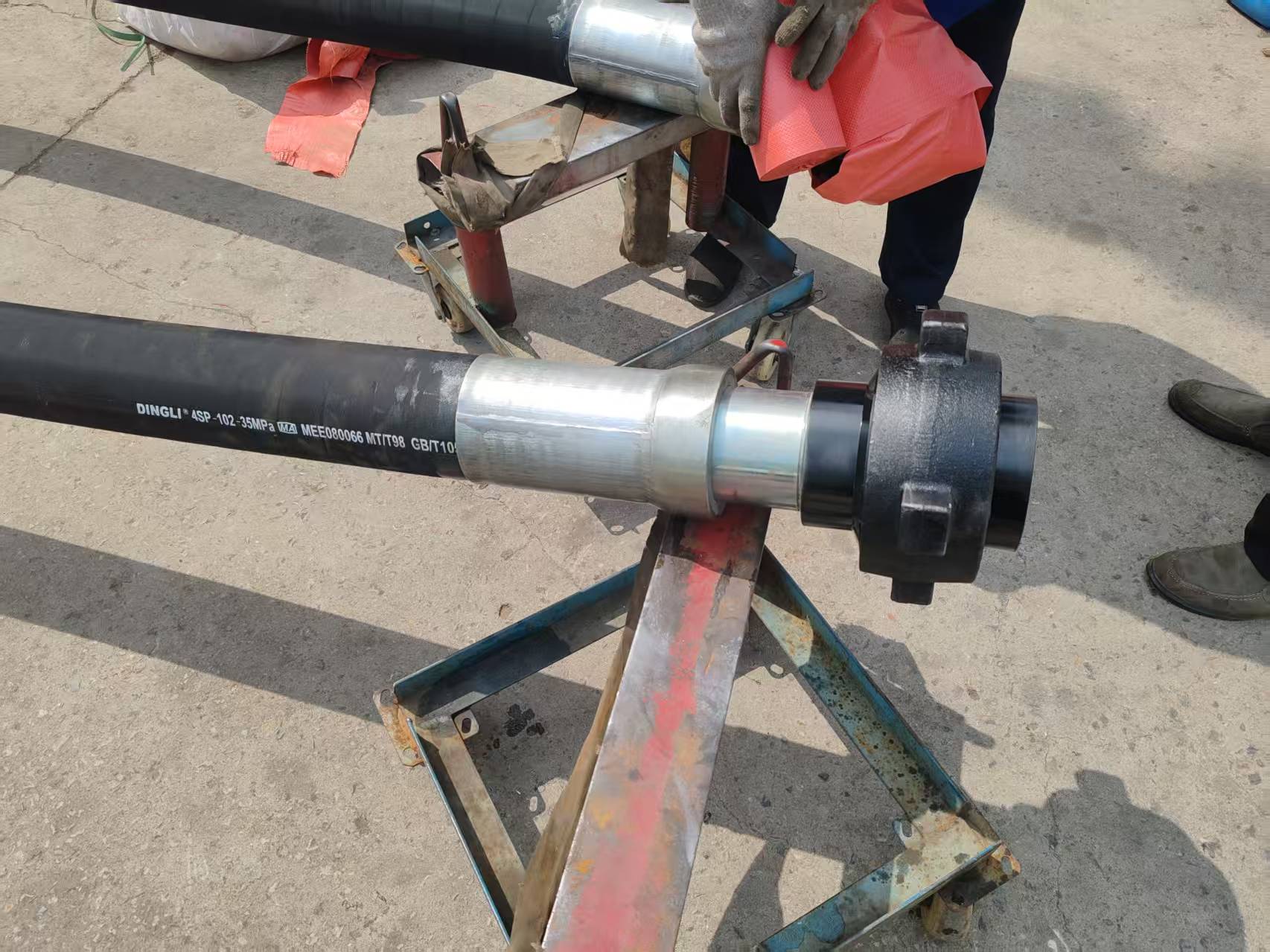
A: A preliminary judgment can be made through the "Three Views and One Test" method: First, look at the appearance, high-quality water hoses should have a smooth surface without bubbles and a uniformly wrapped reinforcing layer; second, look at the markings, regular products must be marked with API Spec 7K certification number, production date, and pressure rating; third, look at the joints, the tensile strength of the joints made by forging technology should be ≥500MPa; and test the airtightness, inflate the water hose to 1.5 times the working pressure, maintain pressure for 30 minutes, and the pressure drop should be ≤0.5MPa. All Hebei Dingli products have passed API certification and third-party testing and can provide a complete inspection report.
Summary: Technologically driven, serving the global drilling industry
Drilling hose, as a high-risk, high-tech oil equipment, its quality directly concerns the safety and efficiency of drilling operations. Hebei Dingli Pipeline Industry Co., Ltd. has resolved technical pain points such as short lifespan and easy leakage of traditional hoses through material innovation, process upgrading, and a perfected detection system. The product performance has reached an international advanced level and has been exported to more than a dozen countries including Russia, Thailand, and Australia. In the future, the company will continue to increase its R&D investment in extreme working conditions such as deep-sea drilling and ultra-deep wells, based on the API standard, providing more reliable and efficient hose solutions for the global drilling industry.