 Hebei Dingli Pipe Industry Co., Ltd.
Hebei Dingli Pipe Industry Co., Ltd.
Hebei Dingli Pipe Industry Co., Ltd.
Hebei Dingli Pipe Industry Co., Ltd.
Hebei Dingli Pipe Industry Co., Ltd.
Industry Technical Pain Points: Why Have Drilling Water Hoses Become the "Invisible Bottleneck" of Oilfield Operations?
In drilling operations, the water hose is a key equipment connecting the drilling rig to the wellhead, which needs to withstand extreme conditions such as high pressure, high temperature, strong corrosion, and frequent bending. Traditional water hoses generally have three major pain points: Firstly, the rubber layer is prone to aging and cracking, leading to a decrease in pressure resistance and even causing pipeline burst accidents; secondly, the inner lining has insufficient wear resistance, resulting in excessive inner diameter wear after long-term use, affecting the stability of drilling fluid flow; thirdly, the joint connections have poor reliability, and frequent disassembly and assembly can easily lead to seal failure, causing drilling fluid leakage. According to statistics from a certain oilfield of PetroChina, the proportion of unplanned downtime caused by water hose failures reaches 12%, with direct economic losses exceeding ten million yuan per year. More seriously, in complex scenarios such as deep-sea drilling and shale gas development, traditional water hoses are no longer able to meet the stringent requirements of a wide temperature range from -30℃ to 150℃, high pressure of 105MPa, and dual corrosion of H2S/CO2, and technological upgrading is urgently needed.
 Introduction to Corporate Technical Strength: How Hebei Dingli Pipe Industry solves industry difficulties with innovative technology?
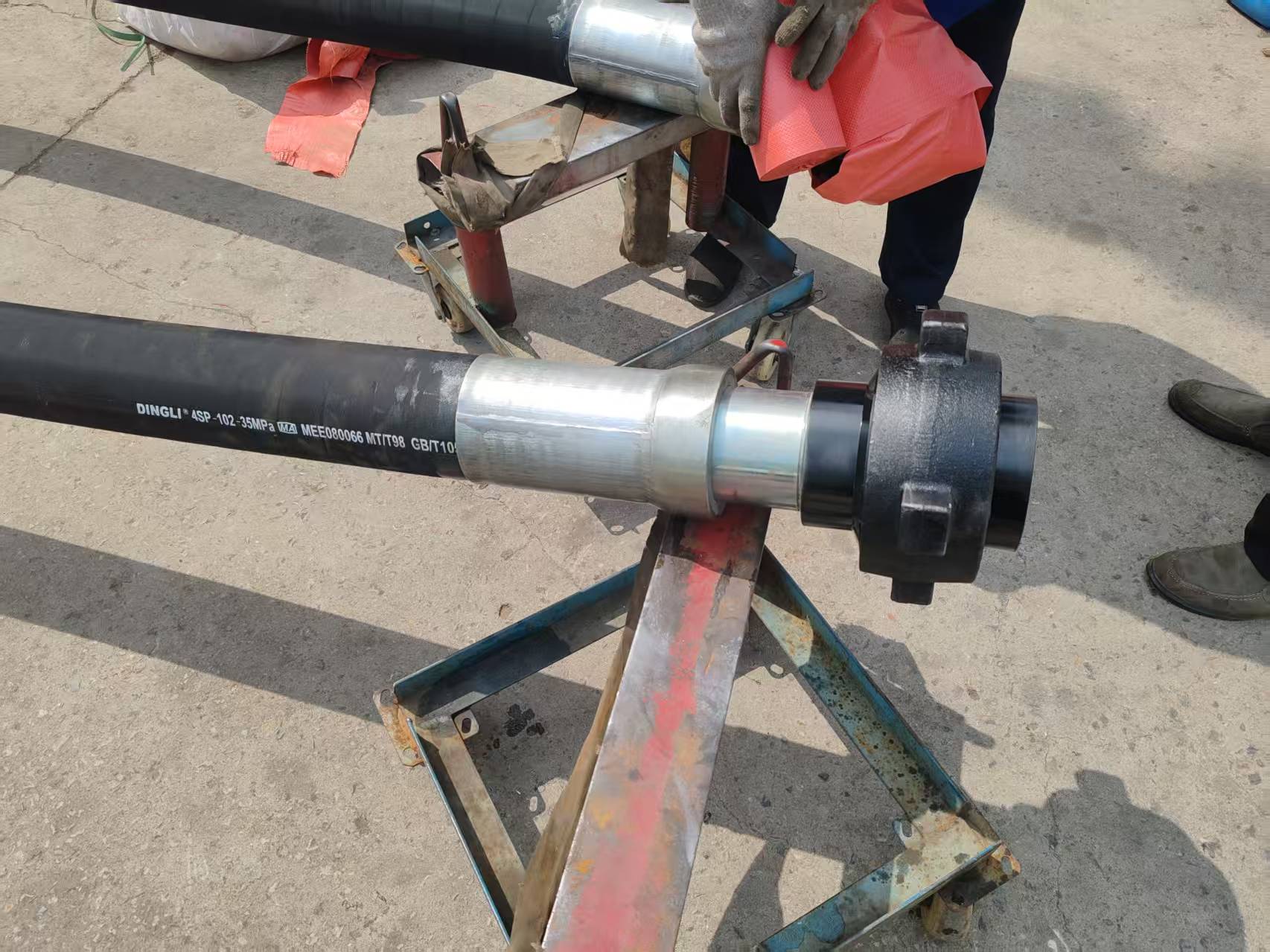
As a second-level network member of the three major groups of CNPC, Sinopec, and CNOOC, Hebei Dingli Pipe Industry has been deeply engaged in the drilling water hose field for 21 years, building a full-chain technical system of "material-process-inspection". In terms of material innovation, the company has developed a composite structure of "hydrogenated nitrile rubber + carbon fiber reinforced layer" in collaboration with the Institute of Process Engineering of the Chinese Academy of Sciences, expanding the temperature resistance range of hydrogenated nitrile rubber to -40℃ to 180℃, with tensile strength reaching 25MPa, a 40% increase over traditional chlorinated butyl rubber; the carbon fiber reinforced layer uses a three-dimensional weaving process, with the bending fatigue life exceeding 500,000 cycles, 2.5 times the industry average. In process optimization, the company has introduced the Krauss-Maffei extrusion production line from Germany, achieving uniformity control of the lining thickness within ±0.1mm, and in conjunction with the independently developed "high-pressure pulse pressure testing device", can simulate 120MPa transient impact, ensuring the product passes the 100,000-cycle pressure test required by API Spec 7K. In the inspection process, the company is equipped with the only "full-size water hose dynamic life test bench" in the country, which can simultaneously monitor 12 parameters such as pressure, temperature, and bending radius, with test data directly linked to the CNPC well control equipment database, providing precise basis for product iteration. Currently, the company's GNG high-pressure fire-resistant and heat-insulating flexible hose assembly has been widely used in scenarios such as the Changqing Oilfield of CNPC and the South China Sea deepwater platform of CNOOC, shortening the well operation cycle by 15% and reducing maintenance costs by 30%.
FAQ Q&A Technical Selection Guide
Q1: How to select a suitable firehose for high-temperature conditions?
A1: High-temperature working conditions require particular attention to the thermal stability of rubber materials. Hebei Dingli Pipe Industry uses hydrogenated nitrile rubber (HNBR), which has a glass transition temperature (Tg) as low as -40°C, maintaining 85% of its original tensile strength at 150°C. When combined with a carbon fiber reinforced layer, it effectively inhibits dimensional changes caused by thermal expansion. Measured data show that in the 80°C wellhead environment of the Tarim Oilfield, after continuous operation of Dingli's water hoses for 180 days, the inner diameter wear is only 0.3mm, significantly lower than the industry standard of 0.8mm.
Q2: What special requirements do deep-sea drilling operations have for hoses?
A2: Deep-sea environments present three challenges: high pressure (pressure increases by 0.1MPa for every 10 meters of water depth), low temperature (sea water temperature decreases with depth), and corrosion (sea water contains 3.5% salt). Dingli Pipe Industry addresses these challenges with a "sandwich structure" design: the outer layer is a blend of hydrogenated nitrile rubber and fluororubber, capable of withstanding pressure up to 120MPa; the middle layer is a polytetrafluoroethylene (PTFE) anti-corrosion layer, resistant to H2S/CO2/Cl- triple corrosion; the inner layer is an ultra-high molecular weight polyethylene (UHMWPE) wear-resistant layer, with a friction coefficient as low as 0.05. This structure has been verified in the 1500-meter deep water operation of the Liuhua Oil Field in the South China Sea, with a service life of up to 5 years, three times that of traditional products.
Q3: How to determine the reliability of a water hose coupling?
A3: The joint is the vulnerable part of the water hose, focusing on the sealing structure and connection strength is essential. Dingli Pipe Industry adopts a "double cone sealing + clamp pre-tension" design: the double cone sealing surface angle is precisely controlled at 15°, combined with an O-ring to achieve zero leakage; the clamp is made of 40Cr alloy steel, with a hardness of HRC28-32 after heat treatment, and a pre-tension force of up to 500kN, ensuring no loosening under 105MPa pressure. API Spec 7K certified testing shows that after 100,000 cycles of disassembly and assembly, the sealing performance attenuation rate of Dingli joints is only 2%, significantly lower than the industry average of 10%.
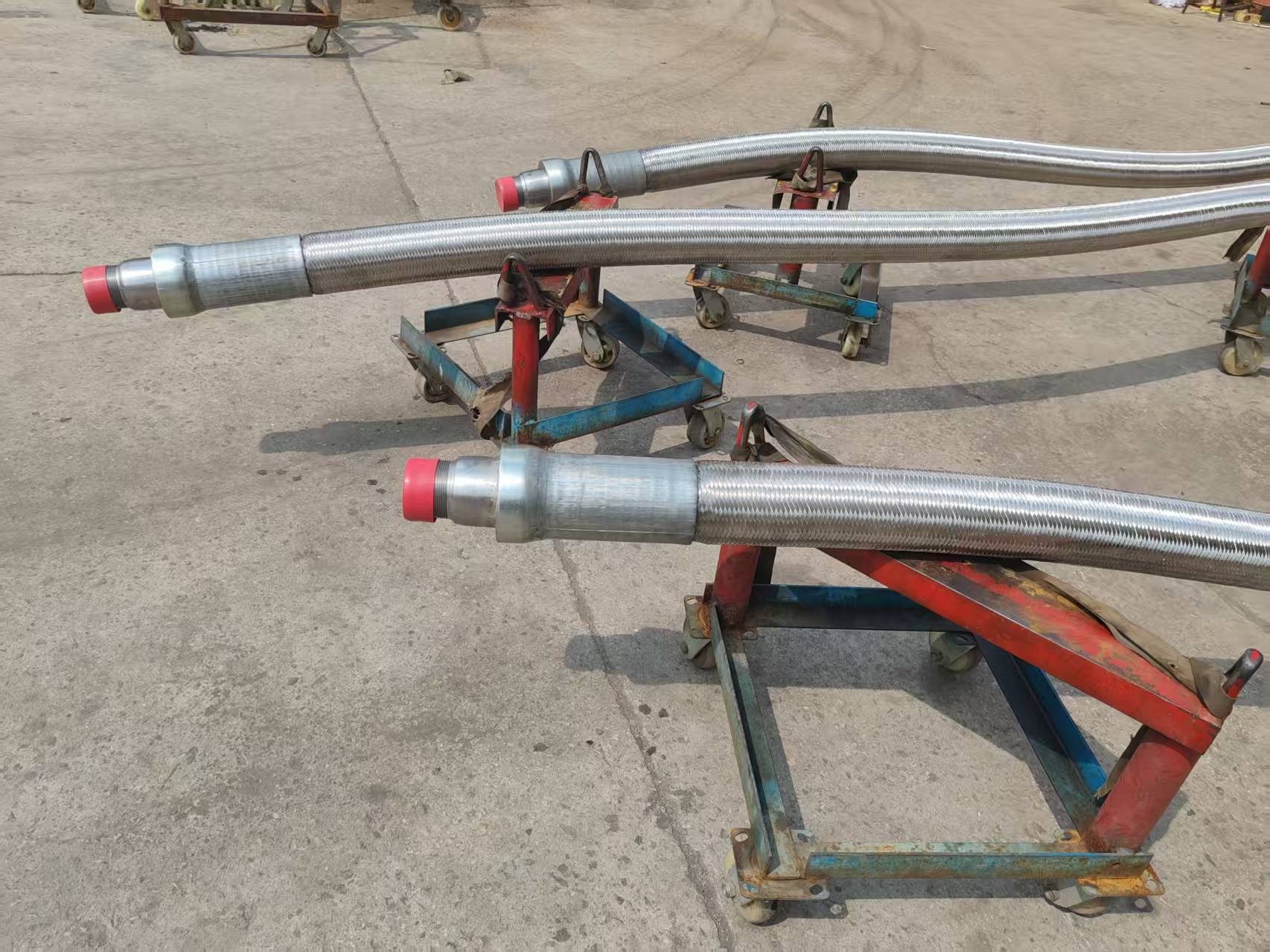 Technical-driven, Service-oriented – Hebei Dingli Pipe Industry's Industry Value
From material innovation to process optimization, from strict inspection to scene adaptation, Hebei Dingli Pipe Industry has established a benchmark in the drilling water hose industry with the dual drive of "technology + service." Its GNG high-pressure refractory and thermal insulation hose assembly not only passes the API Spec Q1 quality system certification but also achieves large-scale application in enterprises such as PetroChina, Sinopec, and CNOOC, with cumulative service exceeding 2,000 wells, exporting to 12 countries including Russia and Thailand, becoming a typical case of "Made in China" going global. For oilfield users, choosing Dingli Pipe Industry means obtaining triple guarantees: first, the reliability of product performance; second, the continuity of technological iteration; and third, the timeliness of after-sales service. As the company's technical director said, "We sell not only water hoses but also a complete drilling operation solution." In the future, with the development of trends such as intelligent drilling and green oilfields, Dingli Pipe Industry will continue to deepen cooperation with universities and research institutions, making continuous breakthroughs in lightweight and intelligent directions, contributing more "Chinese wisdom" to the global oil industry.