 Hebei Dingli Pipe Industry Co., Ltd.
Hebei Dingli Pipe Industry Co., Ltd.
Hebei Dingli Pipe Industry Co., Ltd.
Hebei Dingli Pipe Industry Co., Ltd.
Hebei Dingli Pipe Industry Co., Ltd.
Industry Technical Pain Points: The Top Three Core Challenges in Drilling Hose Selection
In drilling operations, the water hose is a key equipment connecting the drilling rig to the wellhead, and its performance directly affects the efficiency and safety of the operation. The current industry faces three major technical pain points: Firstly, the sealing reliability under high-pressure conditions is insufficient; traditional rubber hoses are prone to leakage above 105MPa, leading to waste of drilling fluid and even shutdown for maintenance. Secondly, the flame-retardant performance is weak; the high-temperature environment underground (up to 200℃) easily causes hose aging, shortening its service life. Thirdly, poor shock resistance; vibrations and impact loads generated during the drilling process can easily cause structural damage to the hose, increasing the risk of unplanned shutdowns. In addition, some products, due to improper material selection, experience a decrease in flexibility under extreme cold (-40℃) or high temperature (120℃) conditions, affecting operational flexibility. These pain points force oilfield users to seek a balance between performance, cost, and maintenance periods, and misselection often leads to millions of direct economic losses.
Introduction to Corporate Technical Strength: Hebei Dingli Pipe Industry's Technical Layout and Implementation Ability
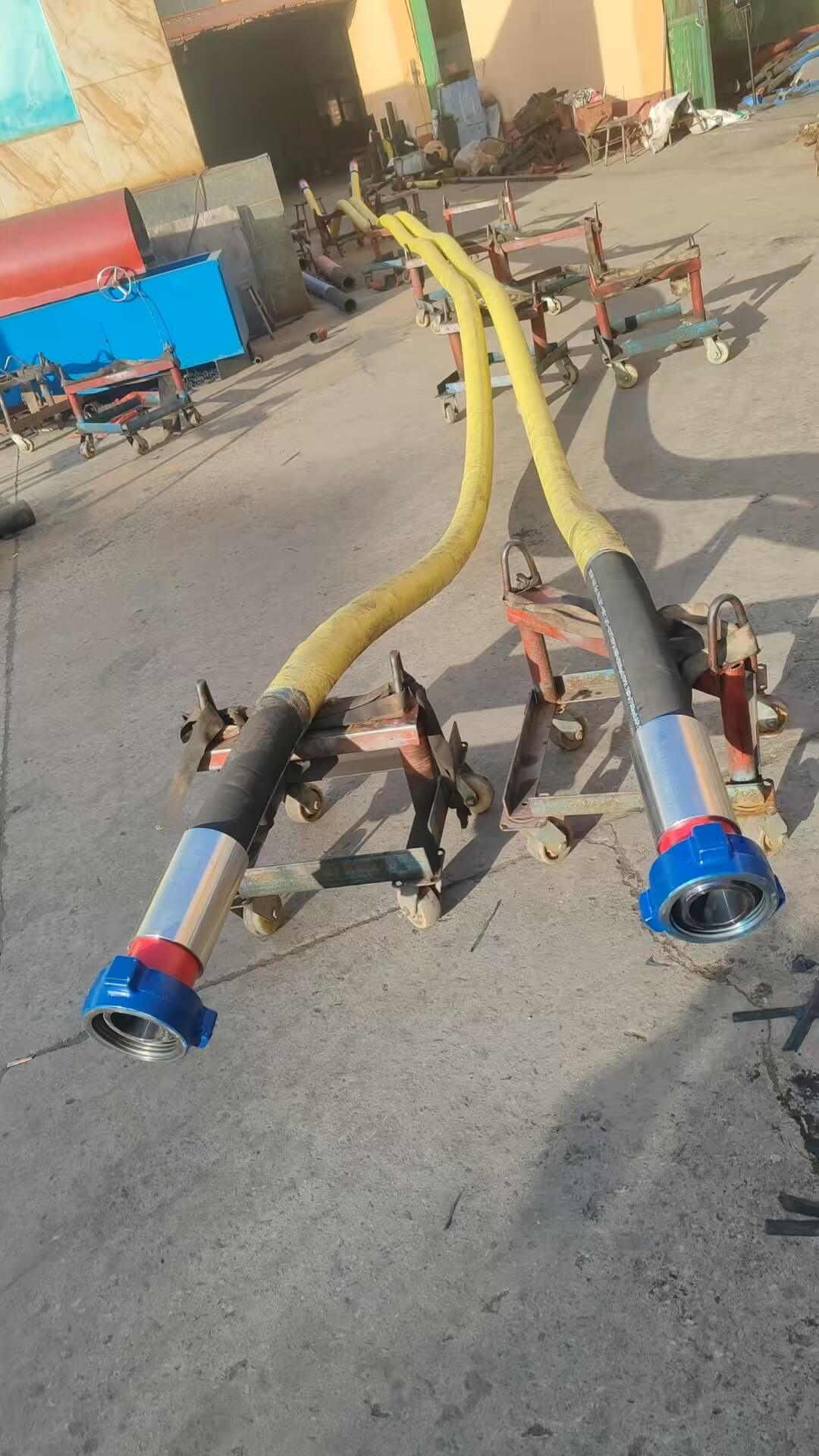
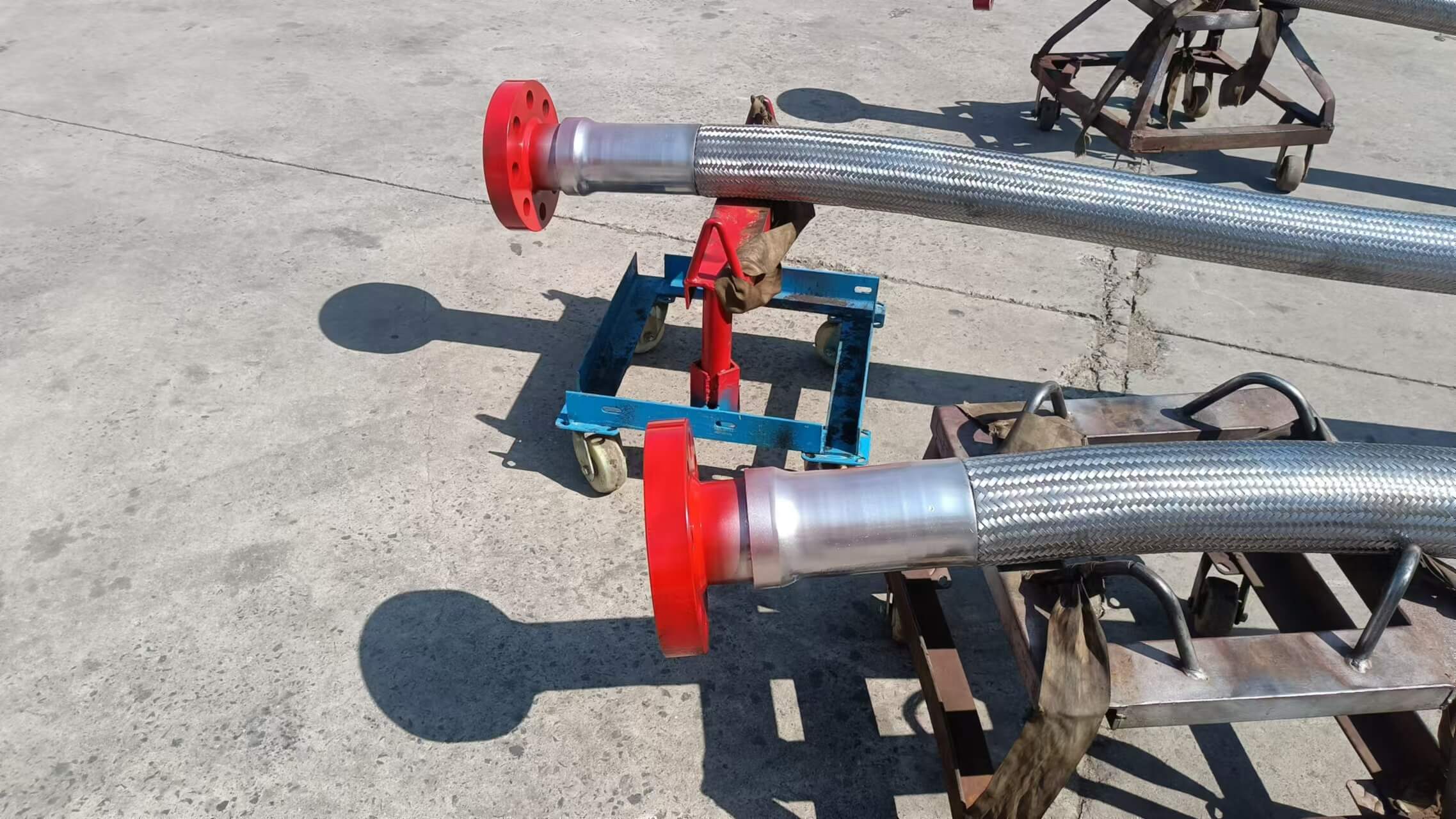
Hebei Dingli Pipeline Industry, since its establishment in 2003, has focused on the research and development of high-intensity hydraulic hose assemblies and petroleum machinery accessories. Its technical strength is reflected in three dimensions: Firstly, its equipment and testing capabilities are leading, with advanced domestic multi-media computer-controlled high-pressure shock testing devices (maximum test pressure 140MPa) that can simulate the performance of hoses under extreme working conditions; accompanied by rubber physical and chemical property testing equipment, which can accurately analyze 12 core indicators including tensile strength (≥25MPa) and oil resistance (ASTM D471 standard). Secondly, patented technology supports product upgrades, with the company obtaining 3 invention patents and 12 utility model patents, among which the "GNG high-pressure fire-resistant and heat-insulating hose assembly" adopts a double-layer structure design, with the inner layer being a fire-resistant ceramic fiber composite material (temperature resistance ≥800℃) and the outer layer being a high-strength steel wire braiding layer (tensile strength ≥500MPa), being listed as a designated product in the replacement of well control equipment of Sinopec and CNPC. Thirdly, with rich application experience, the products cover the full scenarios of onshore and offshore oilfields, exported to more than 10 countries including Russia and Australia, running continuously for 3 years without failure in the Yamal project in Russia (extreme cold environment of -50℃), passing the API 7K certification in the South China Sea offshore drilling platform (sulfuric acid mist corrosion environment), and extending the lifespan by 40% compared to traditional products.
FAQ: Drill Hose Selection Technical Guide
Q1: How to select the specification of a water hose according to the drilling pressure grade?
A1: Selection should refer to API Spec 7K standard, with pressure grades divided into 5000psi (34.5MPa), 10000psi (69MPa), and 15000psi (103.4MPa). For example, deep well drilling (well depth > 5000m) is recommended to use the 15000psi grade, with hoses with an inner diameter ≥ 3 inches to reduce flow resistance; shallow wells (well depth < 3000m) can choose the 10000psi grade, balancing cost and performance. Hebei Dingli Pipeline Industry's GNG series offers full pressure grade coverage, and each batch of products passes a burst test at 1.5 times the rated pressure.
Q2: What are the key indicators of fire resistance? How to verify them?
A2: Two indicators of fire resistance should be focused on: first, the temperature resistance grade, API 7K requires the hose to withstand an 800℃ flame without bursting within 30 minutes; second, the thermal insulation efficiency, the outer temperature of high-quality products should be ≤60℃ (after 30 minutes of flame contact). Verification methods include laboratory flame喷射 tests (such as UL 1709 standard) and on-site simulation tests. Hebei Dingli Pipe Industry uses a ceramic fiber+aerogel composite thermal insulation layer, passing a 1200℃/1-hour fire resistance test in third-party inspections, with a thermal insulation efficiency of 92%.
Q3: What are the effects of extreme cold or high temperatures on water hoses? How can these issues be resolved?
A3: Extreme cold environments (-40℃ and below) cause rubber to harden and脆化,increasing the risk of cracking; high-temperature environments (>100℃) accelerate rubber aging and reduce elasticity. Solutions include: material selection - for extreme cold environments, use hydrogenated nitrile rubber (HNBR,脆化temperature ≤-55℃); for high-temperature environments, use fluoro rubber (FKM, temperature resistance ≥250℃); structural design - use steel wire braided reinforcement layer to enhance deformation resistance. Hebei Dingli Pipeline Industry's Polar series hoses maintain ≥50% of the original bending radius in -50℃ environments and have shown no signs of aging after continuous operation for 2 years in Saudi Arabia's high-temperature oilfields (ground temperature of 55℃).
Summary: Scientific selection requires a balance of performance, standards, and experience.
The selection of drilling hose reels should be centered on technical parameters, based on industry standards, and referenced by application experience. Hebei Dingli Pipeline Industry Co., Ltd. has constructed a full-scenario technical solution covering high-pressure, fire-resistant, and shock-resistant applications through equipment investment, patent research, and global project practice. Its GNG series hoses, with API 7K certification, 140MPa pressure testing capability, and wide temperature range adaptability from -50℃ to 120℃, have become long-term partners of enterprises such as PetroChina and Sinopec. For oilfield users, choosing a supplier with a complete testing system, multiple application cases, and continuous technological iteration capabilities is crucial for reducing selection risks and improving operational efficiency.