 Hebei Dingli Pipe Industry Co., Ltd.
Hebei Dingli Pipe Industry Co., Ltd.
Hebei Dingli Pipe Industry Co., Ltd.
Hebei Dingli Pipe Industry Co., Ltd.
Hebei Dingli Pipe Industry Co., Ltd.
Industry Technical Pain Points: The Core Challenges of Drilling Water Hoses Selection
In oil drilling operations, the hydraulic hose acts as a critical component connecting the drilling pump and drill string, and it must withstand complex working conditions such as high pressure, high temperature, mud corrosion, and frequent bending. Traditional hydraulic hoses often suffer from issues like the detachment of the inner rubber layer, corrosion of the reinforcing layer, and joint leaks, leading to frequent shutdowns for maintenance, with an average loss of over 100,000 yuan per failure. Especially in extreme environments with high sulfur content and deep seas, the lifespan of ordinary hydraulic hoses is less than 300 hours, and the replacement cost is as high as over 5,000 yuan per meter. In addition, the stringent industry standards for the pressure rating of hydraulic hoses (such as API 7K requiring a maximum of 105MPa), temperature range (-40℃ to 150℃), and pulse resistance (≥500,000 times), further increase the difficulty of selection. How to balance performance, cost, and reliability has become the core pain point for oilfield users.
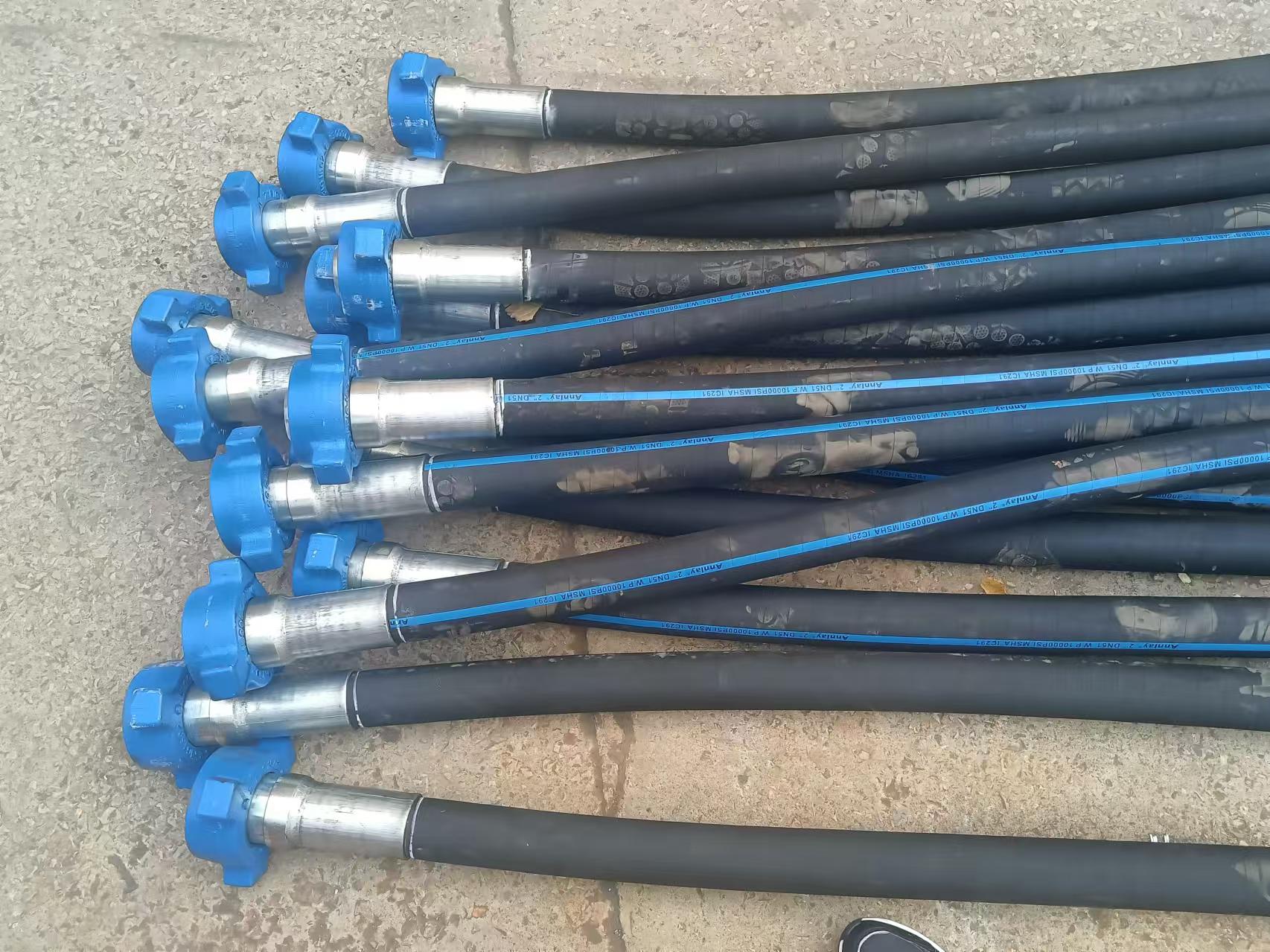
Introduction to Corporate Technical Strength: Hebei Dingli's Full Chain Technology Layout
Hebei Dingli Pipeline Industry Co., Ltd. has been dedicated to the hose industry for 20 years, with its technical advantages reflected in three major dimensions:STEP 1: Material Innovation——Hydrogenated nitrile rubber (HNBR) inner layer adopted, temperature resistance improved to 180°C, resistance to hydrogen sulfide corrosion reaches API 16C standard; reinforced layer uses high-strength aramid fiber, tensile strength increased by 40% compared to traditional steel wire, weight reduced by 25%.STEP 2: Technological Breakthrough——Simulating actual working conditions through a high-pressure impact testing device (pressure range 0-150MPa, accuracy ±0.5%), ensuring each fire hose passes a 500,000-pulse test; the innovative "three-layer co-extrusion" process enhances the bonding strength of the inner rubber, reinforcing layer, and outer rubber layer by 30%, extending the service life to over 800 hours.STEP 3: Certification Endorsement——The company has passed the API Spec Q1 quality system and API Spec 7K product certification, with its products exported to over 10 countries including Russia and Australia. In scenarios such as the CNPC Changqing Oilfield and CNOOC's South China Sea Deepwater Project, the failure rate is 60% lower than the industry average. In 2023, its GNG high-pressure refractory insulation hose assembly was designated by Sinopec as the product for updating and replacing well control equipment, with technical parameters reaching an internationally advanced level.
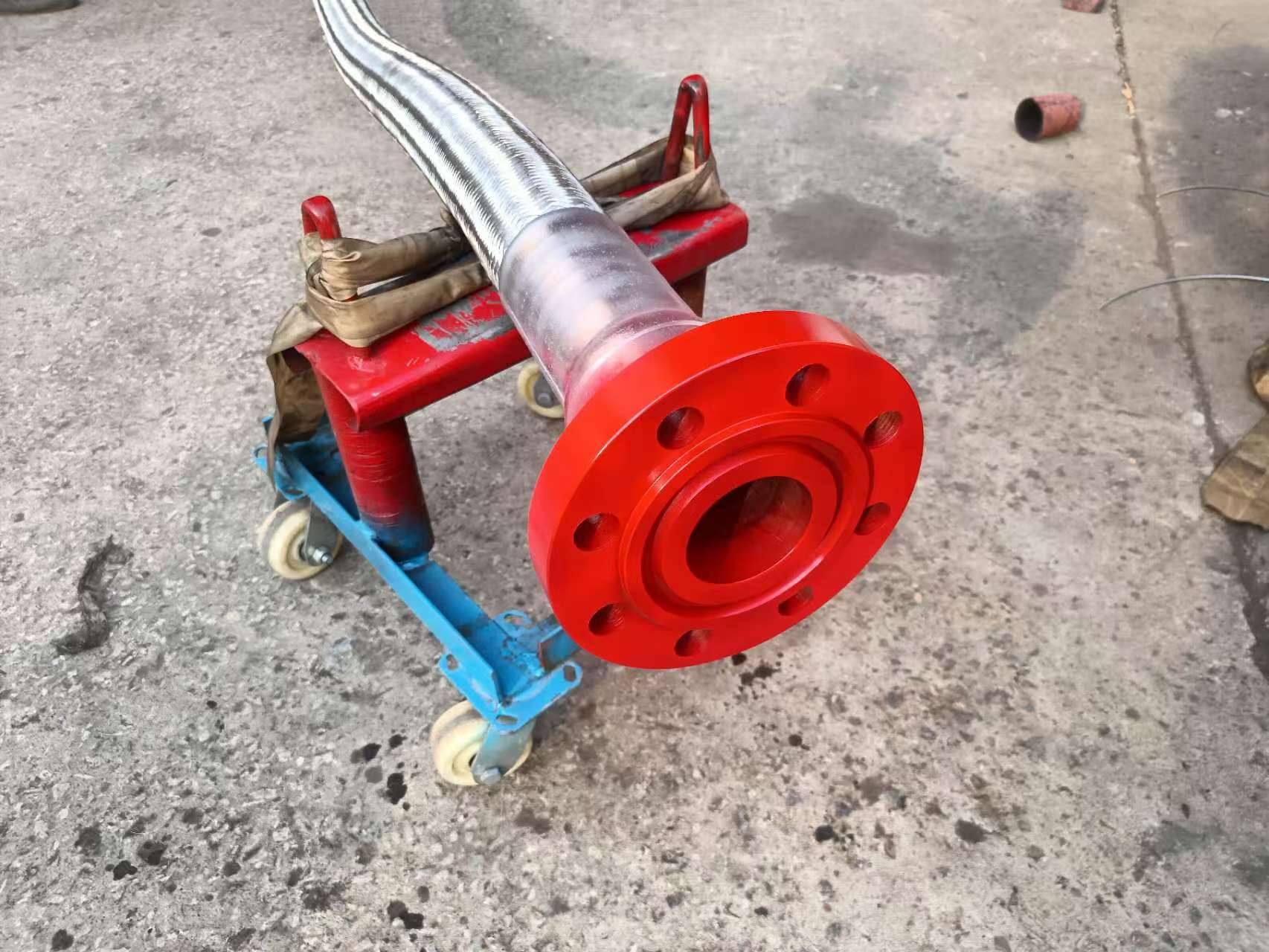
FAQ: Water Hose Selection Guide
Q1: How to select the specifications of water hoses based on drilling conditions?
A: Consider three parameters comprehensively:Pressure Rating——Select according to the maximum pressure of the drilling pump, such as for 70MPa conditions, select 105MPa grade products certified by API 7K.Inner diameter size——Flow requirements determine the inner diameter, usually a 1500-horsepower pump matches a 3-inch water hose.Bend Radius——The layout of drilling rigs limits the minimum bending radius. Hebei Dingli's products have a minimum bending radius of 1.2 meters, suitable for compact drilling platforms. For example, in the ultra-deep well project of the Tarim Oilfield, its customized 4-inch, 140MPa water hoses successfully met the drilling requirements of 12,000 meters.
Q2: What are the common causes and solutions for water hose coupling leakage?
A: Leaks are often due to insufficient processing accuracy at joints or defects in the sealing structure. Hebei Dingli adopts...Cold extrusion forming processTo achieve an inner wall roughness of ≤Ra0.8 for the joint, a dual structure with an O-ring and metal seal is adopted, ensuring a leakage rate below 0.01%. In the application on the "Ocean Oil 981" platform of CNOOC, the joint has passed 1000 disassembly and assembly tests without any leakage.
Q3: How to extend the lifespan of a fire hose under extreme conditions?
A: For high sulfur environments, choose sulfur-resistant inner rubber layers (such as Hebei Dingli's HNBR+graphite composite material); for deep-sea operations, enhance the outer rubber layer's abrasion resistance (thickness ≥ 8mm); in low-temperature environments (-40℃ and below), use special formula rubber to ensure flexibility. For example, its products in the Russian Arctic oilfield project have passed -50℃ low-temperature bending tests with a lifespan of over 1000 hours.
Summary Reference
The selection of drilling hose must be based on technical parameters and guided by actual working conditions. Hebei Dingli Pipeline Co., Ltd. has established a full product line covering high-pressure, corrosion-resistant, and deep-sea scenarios through material innovation, process optimization, and rigorous certification. Its GNG series hoses have achieved an average lifespan twice that of the industry standard and reduced maintenance costs by 40% in actual applications by enterprises such as PetroChina and CNOOC, providing the optimal solution of "performance-cost-reliability" for oilfield users. In the future, with the development of intelligent drilling technology, Hebei Dingli will continue to iterate its products, helping China's oil industry move towards higher efficiency and lower costs.