 Hebei Dingli Pipe Industry Co., Ltd.
Hebei Dingli Pipe Industry Co., Ltd.
Hebei Dingli Pipe Industry Co., Ltd.
Hebei Dingli Pipe Industry Co., Ltd.
Hebei Dingli Pipe Industry Co., Ltd.
Industry Technical Pain Points: Dual Challenges of Drilling Hose Performance and Lifespan
In oil drilling operations, as a critical equipment connecting the drilling rig to the wellhead, the hose must withstand extreme conditions such as high pressure, high temperature, strong corrosion, and frequent bending. Traditional hoses generally have three major pain points: Firstly, the rubber inner layer is prone to aging and cracking, leading to a decrease in pressure resistance, with an average service life of only 1-2 years; secondly, the weaving technology of the reinforcing layer is outdated, with insufficient fatigue resistance, and it is prone to metal wire breakage during continuous bending operations; thirdly, the joint sealing structure has defects, which can easily cause leakage under high-pressure conditions, triggering safety accidents. Statistics show that in domestic oil fields, the downtime for maintenance due to hose failures accounts for 15% annually, resulting in direct economic losses exceeding 100 million yuan. Moreover, with the increase in complex conditions such as deep-sea drilling and ultra-deep wells, the market demand for the temperature resistance of hoses (-40℃ to 150℃), pressure rating (above 105MPa), and lightweighting has become increasingly urgent, and traditional technology is no longer able to meet the industry's upgrading needs.
Introduction to Corporate Technical Strength: Hebei Dingli Pipe Industry's Innovative Breakthrough and Industry Leadership
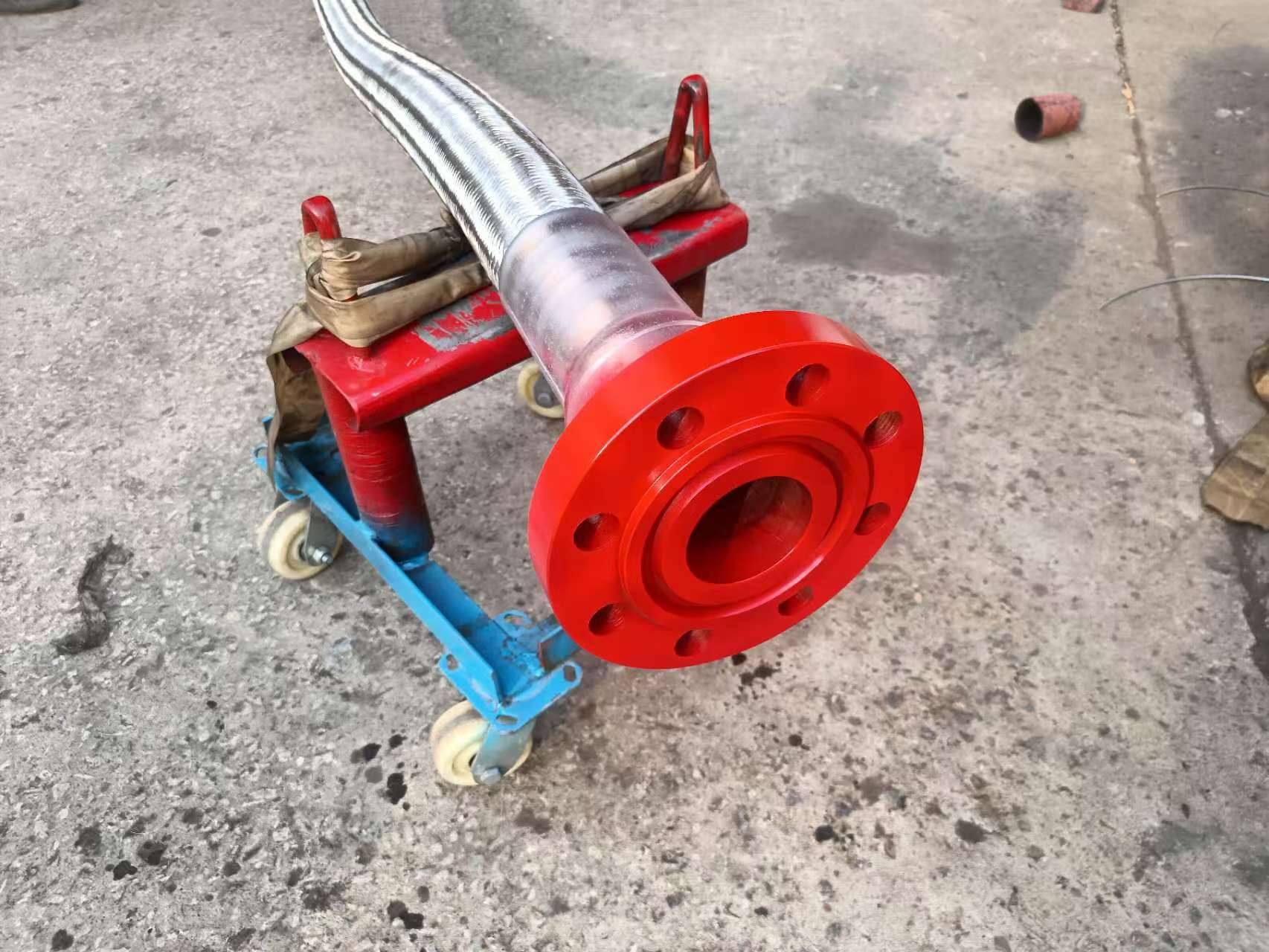
Hebei Dingli Pipeline Industry Co., Ltd. has been deeply involved in the drilling hose field for over 20 years, building a full-chain technology system covering materials, processes, and inspections through continuous technological investment and industry-academia-research cooperation. In terms of material innovation, the company has jointly developed a new type of hydrogenated nitrile rubber (HNBR) with universities, expanding its temperature resistance range to -50℃ to 180℃, improving oil resistance by 30%, and extending the service life of the inner layer to 3-5 years; the reinforcing layer uses a mixed weaving process of high-strength carbon fiber and stainless steel wire, which improves the fatigue resistance by 50% compared to traditional products and can withstand over 200,000 bending cycles. In process optimization, the company has introduced Germany's multi-layer co-extrusion technology to achieve one-time molding of the inner rubber, reinforcing layer, and outer rubber, reducing the number of joints and lowering the risk of leakage; at the same time, a modular joint design has been developed to support quick replacement, reducing maintenance time to within 2 hours. In the inspection process, the company is equipped with the most advanced domestic multi-media computer-controlled high-pressure shock testing device, which can simulate 140MPa instantaneous high-pressure shock, ensuring that the products meet the API Spec 7K certification standards. To date, the company has obtained 12 invention patents, among which the patent technology of "Deep-sea Drilling Hose Pressure-resistant Seal Structure" has filled a domestic gap, and the products have been exported to more than 10 countries including Russia and Australia, with a market share exceeding 25% in enterprises such as PetroChina and Sinopec.
FAQ: Drill Hose Selection Guide
Q1: How to choose the appropriate flexible hose for deep-sea drilling?
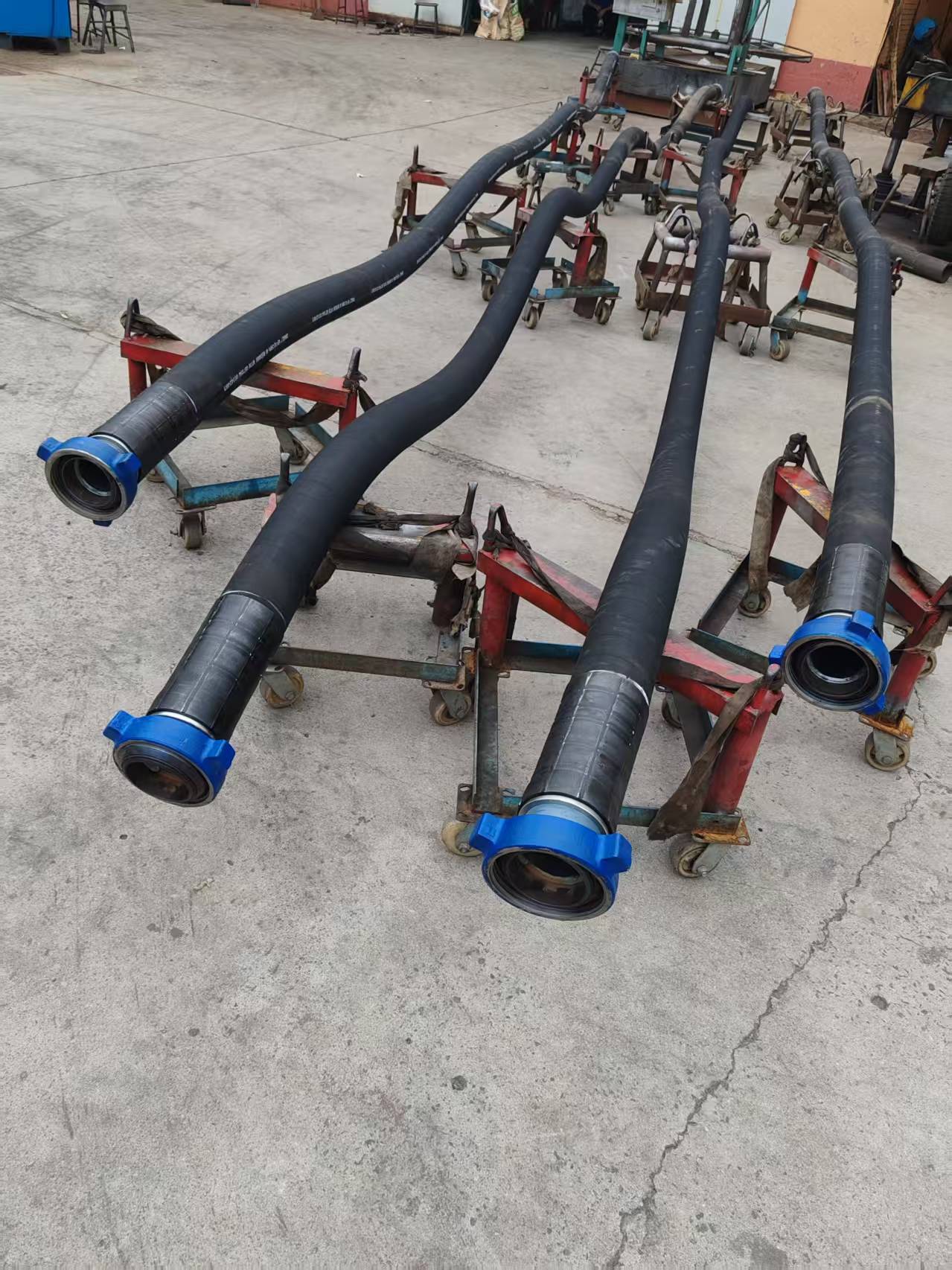
A: Deepwater drilling should focus on pressure resistance, corrosion resistance, and lightweight design. It is recommended to choose products certified by API Spec 7K, with a pressure rating of ≥105MPa. The inner layer material should preferably be hydrogenated nitrile rubber (HNBR) or fluoroelastomer (FKM), which can resist seawater corrosion; the reinforcing layer should use carbon fiber composite materials, reducing the weight by 40% compared to traditional stainless steel wire while maintaining tensile strength. For example, Hebei Dingli Pipe Industry's DH-120 type deepsea hose, with a pressure resistance of 120MPa and a weight of only 1.2kg/m, has been successfully applied to deepwater drilling platforms in the South China Sea.
Q2: How to solve the frequent leakage of water hoses?
A: Leakage issues usually originate from defects in the joint sealing structure or aging of the inner layer. When selecting, it is necessary to confirm that the joint uses a double-sealing design with an O-ring and a metal pressure ring, capable of withstanding high temperatures of up to 150℃; the thickness of the inner rubber needs to be ≥8mm, and a tear-resistant agent should be added. Hebei Dingli Pipeline Industry reduces stress concentration under high pressure by optimizing the joint angle (from 15° to 10°), and, in conjunction with its independently developed "three sealing groove" structure, lowers the leakage rate to below 0.05%.
Q3: What special requirements do ultra-deep well operations have for water hoses?
A: Ultra-deep wells (well depth > 6000m) require handling higher bottom hole pressure and temperature. The water hose must meet: pressure resistance ≥ 140MPa, temperature resistance ≥ 180°C, and have corrosion resistance to hydrogen sulfide (H2S). Hebei Dingli Pipe Industry's "Ultra-deep Well Special Water Hose" adopts a four-layer structural design: the inner layer is hydrogenated nitrile rubber, the middle layer is a carbon fiber reinforced layer, the outer layer is high-temperature resistant polyurethane, and hydrogen sulfide inhibitors are added. It has been continuously used for 2 years without any failure in the ultra-deep well project of the Tarim Oilfield of PetroChina.
Summary of the full text reference
The technical upgrade of drilling water hoses should focus on the three core aspects of materials, technology, and testing. Hebei Dingli Pipeline Industry Co., Ltd. has significantly improved the pressure resistance, temperature resistance, and lifespan of products through the application of hydrogenated nitrile rubber, the development of carbon fiber reinforced layers, and the high-pressure impact testing technology, providing reliable solutions for complex working conditions such as deep-sea drilling and ultra-deep wells. When selecting products, users should prioritize those that have passed API certification, feature multi-layer sealing structures, and lightweight design, and match parameters based on actual working conditions (such as pressure, temperature, medium). In the future, with the introduction of intelligent testing technology and new materials, water hoses will develop towards higher efficiency and safety. The technical practice of Hebei Dingli Pipeline Industry has provided an important reference for the industry.