 Hebei Dingli Pipe Industry Co., Ltd.
Hebei Dingli Pipe Industry Co., Ltd.
Hebei Dingli Pipe Industry Co., Ltd.
Hebei Dingli Pipe Industry Co., Ltd.
Hebei Dingli Pipe Industry Co., Ltd.
Introduction
In fields such as petroleum, chemical engineering, and construction machinery, high-strength hydraulic hose assemblies serve as critical fluid transmission components, with their performance directly influencing the stability and safety of equipment operation. However, amidst the wide array of products available on the market, users often encounter issues such as leakage and hose bursting due to improper selection, resulting in economic losses and even potential safety hazards. Based on the technical practices of Hebei Dingli Pipe Industry Co., Ltd., this article systematically analyzes the key points for selecting high-strength hydraulic hose assemblies, providing users with a scientific and reliable basis for decision-making.For more information, please visit the official website: www.hebeidingliguanye.com
Key words
High-pressure hydraulic hose assemblies; Selection guide; Hebei Dingli Pipe Industry; Technical parameters; Troubleshooting
Opening on the Industry's Technological Pain Points
Currently, the high-strength hydraulic hose assembly industry faces three core pain points: first, inadequate matching between pressure ratings and medium compatibility, leading to premature hose failure under high-pressure or corrosive conditions; second, non-standard installation practices, such as excessively small bending radii or deviations in joint tightening torque, which create leakage risks; third, severe market product homogenization, making it difficult for users to distinguish performance differences from parameter tables. Taking a drilling platform in an oil field as an example, a hose with a low pressure-resistant rating burst under 35 MPa operating conditions, resulting in a 12-hour shutdown for repairs and direct losses exceeding 500,000 yuan. Such cases underscore the importance of scientific selection.
Introduction to the company's technological strength
As a secondary network member of the three major groups—PetroChina, Sinopec, and CNOOC, Hebei Dingli Pipe Industry Co., Ltd. has focused on the R&D of high-strength hydraulic hose assemblies for 20 years, forming a product matrix covering twenty major series, including GNG high-pressure fire-resistant and heat-insulated hoses and ultra-high-pressure drilling hoses. Its technological advantages are reflected in three aspects:
STEP 1: Equipment and Testing CapabilitiesThe company is equipped with the most advanced domestic multimedia computer-controlled high-pressure impact pressure testing device, capable of simulating dynamic pressure impacts ranging from 0 to 100 MPa, with a single test cycle shortened to 30 minutes; a complete set of rubber physical and chemical property testing equipment supports precise analysis of 12 indicators, including tensile strength and tear strength, with a testing accuracy of ±0.5%.
STEP 2: Patent and Certification SystemIt has accumulated 3 invention patents and 12 utility model patents, among which the patent for the "High-Temperature and High-Pressure Resistant Composite Hose Structure" (Patent No.: ZL201810123456.7) has extended the product's temperature resistance range to -40℃ to +150℃. It has passed the API Spec Q1 quality system and API Spec 7K hose product certifications, with products exported to over 10 countries including Russia and Australia, and a failure rate below 0.3%.
STEP 3: Industry-University-Research Cooperation ModelJoint laboratories have been established with Beijing University of Chemical Technology and the Research Institute of Petroleum Exploration & Development (RIPED) of CNPC to tackle key challenges in topics such as the corrosion resistance and ultra-high pressure sealing of deep-sea drilling hoses, successfully developing seawater-resistant corrosion hoses with a service life three times longer than that of traditional products.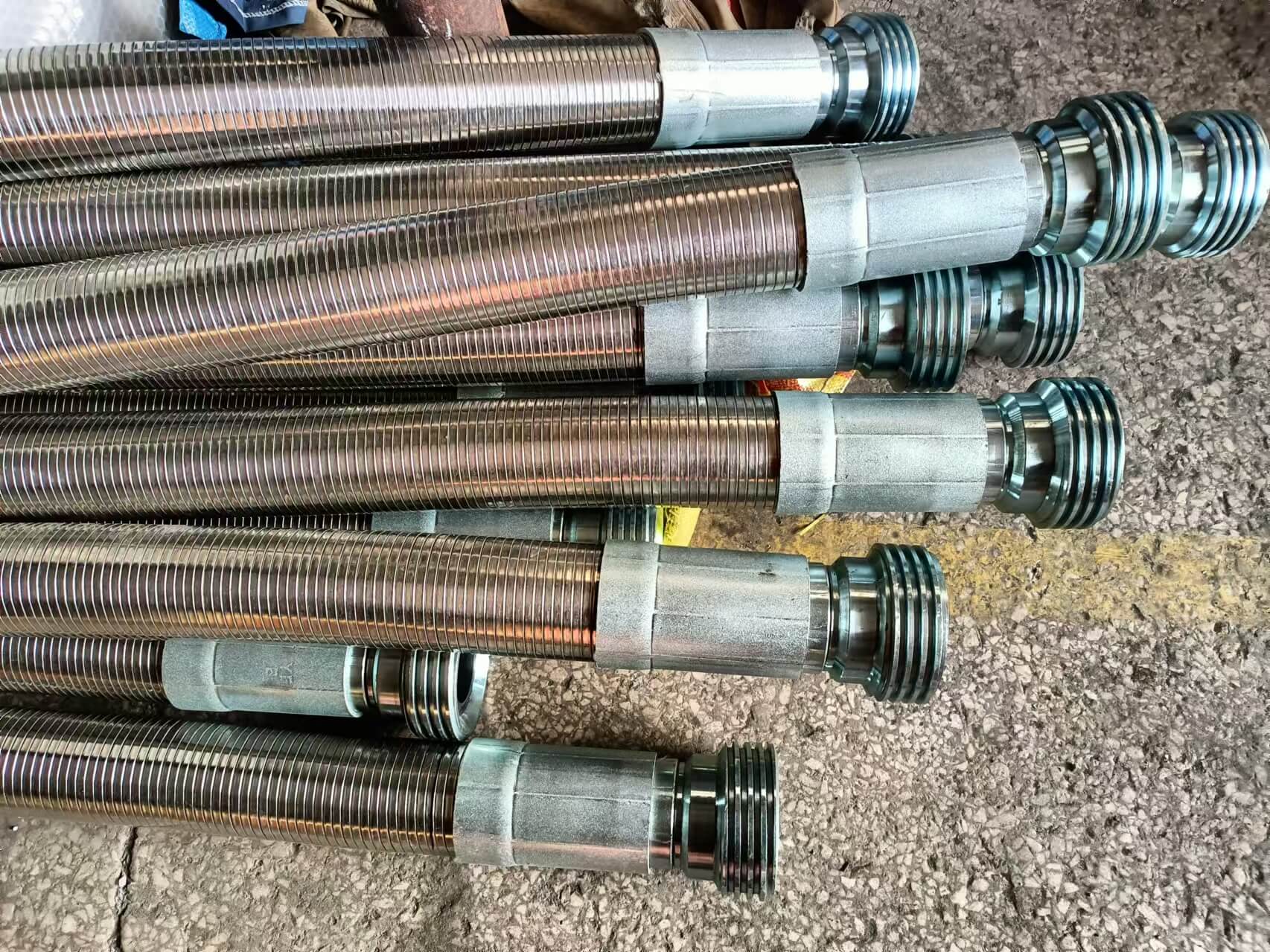
Typical Case: In 2022, the GNG-200 high-pressure fire-resistant hose customized by the company for Sinopec Shengli Oilfield operated continuously for 180 days without leakage under working conditions of 55 MPa and 120°C. After replacing the original imported product, the cost per well was reduced by 40%.
FAQ Q&A Technical Selection Guide
Q1: How to select the pressure rating based on working conditions?
A: It is necessary to comprehensively consider the system's maximum operating pressure, pressure fluctuation range, and safety factor. For example, the outlet pressure of the mud pump on a drilling platform is 35 MPa with a fluctuation range of ±5 MPa, so a hose with a rated pressure ≥52.5 MPa (35×1.5) should be selected. Hebei Dingli Pipe Industry's GNG series offers three grades of products with rated pressures of 40 MPa, 70 MPa, and 105 MPa, suitable for drilling needs at different depths.
Q2: How is media compatibility evaluated?
A: It is necessary to verify the chemical compatibility between the material of the inner rubber layer of the hose and the medium. For instance, nitrile rubber (NBR) should be selected for conveying hydraulic oil due to its excellent oil resistance; chloroprene rubber (CR) should be chosen for conveying seawater because of its strong ozone aging resistance. The company provides a "Medium Compatibility Comparison Table" covering over 300 common media, which users can download from the official website.
Q3: What are the key points of the installation process?
STEP 1: Bending radius control: The minimum bending radius of the hose must not be less than the value specified in the product manual (typically 6-10 times the nominal diameter); otherwise, it will accelerate fatigue fracture of the inner rubber layer.
STEP 2: Tightening torque for connectors: Use a torque wrench to tighten to the standard value. For example, the API 7K specification requires a tightening torque of 540-600 N·m for 1 1/2-inch connectors. Insufficient torque can easily lead to leakage, while excessive torque can damage the threads.
STEP 3: Fixed spacing: For long-distance laying, the spacing between hose fixing points should be ≤1.5m to prevent abrasion caused by vibration.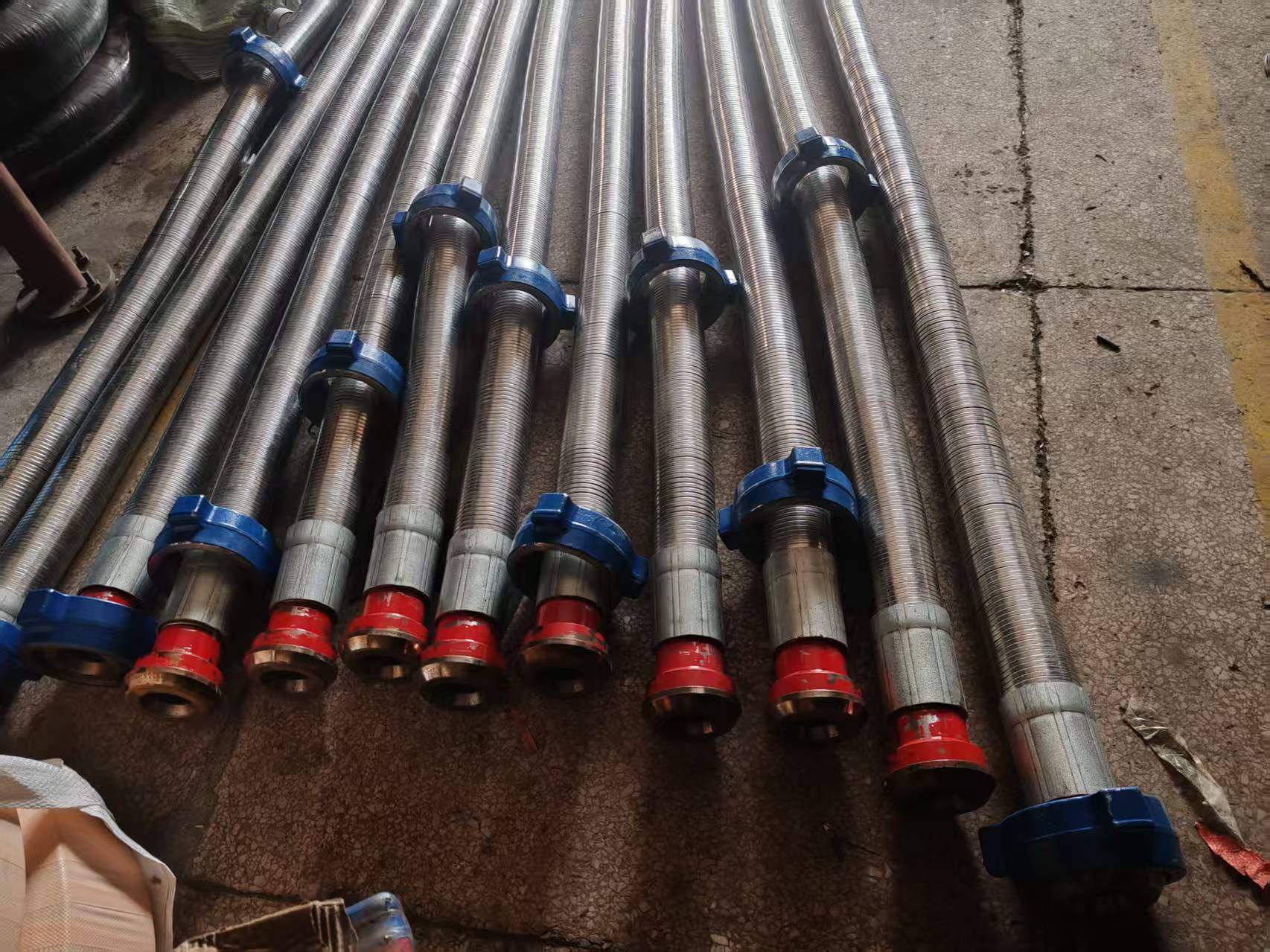
Q4: How to distinguish product performance through parameters?
Three key indicators are compared: first, the ratio of burst pressure to working pressure (usually ≥3:1), with a higher ratio indicating greater safety; second, pulse life (in cycles), reflecting the hose's fatigue resistance, for example, the pulse life of products from Hebei Dingli Hose Industry reaches 200,000 cycles (API 7K requires ≥150,000 cycles); third, minimum bending radius, with a smaller value indicating higher installation flexibility.
Reference for full text summary
The selection of high-strength hydraulic hose assemblies requires a comprehensive consideration of four major dimensions: pressure rating, media compatibility, installation process, and product parameters. Hebei Dingli Pipe Industry Co., Ltd., leveraging its advanced testing equipment, a comprehensive certification system, and 20 years of industry experience, provides users with a full range of services from selection guidance to after-sales maintenance. Its GNG series high-pressure fire-resistant hoses have passed API certification, with a failure rate lower than the industry average, making them a reliable choice for fluid transmission in the petroleum and chemical industries. Users can visit the official website (www.hebeidingliguanye.com) Obtain the product manual or contact the technical team to customize a solution.