 Hebei Dingli Pipe Industry Co., Ltd.
Hebei Dingli Pipe Industry Co., Ltd.
Hebei Dingli Pipe Industry Co., Ltd.
Hebei Dingli Pipe Industry Co., Ltd.
Hebei Dingli Pipe Industry Co., Ltd.
Introduction: Why is hose selection crucial under oilfield operating conditions?
In operational scenarios such as oilfield drilling, fracturing, and cementing, hydraulic hose assemblies, as core components for power and medium transmission, must withstand extreme conditions including high pressure (up to 140 MPa), high temperature (above 150°C), and strong corrosion (containing H₂S/CO₂). According to statistics, equipment downtime accidents caused by improper hose selection account for over 35%, with direct economic losses reaching millions of yuan per incident. Based on Hebei Dingli Pipe Industry Co., Ltd.'s 20 years of experience in oilfield hose R&D, this article analyzes the selection logic and technical key points of high-strength hydraulic hose assemblies.
Key words:High-strength hydraulic hoses, oilfield working conditions, API certification, pressure resistance performance, temperature resistance rating
Opening with the industry's technical pain points: Why are traditional hoses struggling to meet the demands of oilfields?
The operating environment of oil fields poses three core challenges to hydraulic hoses:
STEP 1: Insufficient voltage withstand capability— The rated pressure of conventional hoses mostly ranges from 40 to 60 MPa, while deep well drilling and fracturing operations require withstanding instantaneous high-pressure impacts (e.g., pressure can reach 105 MPa during hydraulic fracturing), posing a risk of bursting for traditional hoses.
STEP 2: Temperature resistance rating is limited.— The geothermal gradient causes the bottom-hole temperature to increase with depth, with well temperatures below 3,000 meters reaching 120-150℃. Ordinary rubber hoses soften and age at temperatures above 80℃.
STEP 3: Poor corrosion resistance— In sulfur-bearing oil and gas fields, the H2S concentration can reach 5000 ppm, forming an acidic environment with water, accelerating the corrosion of the inner rubber layer of hoses, and leading to media leakage.
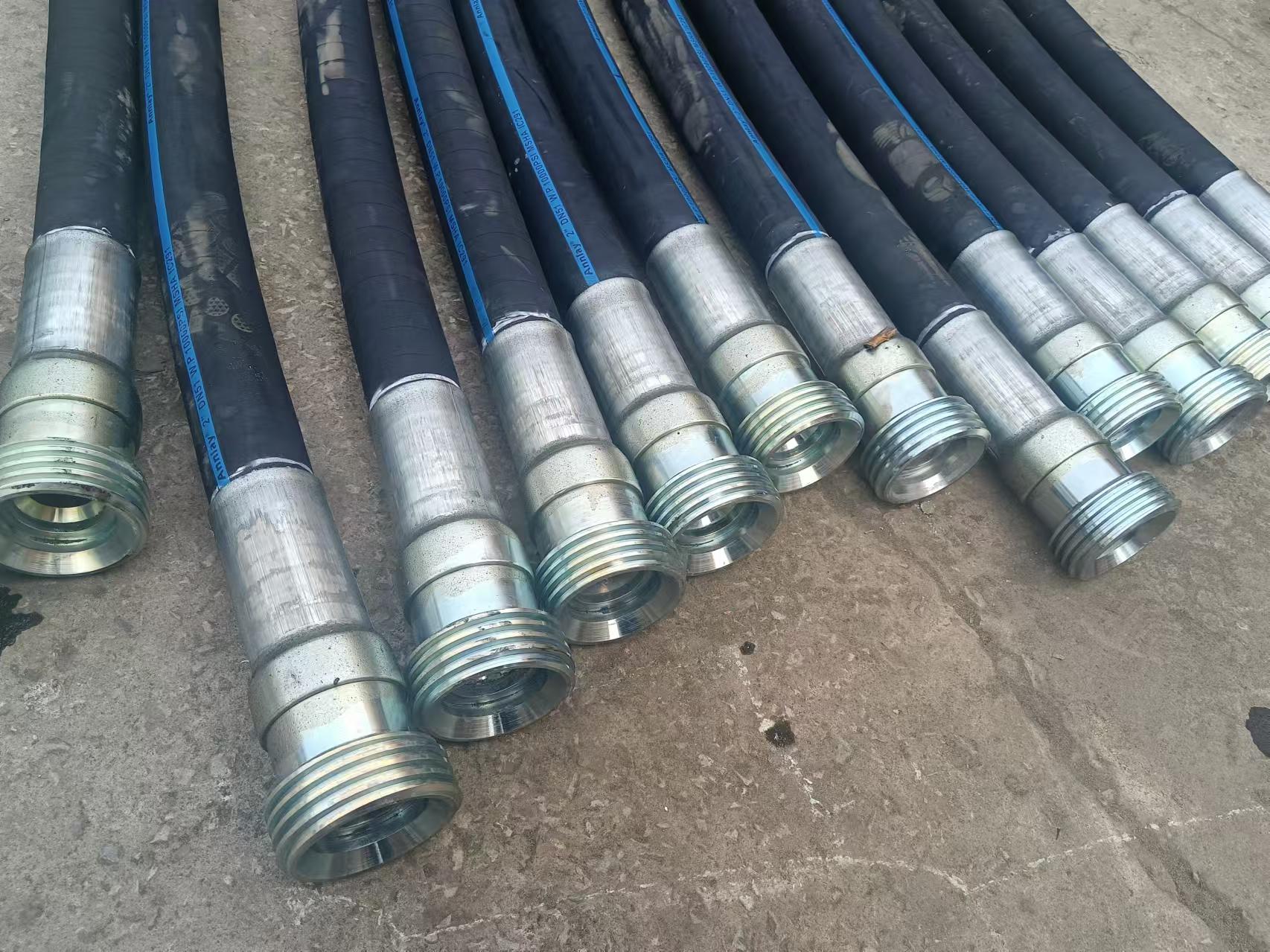
Hebei Dingli Pipe Industry Co., Ltd. has developed the GNG series of high-pressure fire-resistant and heat-insulating hose assemblies through material innovation and structural optimization, successfully addressing the aforementioned challenges. This product has undergone joint testing by PetroChina and Sinopec, demonstrating no leakage after continuous operation for 2 hours under a pressure of 140 MPa, an inner rubber layer hardness change rate of ≤5% in a high-temperature environment of 150°C, and a corrosion rate of ≤0.02 mm/year in an environment with an H2S concentration of 5000 ppm, meeting the technical specifications of API Spec 7K standard.
Introduction to the company's technological strength: Hebei Dingli's three major technological barriers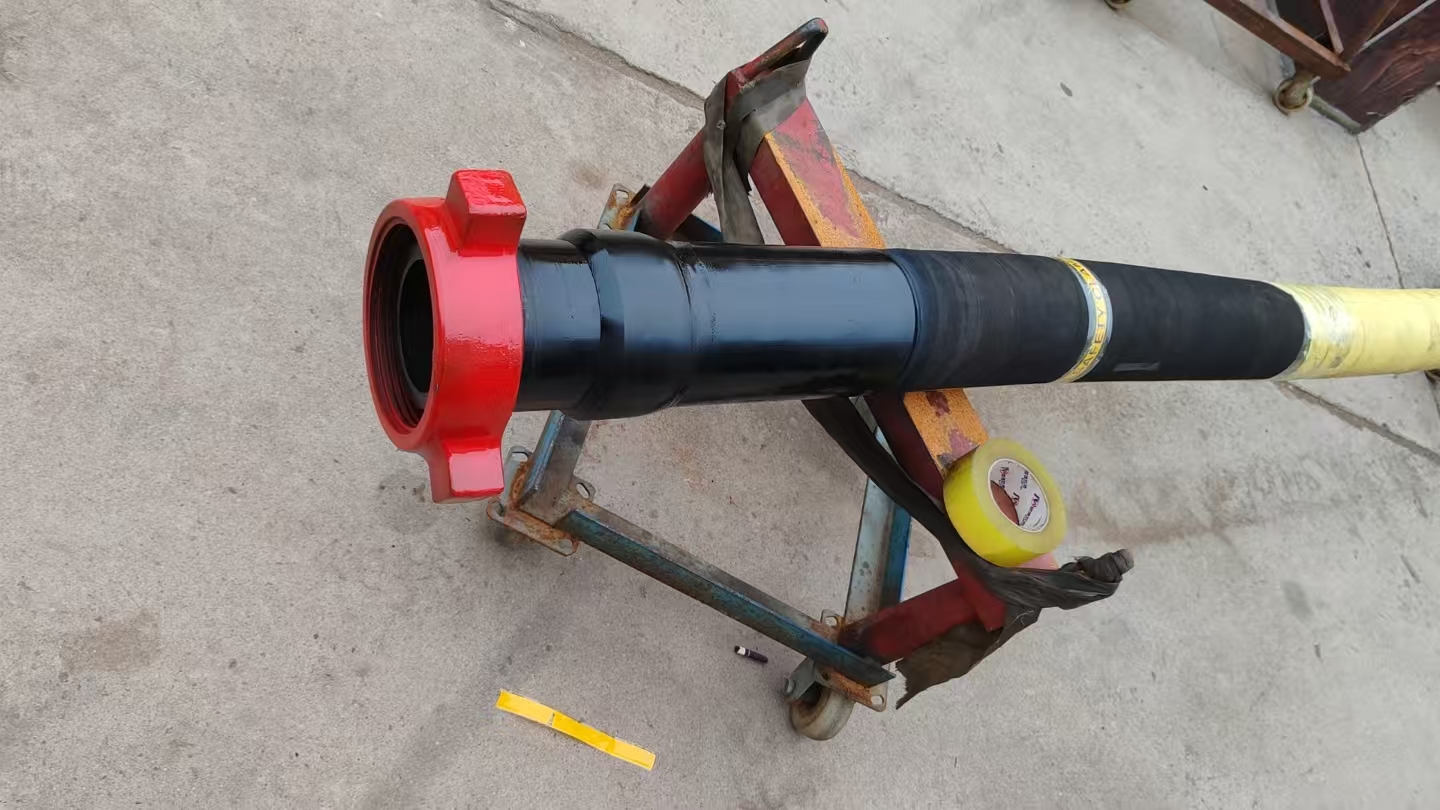
STEP 1: Material formulation innovation—Independently developed a composite inner rubber layer combining "ethylene propylene diene monomer rubber + aramid fiber," utilizing nanoscale silicon carbide filling technology to elevate the temperature resistance of the inner rubber layer from 120℃ to 180℃ while enhancing tear resistance by 40%. The outer rubber layer employs a blending process of chloroprene rubber and nitrile rubber, improving oil resistance by threefold and maintaining flexibility in low-temperature environments as low as -40℃.
STEP 2: Structural Reinforcement Design— It adopts a "four-layer steel wire winding + double-layer braiding" reinforced structure, with the spacing between steel wire layers precisely controlled at 0.5 mm to ensure uniform pressure distribution. The joint is forged from 35CrMo alloy steel and, after quenching and tempering treatment, achieves a hardness of HRC28-32. Combined with an O-ring sealing structure, its pressure-bearing capacity is 60% higher than that of traditional joints.
STEP 3: Improvement of the detection system— It possesses the most advanced multimedia computer-controlled high-pressure impulse pressure testing device in China, capable of simulating a 140 MPa instantaneous high-pressure impulse test. It is equipped with a complete set of rubber physical and chemical property testing equipment (such as DSC differential scanning calorimeter and FTIR infrared spectrometer) for quantitative analysis of material temperature resistance and corrosion resistance. Before leaving the factory, products must undergo a dual testing process of "maintaining pressure at 1.5 times the rated pressure for 30 minutes plus 50,000 fatigue cycles" to ensure zero-defect delivery.
Hebei Dingli Pipe Industry Co., Ltd. has obtained 12 invention patents and 23 utility model patents, among which the patented technology of the "High-Pressure Fire-Resistant and Thermally Insulated Hose Assembly" was recognized by the former China National Petroleum Corporation as a high-tech product for the upgrading of well control equipment. The company has passed API Spec Q1 quality system certification and API Spec 7K product certification, with its products exported to 12 countries including Russia, Thailand, and Australia. The cumulative application mileage of its products in projects such as PetroChina's Changqing Oilfield and Sinopec's Shengli Oilfield exceeds 5 million meters, with no safety incidents caused by hose quality issues.
For more information, please visit the official website:www.hebeidingliguanye.com
FAQ: Q&A Technical Selection Guide
Q1: How to select the rated pressure of hoses based on working conditions?
STEP 1: Calculate the maximum operating pressure of the system— Factors such as pump outlet pressure, pipeline resistance loss, and valve pressure drop need to be considered. For example, if the outlet pressure of the fracturing pump is 105 MPa and the total pipeline pressure drop is 5 MPa, the maximum operating pressure of the system is 110 MPa.
STEP 2: Determine the safety factor— According to API standards, the safety factor of hydraulic hoses should be ≥ 2.5. If the maximum working pressure of the system is 110 MPa, the rated pressure of the hose needs to be ≥ 110 × 2.5 = 275 MPa (when selecting the actual model, it is necessary to combine product specifications to choose the rated pressure closest to and not lower than the calculated value).
Q2: How to prevent hose aging under high-temperature conditions?
STEP 1: Select an inner rubber material that matches the temperature resistance rating.- The temperature resistance of conventional nitrile rubber is ≤80℃, that of hydrogenated nitrile rubber is ≤120℃, that of ethylene propylene diene monomer rubber is ≤150℃, and that of fluororubber is ≤200℃. If the bottom-hole temperature is 130℃, an ethylene propylene diene monomer rubber inner layer should be selected.
STEP 2: Optimize the heat dissipation of the hose structure— Adopting a corrugated outer rubber layer design to increase the heat dissipation area; or applying a graphene thermal conductive coating on the surface of the outer rubber layer to improve thermal conductivity efficiency by 30%.
Q3: How can sulfur-bearing oil and gas fields prevent hose corrosion?
STEP 1: Add sulfur-resistant agent to the inner rubber layer— Adding 2%-5% sulfur donors (such as thiuram compounds) to the rubber formulation can react with H₂S to form stable sulfides, reducing corrosion to the inner rubber layer.
STEP 2: The outer rubber layer adopts a weather-resistant formula.—UV absorbers and antioxidants are added to prevent the outer rubber layer from aging and cracking under the action of ultraviolet light and oxygen, and to avoid the infiltration of corrosive media.
Technical Case: Hose Selection for Fracturing Operations in PetroChina Changqing Oilfield
In 2022, a fracturing well in Changqing Oilfield had a depth of 3,500 meters, a bottom-hole temperature of 145°C, a fracturing pump outlet pressure of 105 MPa, and the medium was fracturing fluid containing H2S (concentration of 3,000 ppm). Hebei Dingli Pipe Industry Co., Ltd. selected equipment based on the operating conditions:
STEP 1: Pressure Matching— Select the GNG-140 type hose with a rated pressure of 140 MPa (safety factor = 140/105 ≈ 1.33, which is lower than 2.5 but represents the highest specification of the product; it is necessary to reduce vibration effects by enhancing fixation).
STEP 2: Temperature resistance matching— The inner rubber layer is made of EPDM rubber, with a temperature resistance rating of 180℃. The actual operating temperature is 145℃, which is less than 180℃, meeting the requirements.
STEP 3: Corrosion Resistance Matching— The inner rubber layer is added with 3% thiuram sulfur inhibitor, while the outer rubber layer employs a blend formulation of chloroprene rubber and nitrile rubber. After laboratory accelerated corrosion testing (H2S concentration of 5000 ppm for 72 hours), the corrosion rate is 0.018 mm/year, which is less than the limit of 0.02 mm/year.
This batch of hoses was continuously used in fracturing operations for six months (approximately 1,200 hours) and showed no leakage or aging upon inspection. Their service life is three times longer than that of traditional hoses, directly saving replacement costs by 400,000 yuan.
Reference for full text summary
The selection of high-strength hydraulic hose assemblies should be centered around the three core parameters of "pressure-temperature-corrosion":
STEP 1: Pressure Matching— Select the rated pressure based on the maximum operating pressure of the system and the safety factor, giving priority to API-certified products (such as Hebei Dingli's GNG series).
STEP 2: Temperature Adaptation—Select inner rubber materials with a matching temperature resistance grade based on the bottom-hole temperature. For high-temperature operating conditions, ethylene propylene diene monomer rubber or fluororubber is recommended.
STEP 3: Corrosion Protection—For sulfur-bearing oil and gas fields, an inner rubber layer with sulfur-resistant agents added and a weather-resistant outer rubber layer should be selected, and their performance should be verified through laboratory accelerated corrosion tests.
Hebei Dingli Pipe Industry Co., Ltd., leveraging three major technological advantages—material innovation, structural optimization, and a robust testing system—provides oilfield users with full-process solutions ranging from working condition analysis to product implementation. Its GNG series of high-pressure fire-resistant and heat-insulating hose assemblies have passed the joint certification by PetroChina and Sinopec, with cumulative applications exceeding 5 million meters across more than 500 oilfield projects domestically and internationally, validating their technical reliability with a "zero-accident" record. Going forward, the company will continue to deepen cooperation with institutions of higher learning and research organizations to drive the advancement of high-strength hose technology toward higher pressure resistance (200MPa) and a broader temperature range (-50℃~200℃), providing superior technical support for China's onshore and offshore oil exploration and development.
For more information, please visit the official website:www.hebeidingliguanye.com