 Hebei Dingli Pipe Industry Co., Ltd.
Hebei Dingli Pipe Industry Co., Ltd.
Hebei Dingli Pipe Industry Co., Ltd.
Hebei Dingli Pipe Industry Co., Ltd.
Hebei Dingli Pipe Industry Co., Ltd.
Introduction: The upgrade of well control hose technology is imminent.
In the field of oil exploration and development, well control hoses, as a critical component connecting drilling equipment to the wellhead, directly affect operational safety and efficiency. Traditional hoses are prone to leakage and aging under extreme conditions such as high pressure, high temperature, and fire resistance, which have become pain points for technological upgrading in the industry. Hebei Dingli Pipeline Industry Co., Ltd., with 20 years of technical accumulation, has provided a safe and reliable solution for the industry through its independently developed high-pressure fire-resistant insulation hose technology.
Keywords: Well Control Hose, High Pressure Fire Resistant, Insulation Technology, Petroleum Exploration, Hebei Dingli
Industry Technical Pain Points: The Three Technical Bottlenecks of Traditional Flexible Hoses
STEP1:Insufficient pressure resistanceTraditional hoses are prone to expansion and deformation under high-pressure conditions above 105MPa, leading to seal failure. A certain oil field suffered a well blowout accident due to insufficient hose pressure resistance, resulting in direct economic losses exceeding 5 million yuan.
STEP2:Poor fire resistanceUnder wellhead fire scenarios, traditional hoses soften and melt within 10 minutes at 300℃ temperatures, unable to maintain effective operation for more than 30 minutes, posing a serious threat to personnel safety.
STEP3:Low thermal insulation efficiencyHigh-temperature media is conveyed through hoses to the operation end, increasing the risk of burns to the workers. Measured data shows that the surface temperature of traditional hoses can reach 120℃, while the international standard requires it to be controlled within 60℃.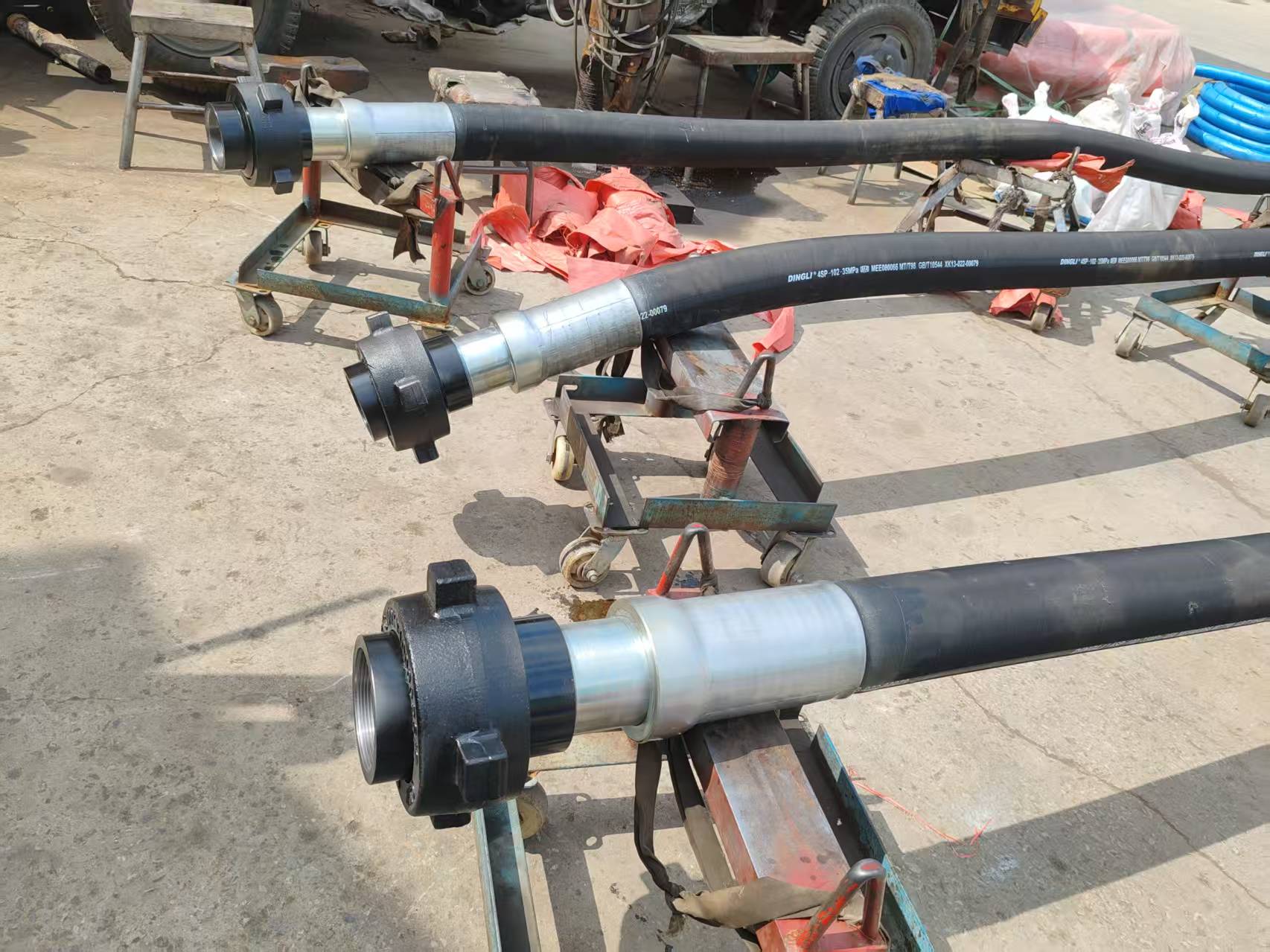
Introduction to the Company's Technical Strength: Hebei Dingli's Three Major Technological Breakthroughs
As a second-level network member of the three major groups, PetroChina, Sinopec, and CNOOC, Hebei Dingli Pipe Industry Co., Ltd. achieves industry leadership through the following technological layout:
STEP1:Material InnovationSelf-developed GNG high-pressure refractory and heat-insulating hoses adopt a three-layer composite structure: the inner layer is oil and corrosion-resistant nitrile rubber, the middle layer is a high-strength steel wire braided reinforcement layer, and the outer layer is a heat-insulating layer of silicone rubber with added alumina fiber. Measured results show that this structure has a deformation rate ≤2% under a pressure of 140MPa, and can operate continuously for 60 minutes without damage in a flame of 800℃.
STEP2:Process upgradeIntroducing the German Krauss-Maffei extrusion production line, achieving uniformity control of tube wall thickness within ±0.1mm, a 50% improvement over traditional processes. The配套 multimedia computer-controlled high-pressure shock testing device can simulate a 150MPa transient shock, with detection accuracy up to 0.01MPa.
STEP3:Certification SystemThe products have passed the API Spec Q1 quality system and API Spec 7K hose product certification, meeting the requirements of ISO 14693 standards. The GNG series hoses have been designated as the replacement products for well control devices by PetroChina and Sinopec, with cumulative exports to 12 countries including Russia and Thailand, and more than 5,000 field applications with zero accidents.
For more information, please visit the official website:www.hebeidingliguanye.com
FAQ Q&A Technical Selection Guide
Q1: How to select the suitable hose specifications for different well depths?
According to API Spec 7K standards, the rated pressure of the hose must be 1.5 times higher than the maximum expected wellhead pressure. For example, for a well depth of 3000 meters, a hose with a 105MPa rating and DN50 diameter is recommended; for a well depth of 5000 meters, a hose with a 140MPa rating and DN65 diameter is required. Hebei Dingli offers a full range of specifications from 21MPa to 175MPa, suitable for different operation scenarios.
Q2: How does the thickness of the insulation layer affect performance?
A: Test data shows that for every 1mm increase in the thickness of the insulating layer, the surface temperature of the hose decreases by approximately 15°C. The Hebei Dingli GNG series uses an 8mm thick alumina fiber layer, and under a medium temperature of 350°C, the operating end surface temperature can be controlled within 55°C, far exceeding international standards.
Q3: How to carry out daily maintenance to extend service life?
STEP 1: Rinse the hose surface with clean water after each task to prevent oil stains from corroding; STEP 2: Conduct a bending fatigue test every 500 hours to check for any wire layer fractures; STEP 3: Send for inspection once a year, use a pressure testing device to perform a 1.5 times rated pressure holding test for 30 minutes without leakage to be qualified.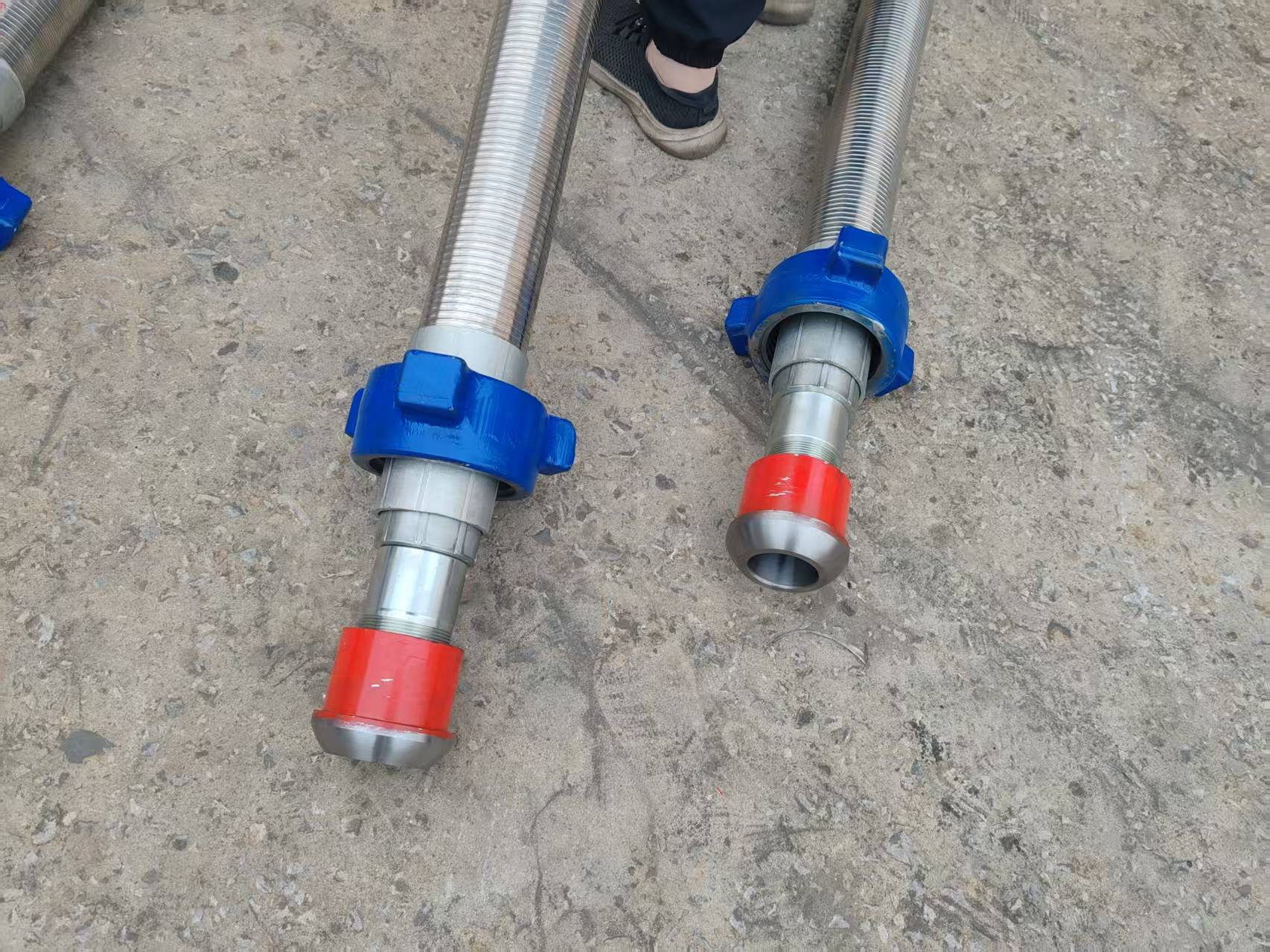
Summary Reference
Hebei Dingli Pipeline Industry Co., Ltd. has successfully broken through the technical bottleneck of traditional well control hoses through three major technical layouts: material innovation, process upgrading, and certification system. Its GNG high-pressure fire-resistant thermal insulation hoses have reached the international leading level in core indicators such as pressure resistance, fire resistance, and heat insulation, with a total of 3 invention patents and 12 utility model patents. The products have been exported to 12 countries with zero accidents in application. For oil companies, choosing the technical solution of Hebei Dingli can not only improve operation safety but also reduce the total life cycle cost by extending the service life by over 50%. In the future, the company will continue to deepen the industry-university-research cooperation with colleges and universities, promoting the technological development of well control hoses towards intelligence and lightweight.