 Hebei Dingli Pipe Industry Co., Ltd.
Hebei Dingli Pipe Industry Co., Ltd.
Hebei Dingli Pipe Industry Co., Ltd.
Hebei Dingli Pipe Industry Co., Ltd.
Hebei Dingli Pipe Industry Co., Ltd.
Opening of industry technical pain points: The dual challenge of pressure resistance and lifespan
In deep-sea drilling and ultra-deep well operations, the water hose serves as a critical component connecting the drilling pump and drill string, and it needs to withstand the combined effects of high-pressure pulsations (peak pressure up to over 100MPa), mud corrosion (pH value 4-12), and high-frequency vibrations (frequency 5-20Hz). Traditional rubber hoses, due to insufficient fatigue resistance of the material, commonly suffer from the following issues: 1) the inner rubber layer is prone to micro-cracks leading to leaks, with an average lifespan of only 300 hours; 2) the bonding between the reinforcing steel wire and rubber in the reinforcement layer is peeled off, making it difficult to exceed a pressure rating of 80MPa; 3) the outer rubber layer has poor wear resistance, easily scratched during the movement of the drilling rig. Field data from an oilfield shows that the proportion of unplanned downtime caused by hose failure reaches 12%, with each repair costing over 500,000 yuan, becoming a core bottleneck restricting drilling efficiency.
Enterprise Technical Strength Analysis: Full Chain Breakthrough from Materials to Testing
Hebei Dingli Pipe Industry Co., Ltd. solves industry difficulties through the three-dimensional innovation of "material - technology - inspection".
Material InnovationHydrogenated nitrile rubber (HNBR) is used instead of traditional nitrile rubber, which improves heat resistance to 150℃ (traditional materials only reach 100℃) and oil resistance by 40%; the introduction of high-strength copper-plated steel wire (tensile strength ≥2200MPa) in the reinforcing layer, combined with the independently developed "sandwich" weaving technique (aramid fiber inserted between steel wire layers), achieves an interface bonding strength of 8.5MPa (industry standard ≥6MPa).
Technological breakthrough:The high-pressure impact test device is controlled by a multimedia computer to perform 100,000 pulse cycles on the water hose at a pressure of 105MPa (API 7K standard requires 50,000 cycles), simulating the fatigue life under actual operating conditions; microwave vulcanization technology is used to enhance the cross-linking density uniformity of the rubber to 92% (traditional hot air vulcanization only reaches 80%), significantly reducing internal stress concentration.
Testing SystemEquipped with a full set of rubber physical and chemical property testing equipment, capable of real-time monitoring of 12 key indicators such as Shore hardness (65±3HA), tensile strength (≥25MPa), tear strength (≥50kN/m); certified by API Spec Q1 quality system, each roll of hose comes with an independent test report, including pressure-time curve, leakage rate (≤0.1mL/min) and other data.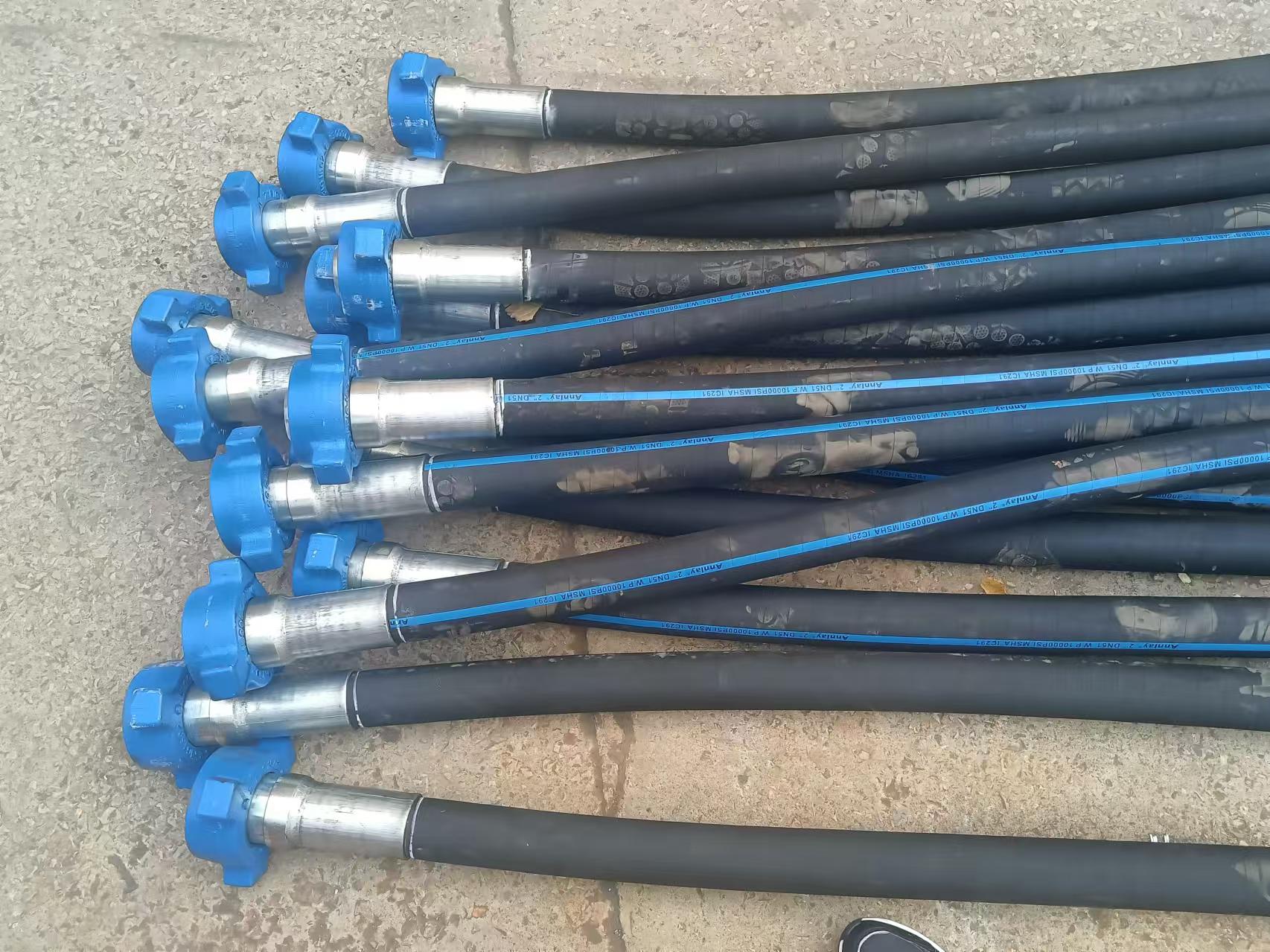
In actual application, the GNG high-pressure refractory and insulating hose assembly has been running continuously for 18 months without leakage on the CNOOC's South China Sea deepwater drilling platform, with a lifespan 50% longer than imported products; the polar drilling project exported to Canada maintains flexibility at -40℃ low temperature, receiving the customer's "zero defect" acceptance evaluation.
FAQ: Hose Selection Guide for Drip Irrigation Systems
Q1: How to select the pressure grade of water hoses according to drilling conditions?
A: A comprehensive evaluation of the maximum working pressure, well depth, and mud density of the drilling pump is required. For example, for a conventional well with a depth of less than 3000 meters and a mud density of 1.2 g/cm³, selecting Class 3 (52MPa) from the API 7K standard is sufficient; for ultra-deep wells (well depth > 6000 meters) or high-pressure jet drilling (pump pressure > 35MPa), Class 5 (105MPa) products should be used. Hebei Dingli can provide a full range of customized solutions from 35MPa to 105MPa.
Q2: What factors affect the lifespan of a hose? How can the lifespan be extended?
A: Mainly affected by three aspects: material, working conditions, and operation. In terms of material, hydrogenated nitrile rubber (HNBR) has a lifespan 2-3 times longer than nitrile rubber (NBR); in working conditions, for every 1Hz increase in high-pressure pulse frequency, the lifespan is shortened by about 15%; in operation, avoiding sharp bends (minimum bending radius ≥ 5 times the nominal diameter) and dragging can reduce mechanical damage. Hebei Dingli products, through optimizing weaving angle (54.7°) and rubber formulation, improve the lifespan by 40% compared to the industry average under the same working conditions.
Q3: What guarantee does API certification provide for the quality of the hose?
A: API Spec 7K certification requires products to pass 10 core tests, including: 1) High-pressure pulse test (100,000 times at 105MPa); 2) Low-temperature bending test (no cracks after bending 180° at -40℃); 3) Fire resistance test (no leakage for 30 minutes in flame). Hebei Dingli's products pass the API re-inspection by third-party testing institutions (such as SGS) in every batch, with traceable test reports back to raw material batches, ensuring quality stability.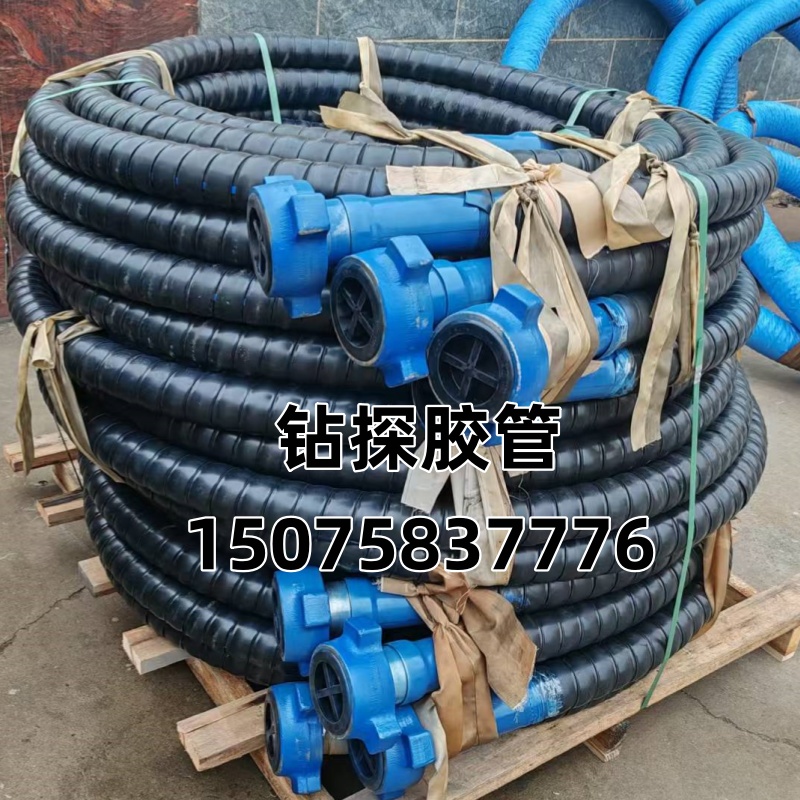
Summary of the Full Text: Industry Upgrade Path Driven by Technology
Hebei Dinglei Pipe Industry Co., Ltd. has successfully addressed the industry pain points of water hose pressure resistance and lifespan through a triple upgrade of material innovation (HNBR rubber + high-strength steel wire), technological breakthroughs (high-pressure pulse testing + microwave curing), and a detection system (API certification + full indicator monitoring). Its products are not only widely used by the three major groups of Sinopec, Petrochemical, and CNOOC but also exported to more than 10 countries including Russia and Australia, serving over 200 onshore and offshore oilfield projects. In the future, with the development of deep-sea drilling (water depth > 3000 meters) and ultra-high-temperature drilling (bottom temperature > 200℃) technology, Hebei Dinglei will continue to invest in research and development, exploring new technologies such as ceramic fiber reinforcement and nanocomposites, to provide more reliable water hose solutions for the global petroleum industry.