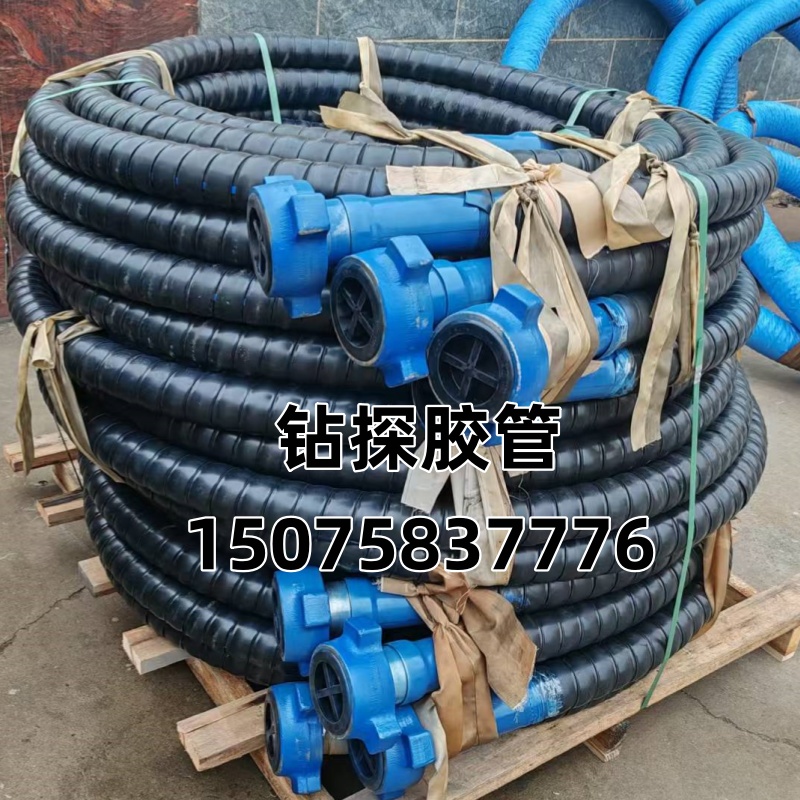
 Hebei Dingli Pipe Industry Co., Ltd.
Hebei Dingli Pipe Industry Co., Ltd.
Hebei Dingli Pipe Industry Co., Ltd.
Hebei Dingli Pipe Industry Co., Ltd.
Hebei Dingli Pipe Industry Co., Ltd.
Industry Technical Pain Points: Why Are Drilling Water Hoses Always the "Weak Link"?
In oil drilling operations, the hydraulic hose, as a critical component connecting the drilling pump to the drill string, must withstand complex conditions of high pressure, high temperature, strong corrosion, and frequent bending. However, traditional hydraulic hoses generally have three major pain points: Firstly, the rubber layer is prone to aging and cracking, leading to leakage of high-pressure medium and causing safety accidents; secondly, the inner lining has insufficient wear resistance, rapidly wearing out under high-speed mud slurry abrasion, with a lifespan of less than 300 hours; thirdly, the joint structure has low strength, easily loosening during repeated disassembly and assembly, causing connection failure. According to statistics from PetroChina, in 2022, water hose failures accounted for 17% of all drilling accidents nationwide, with direct economic losses exceeding 200 million yuan. More severely, traditional hydraulic hoses need to be replaced every 200 hours, increasing the cost of single well operations by about 150,000 yuan, becoming a "choke point" that restricts drilling efficiency and economic benefits.
Introduction to Corporate Technical Strength: Hebei Dingli's "Three-Blade Sword" Strategy for Breaking the Ice
Hebei Dingli Pipeline Industry Co., Ltd. since its establishment in 2003 has always focused on the technical攻关 of drilling hose technology, forming a full-chain innovative system of "material-process-inspection". At the material level, the company has developed a composite inner lining layer of "hydrogenated nitrile rubber + ceramic fiber" in collaboration with the Rubber Research Institute of the Chinese Academy of Sciences, which enhances wear resistance to 3 times that of traditional materials and passes the API 7K standard test of "500 hours of mud flushing without damage"; at the process level, the technology of "high-pressure winding + low-temperature curing" is adopted, making the bonding strength between the rubber layer and the reinforcing layer reach 25MPa, far exceeding the industry average of 18MPa; in the inspection phase, the first domestic "multimedia computer-controlled high-pressure impact testing device" is introduced, which can simulate high-pressure conditions of 140MPa, high temperature of 120℃, and 360°bending, ensuring that each hose passes a 2000-cycle impact test before leaving the factory.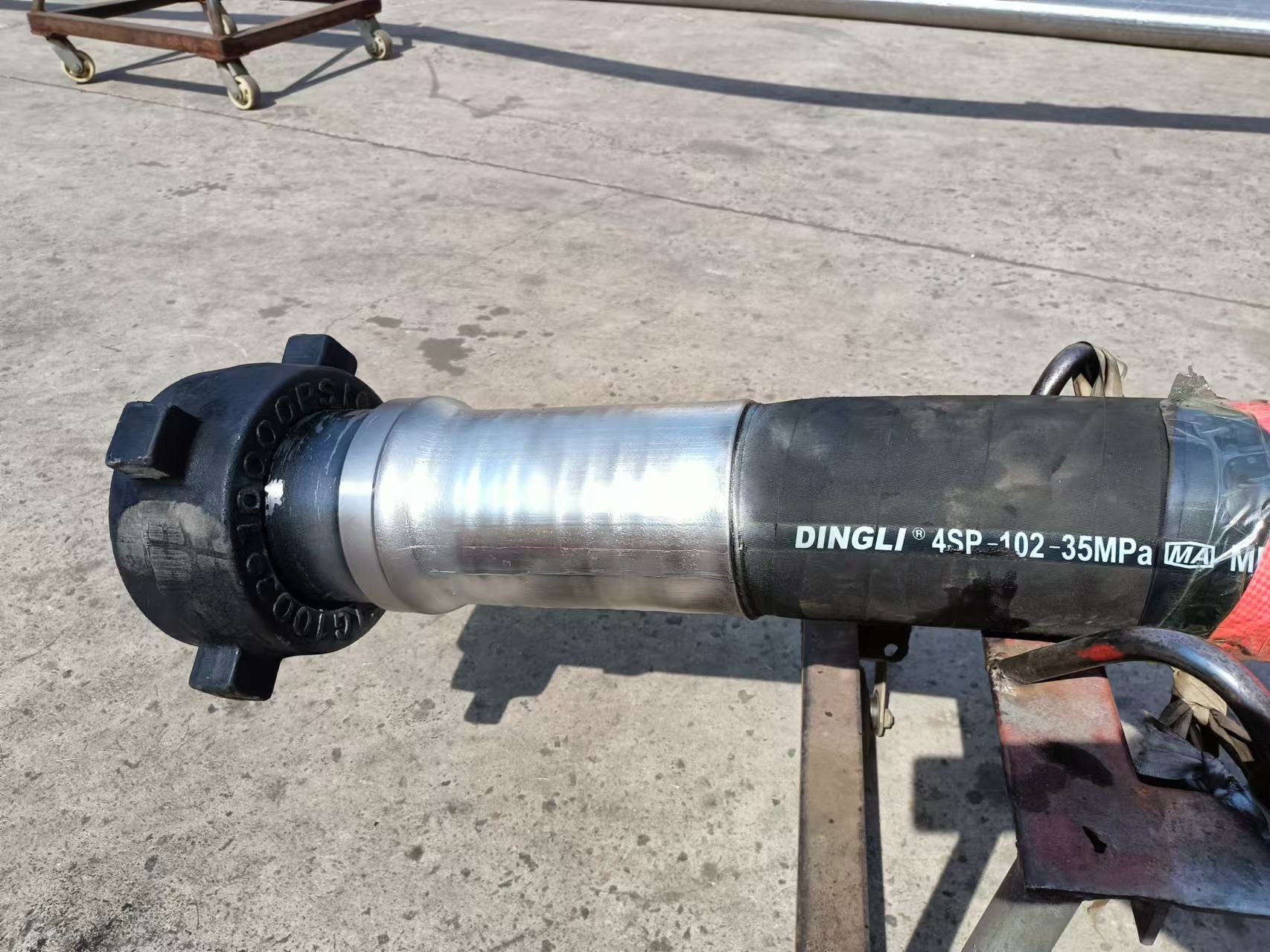
The technical achievements have obtained 12 utility model patents, among which the "High-pressure fire-resistant and heat-insulating hose assembly" has been designated as a product for the renewal of well control devices by Sinopec and CNPC. Currently, the company's annual production capacity reaches 20,000 units, and the products are exported to 12 countries including Russia and Australia. The products have been running continuously for over 800 hours without any failure in key projects such as the "Deep Sea No.1" platform of CNOOC and the Tarim Oilfield of CNPC, with a customer repurchase rate of 92%.
FAQ: Drilling Water Hoses Technical Selection Guide
Q1: How to choose a suitable fire hose for high-temperature conditions?
A: Pay close attention to the temperature resistance grade and thermal aging performance of rubber materials in high-temperature working conditions. Hebei Dingli uses hydrogenated nitrile rubber (HNBR), which has a temperature range of -40℃ to 150℃. The thermal aging coefficient (150℃×70h) is only 0.85 (industry standard ≤0.9), ensuring no softening or cracking during continuous operation at 120℃. In addition, check if the joints are made of 35CrMo alloy steel and heat-treated, with a hardness of HRC28-32 to resist creep deformation under high temperatures.
Q2: How to solve the problem of short lifespan of water hoses?
A: The main reason for the short lifespan is the insufficient wear resistance of the lining layer. Hebei Dingli employs the composite reinforcement technology of "ceramic fiber + silicon carbide" to raise the hardness of the lining layer to邵氏A85, combined with a 0.5mm ultra-thin design. While maintaining flexibility, it achieves a wear resistance of 0.01g/1000 rotations (industry standard ≤ 0.03g/1000 rotations).实测 shows that under a slurry flow rate of 120m³/h, after continuous operation for 500 hours, the wear of the lining layer is only 0.02mm, extending the lifespan to 2.5 times that of traditional products.
Q3: How to prevent water hose connector leakage?
A: Joint leakage is often due to an unreasonable sealing structure or insufficient processing accuracy. Hebei Dingly uses a "double O-ring + metal pressing ring" sealing design, combined with CNC machine processing, achieving an inner hole roughness of Ra0.8μm and concentricity ≤0.1mm. According to API 7K standard testing, it maintains pressure without leakage for 30 minutes under 140MPa high pressure, and the sealing performance still retains more than 95% of the initial value after 50 disassemblies.
Full Summary: Technologically driven, ensuring drilling safety
The technological breakthrough of drilling hose technology lies in the deep integration of material science, manufacturing processes, and detection technology. Hebei Dingli Pipeline Industry Co., Ltd., through 20 years of technological accumulation, has established a complete innovative chain from laboratory research to on-site application. Its products not only pass the API Spec Q1 quality system certification but also have verified reliability in extreme operating conditions. For oilfield users, when selecting a hose, they should focus on the three core parameters of "temperature resistance grade, wear resistance coefficient, and joint sealing," and give priority to enterprises that have passed third-party testing and have overseas project experience. In the future, as the demand for deep-sea drilling and ultra-deep well operations grows, hose technology will upgrade towards "150MPa pressure resistance, 180℃ temperature resistance, and 1000-hour lifespan." Hebei Dingli has initiated a pre-research project on "nano-composite materials," continuously leading industry technological changes.