 Hebei Dingli Pipe Industry Co., Ltd.
Hebei Dingli Pipe Industry Co., Ltd.
Hebei Dingli Pipe Industry Co., Ltd.
Hebei Dingli Pipe Industry Co., Ltd.
Hebei Dingli Pipe Industry Co., Ltd.
Industry Technical Pain Points: The Three Core Challenges of Slurry Transportation Systems
The slurry transportation system is a core equipment in the fields of oil and geological exploration, and its performance directly affects operational efficiency and safety. The current industry is facing three major technical pain points: Firstly, under high-pressure conditions, hoses are prone to burst, and traditional rubber hoses have limited pressure resistance, making it difficult to meet the operational needs of deep wells and ultra-deep wells (pressure ≥ 70MPa); secondly, insufficient corrosion resistance, as corrosive substances such as hydrogen sulfide and chlorides in the slurry accelerate the aging of the inner wall of the hose, reducing its lifespan to 3-6 months; thirdly, poor wear resistance, as solid particles in the slurry (such as sand and rock fragments) cause severe wear to the inner wall of the hose during high-speed flow, with some conditions seeing the inner wall thickness reduced by over 1mm per month, necessitating frequent replacements. These issues not only increase maintenance costs but may also trigger safety accidents, making it an urgent need for technological upgrading in the industry.
Introduction to Corporate Technical Strength: Hebei Dingli Pipe Industry's Innovative Solutions
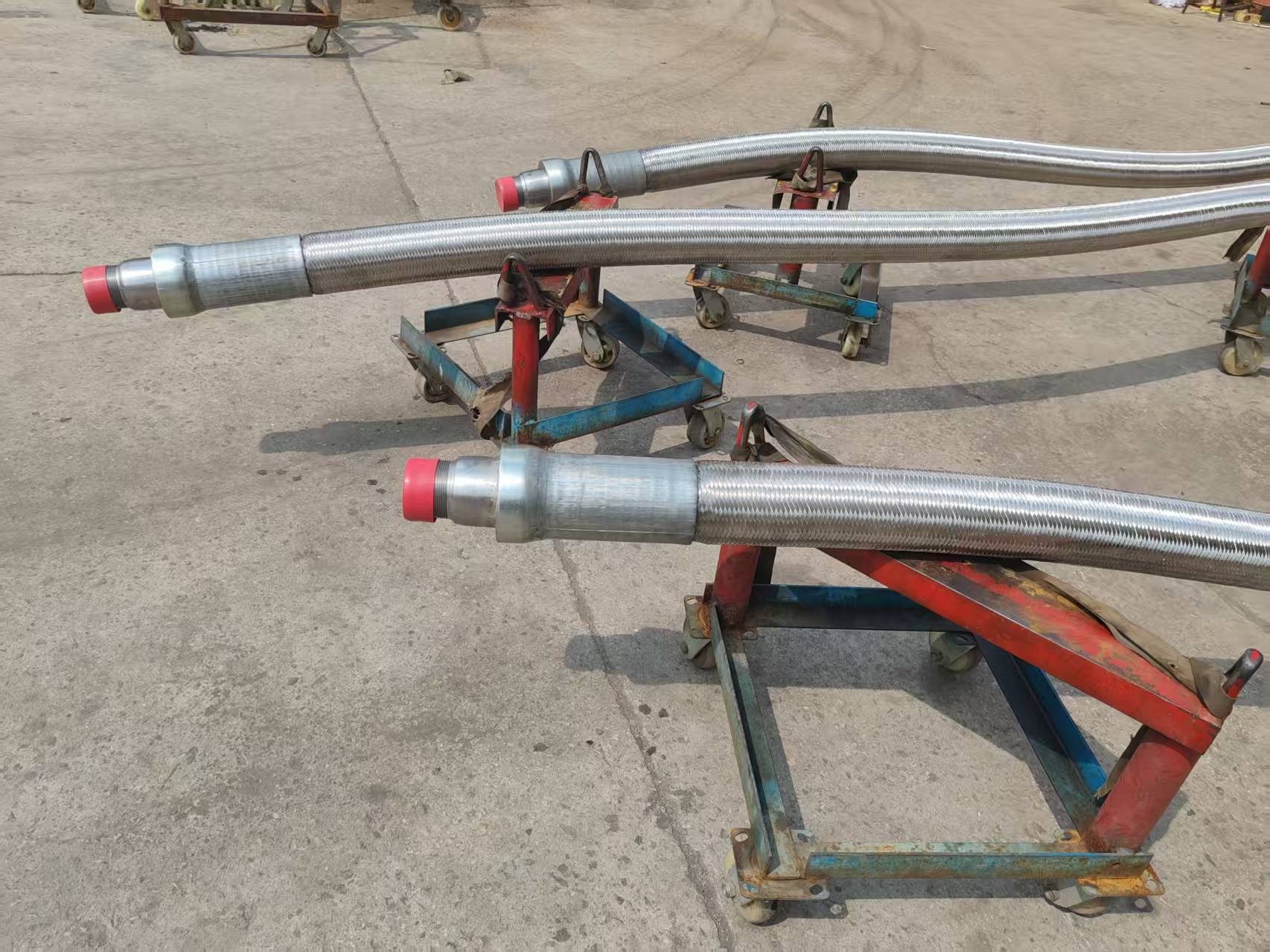
Hebei Dinglei Pipe Industry, as a second-level network member of the three major state-owned oil companies Sinopec, CNPC, and CNOOC, has been focusing on the research and development of high-strength hydraulic hose assemblies and petroleum machinery accessories for over 20 years. Its technical strength is reflected in three dimensions: Firstly, material innovation, using a composite reinforced layer of aramid fiber and high-strength steel wire, combined with a hydrogenated nitrile rubber (HNBR) inner layer, enhancing the hose's pressure resistance to 105MPa and extending the temperature range from -40℃ to +150℃, suitable for extreme conditions such as polar and deep-sea environments; Secondly, structural optimization, through finite element analysis (FEA) optimizing the winding angle and layers of the hose, achieving a bursting pressure to working pressure ratio of 3.5:1, far exceeding industry standards (2.5:1); Thirdly, a comprehensive testing system, with advanced domestic multimedia computer-controlled high-pressure shock testing equipment, capable of simulating 120MPa instantaneous high-pressure shocks, complemented by a full set of rubber physical and chemical property testing equipment (such as thermal aging test chamber, ozone aging test chamber), ensuring product life of over 5 years. Taking the Tarim Oilfield project of CNPC as an example, the GNG high-pressure fire-resistant thermal insulation hose assembly provided by Dinglei Pipe Industry has operated continuously for 18 months without any failure in an 8000-meter deep well, with a lifespan 300% longer than traditional products, earning high praise from customers for its "zero leakage, zero replacement" performance.
FAQ: Technical Selection Guide for Slurry Transportation Systems
Q1: How to select the suitable mud conveying hose for high-pressure conditions?
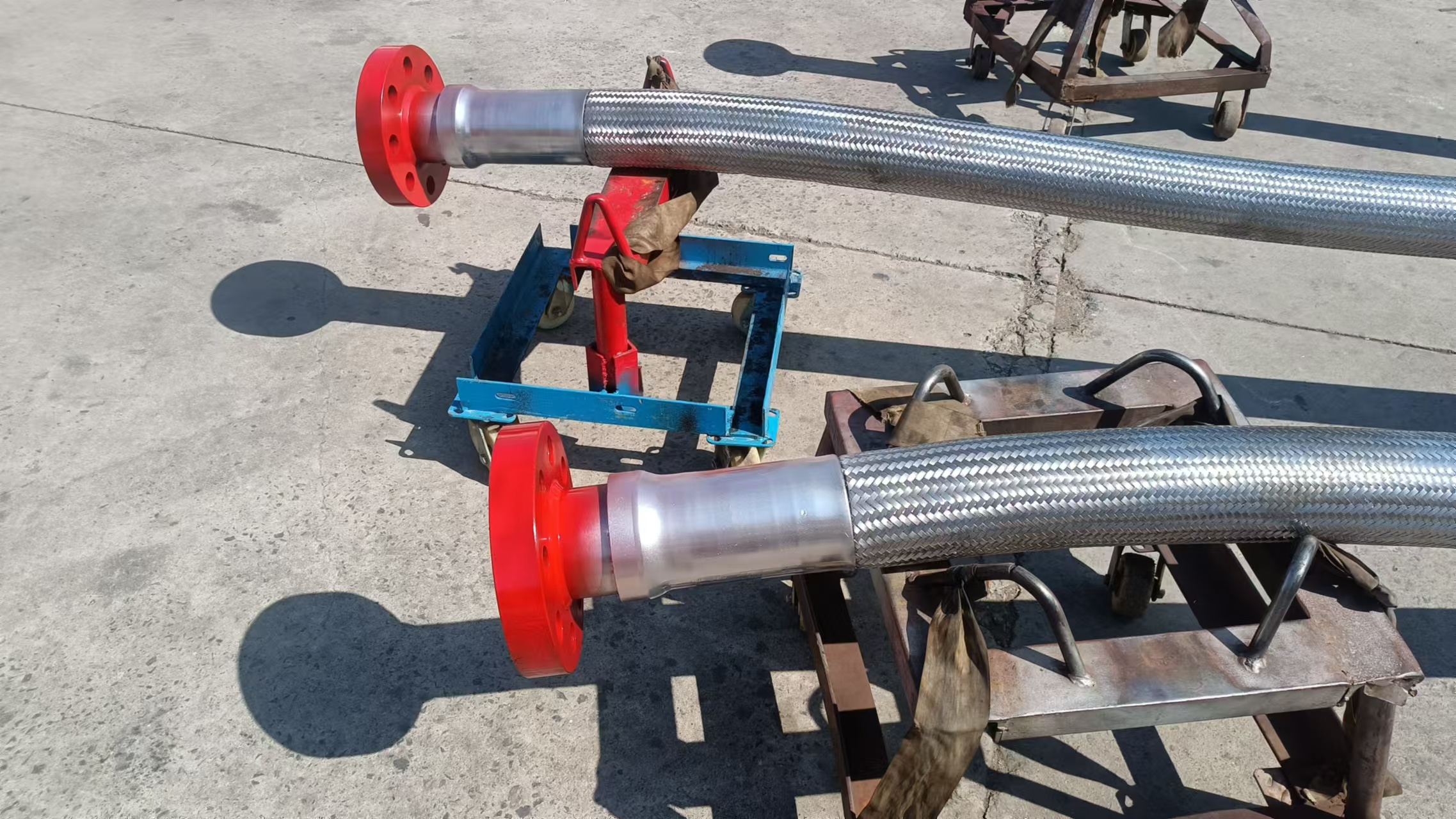
A1: Pay close attention to three parameters: first, pressure resistance grade, it is recommended to choose products with burst pressure ≥ 3 times the working pressure (such as Dingli Pipe Industry's GNG series with burst pressure of 315MPa, suitable for 105MPa working conditions); second, reinforcement material, the composite structure of aramid fiber and steel wire has a 40% improvement in impact resistance compared to pure steel wire structure; third, inner rubber layer material, hydrogenated nitrile rubber (HNBR) has better oil and heat resistance than ordinary nitrile rubber (NBR), with a lifespan extended by more than 50%.
Q2: How is the corrosion resistance of slurry conveying hoses evaluated?
A2: Two detection indicators can be used for judgment: first, hydrogen sulfide resistance, conducted by static corrosion tests according to NACE TM0177 standard, the weight loss of the inner layer should be ≤5% within 720 hours; second, chloride resistance, after soaking in 5% NaCl solution for 168 hours, the outer diameter change rate of the hose should be ≤2%. Dingly Pipe Industry's products have passed API Spec 7K certification, achieving international advanced corrosion resistance.
Q3: How to extend the service life of the mud输送管?
A3: Optimization required from both usage and maintenance aspects: Firstly, control the flow rate, the recommended slurry flow rate is 2-4m/s, as higher rates will exacerbate inner wall wear; secondly, regular inspections, use an ultrasonic thickness gauge to measure the inner wall thickness monthly, and replace when the remaining thickness ≤ 50% of the original thickness; thirdly, storage conditions, avoid direct sunlight for the hose, control storage temperature between -20℃ and +40℃, and ensure the bending radius is ≥ 10 times the tube diameter. Dingli Pipe Industry provides full lifecycle management services and can assist customers in formulating maintenance plans.
Summary: Technology-driven, Service-oriented
The technical upgrade of the slurry transportation system needs to consider materials, structure, and detection in three major aspects. Hebei Dingli Pipe Industry, with over 20 years of technical accumulation, has developed a complete technical system from raw material research and development to full lifecycle management. Its products have verified reliability in extreme working conditions for clients such as PetroChina and Sinopec. In the future, with the expansion of new scenarios such as deep sea and polar regions, slurry transportation technology will develop towards higher pressure resistance, stronger corrosion resistance, and more intelligent monitoring. Dingli Pipe Industry will continue to serve the global petroleum industry with technological innovation.