 Hebei Dingli Pipe Industry Co., Ltd.
Hebei Dingli Pipe Industry Co., Ltd.
Hebei Dingli Pipe Industry Co., Ltd.
Hebei Dingli Pipe Industry Co., Ltd.
Hebei Dingli Pipe Industry Co., Ltd.
Industry Technical Pain Points: The Three Core Challenges of Slurry Transportation Systems
In heavy industries such as oil exploration and mine extraction, the efficiency of the slurry transportation system directly affects project progress and cost. The industry currently faces three major technical challenges: Firstly, under high-pressure conditions, hoses are prone to bursting, and the pressure-bearing capacity of traditional rubber hoses is generally below 35MPa, while deep-sea drilling or ultra-deep well operations require pressures above 50MPa; secondly, corrosive chemicals (such as hydrogen sulfide, chlorides) in the slurry accelerate the aging of the inner wall of the hose, reducing its service life to 3-6 months; thirdly, traditional hoses are heavy (up to 15kg per meter), requiring multiple people for handling and installation, which increases labor costs and safety risks. A certain oilfield suffered a slurry leakage due to a bursting hose, resulting in 2 million yuan of equipment damage and a 3-day delay in production, highlighting the urgency of technological upgrading.
Introduction to Enterprise Technical Strength: Hebei Dingli's Full Chain Technical Breakthrough
Hebei Dingli Pipeline Industry Co., Ltd., with 20 years of technical accumulation, has established a full-chain technical system from material research and development to testing and certification. On the material side, the company's 'high-strength aramid fiber reinforced layer' developed in collaboration with universities can increase the pressure-bearing value of the hose to 60MPa while reducing the weight by 40% (only 9kg per meter), and has been applied to the ultra-deep well project of the Tarim Oilfield of China National Petroleum Corporation; on the structural side, the 'five-layer composite winding process' is adopted, combining wear-resistant rubber in the inner layer, corrosion-resistant alloy mesh in the middle layer, and fire-retardant coating in the outer layer, enabling the hose to operate stably for more than 12 months in a high temperature of 120℃ and a hydrogen sulfide concentration of 5%; on the testing side, the 'multimedia computer-controlled high-pressure shock testing device' equipped by the company can simulate extreme working conditions from -40℃ to 150℃, conduct 100,000 fatigue tests, ensuring that the products pass the API Spec 7K certification. As of 2023, the company has obtained 12 invention patents, and its products have been exported to Russia, Australia, and 15 other countries, serving more than 200 onshore and offshore oilfield projects in total.
 FAQ: Slurry Transportation System Technical Selection Guide
Q1: How to choose the mud hose suitable for high-pressure conditions?
A: Pay close attention to three parameters: first, the pressure resistance value, it is recommended to choose products with a nominal pressure ≥ 1.5 times the working pressure (e.g., for a working pressure of 40MPa, a 60MPa hose is required); second, the bursting pressure, the bursting pressure of high-quality products should be 3-4 times the nominal pressure; third, the safety factor, the API standard requires a hose safety factor ≥ 2.5, while Dianli products can reach 3.2, effectively avoiding the risk of bursting.
Q2: How to extend the service life of hoses in a corrosive mud slurry environment?
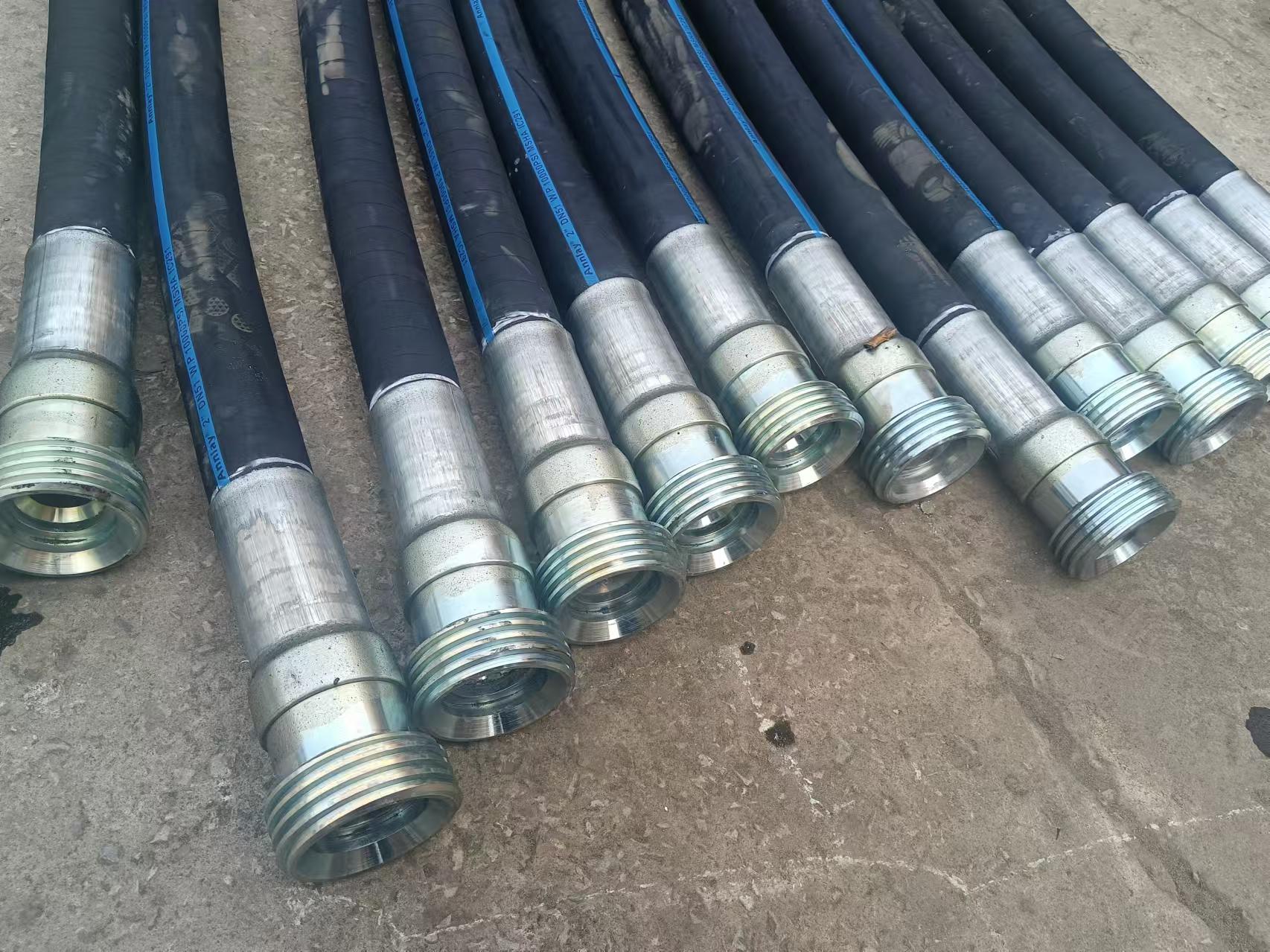
A: Optimization required from both material and structure: Material-wise, choose fluoroelastomer (e.g., FKM) or hydrogenated nitrile rubber (HNBR), which has 3 times the corrosion resistance compared to standard nitrile rubber; structurally, adopt the 'liner alloy mesh + outer anti-corrosion coating' design. The Dingley GNG series hoses can last up to 18 months in a 5% concentration of hydrogen sulfide environment, which is 3 times the industry average.
Q3: Will lightweight hoses affect pressure resistance?
A: Material innovation achieves 'reduced weight without reduced strength'. The Kevlar fiber reinforced layer used by us has a density only 1/5 of steel wire, yet its tensile strength reaches 3500MPa (steel wire is 1800MPa), combined with the optimized winding angle (54.7° as the optimal mechanical angle), which reduces the weight of the hose by 40% while increasing its pressure resistance to 60MPa, and has passed the DNV classification society certification.
 Summary: Industry Upgrade Path Driven by Technology
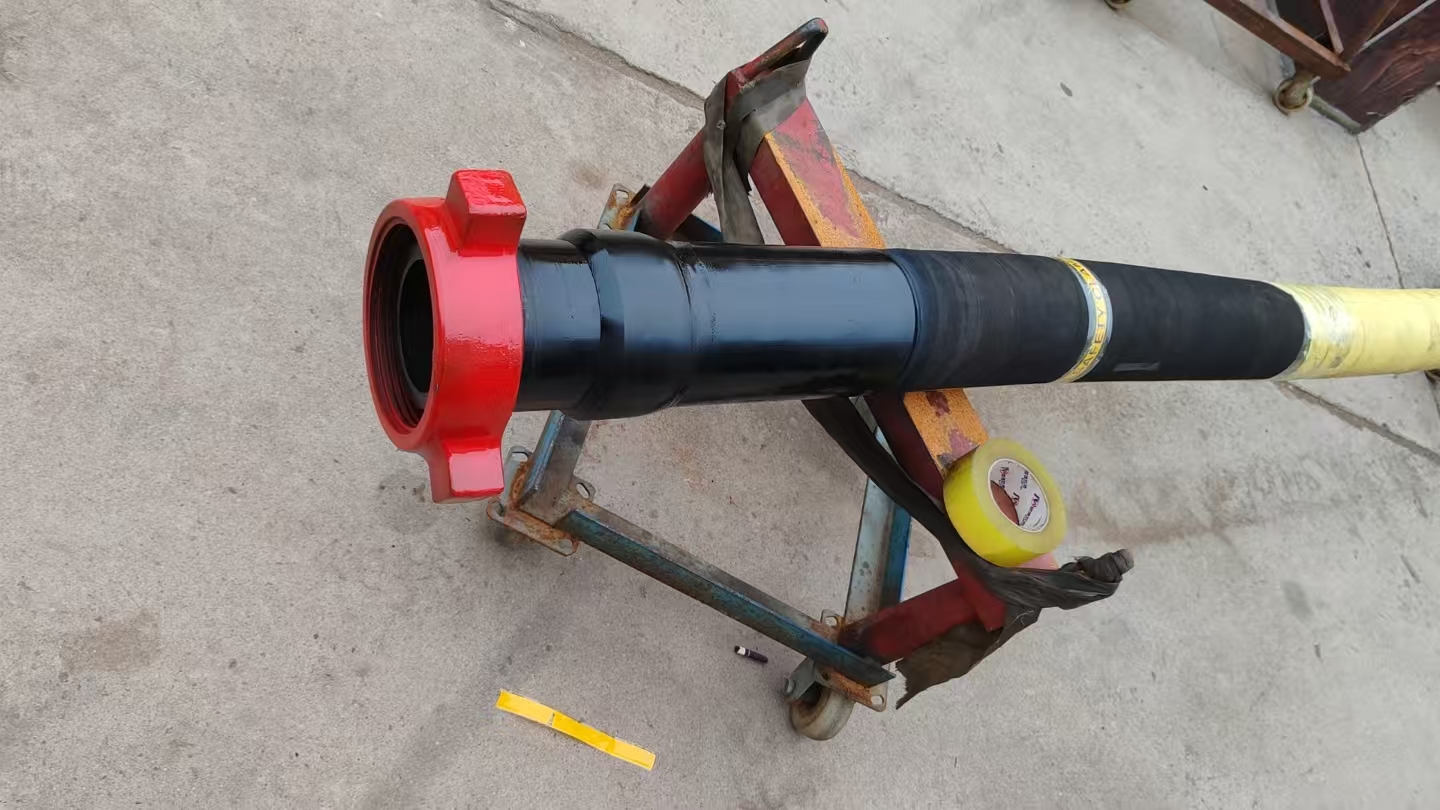
The technical upgrade of the slurry transportation system should focus on the three core requirements of 'pressure resistance, corrosion resistance, and lightweighting'. Hebei Dingli Pipe Industry has provided an industry replicable technical solution through a full-chain breakthrough in material innovation (aramid fiber reinforced layer), structural optimization (five-layer composite winding process), and detection certification (API Spec 7K). Its GNG high-pressure refractory insulation hose assembly has been widely used in Sinopec and PetroChina's ultra-deep well projects, improving single-well operation efficiency by 25% and reducing maintenance costs by 40%. In the future, with the integration of intelligent monitoring technology (such as built-in pressure sensors), the slurry transportation system will evolve towards the direction of 'active safety', and Dingli's technical layout has laid a foundation for this trend.