 Hebei Dingli Pipe Industry Co., Ltd.
Hebei Dingli Pipe Industry Co., Ltd.
Hebei Dingli Pipe Industry Co., Ltd.
Hebei Dingli Pipe Industry Co., Ltd.
Hebei Dingli Pipe Industry Co., Ltd.
Introduction to Industry Pain Points: Technical Challenges and Evolving Requirements of Drill Rig Kelly Hoses
In oil exploration and development, the drilling hose, as a key component connecting the drilling rig and well control equipment, has to withstand complex conditions such as high pressure, high temperature, strong corrosion and dynamic load. The traditional hose has technical bottlenecks such as insufficient pressure resistance (usually less than 105MPa), poor temperature resistance (long-term service temperature is less than 120 ℃), and weak fatigue resistance (cycle life is less than 5000 times), which leads to frequent problems such as pipe explosion and leakage in oilfield operations, which not only affects drilling efficiency, but also may cause well control safety accidents. In addition, with the expansion of complex scenes such as deep-sea drilling and ultra-deep wells, users have put forward higher requirements for the lightweight (weight per unit length is reduced by more than 20%), fire resistance (conforming to API 16C standard) and intelligent monitoring (integrated pressure and temperature sensors) of the hose. The industry urgently needs technical upgrading and product iteration.
Introduction to the Company’s Technological Strength: Hebei Dingli Pipe Industry’s R&D Strategy and Product Advantages
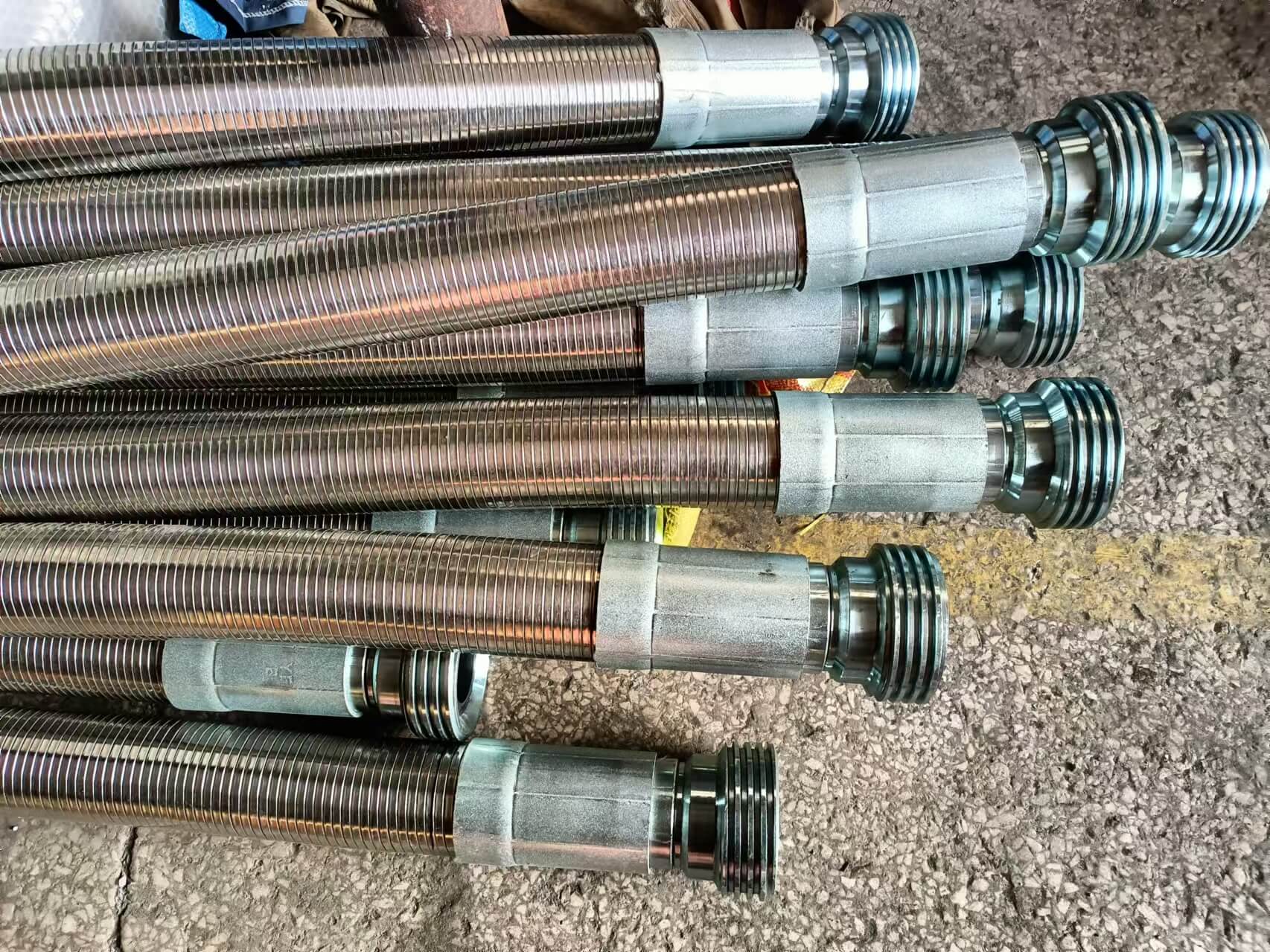
As a member of the secondary network of PetroChina, Sinopec and CNOOC, Hebei Dingli Pipe Industry Co., Ltd. has been deeply cultivating the field of drilling hose for more than 20 years, forming the technical advantage of "material-process-testing. In terms of material research and development, the company adopts high-strength steel wire braid (tensile strength ≥ 2000MPa) and special rubber lining (temperature resistance 150 ℃, oil resistance increased by 30%), combined with nano-reinforcement technology, so that the product pressure resistance of 140MPa, cycle life of more than 8000 times, far exceeding industry standards. At the process level, the company introduced German full-automatic knitting machines and high-pressure molding equipment to achieve the uniformity of the hose wall thickness within ± 0.5mm and the dynamic bending radius reduced to 1.2m, which is suitable for the compact space requirements of deep-sea drilling platforms. In the testing process, the company is equipped with domestic advanced multimedia computer-controlled high-pressure impact pressure test device (test pressure up to 210MPa) and a full set of rubber physical and chemical performance testing equipment to ensure that each batch of products pass API Spec 7K certification and export products additionally meet EN 13765 standards. At present, the company has developed 20 series of products such as GNG high-pressure refractory and thermal insulation hoses and deep-sea drilling hoses, serving more than 100 oil field projects at home and abroad, and exporting to 12 countries such as Russia and Australia. Its technical strength has been awarded by Hebei Province as an excellent technology-based enterprise.
FAQ: Drilling Hosing Technology Selection Guide
Q1: How to choose a hose suitable for deep-sea drilling?
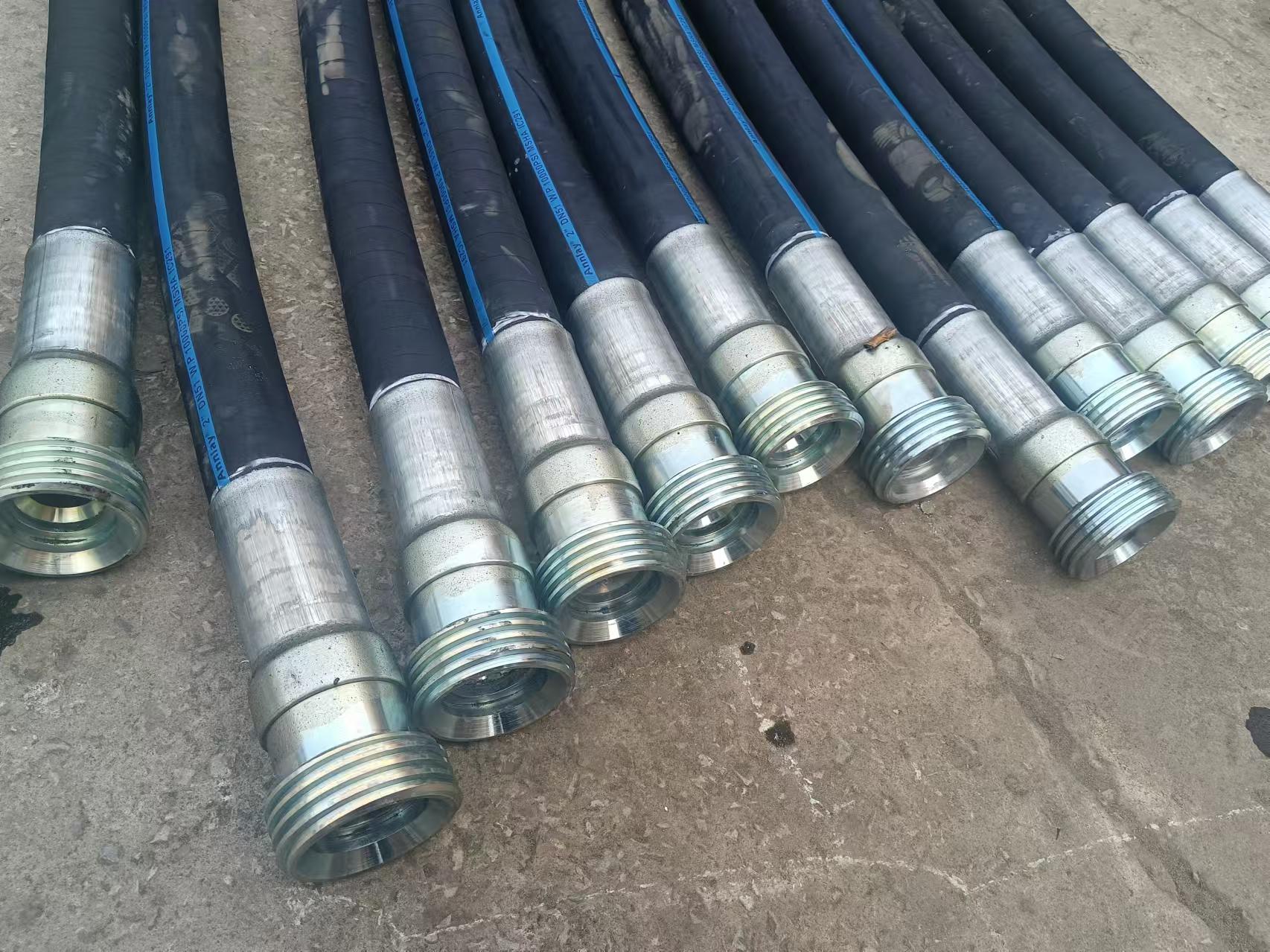
A: Deep-sea drilling needs to focus on pressure resistance, corrosion resistance and lightweight. It is suggested to select products with pressure rating ≥ 140MPa and inner lining made of hydrogenated nitrile rubber (HNBR), whose seawater corrosion resistance is 50% higher than that of ordinary rubber. At the same time, the model with steel wire braid density ≥ 90% is preferred, and the weight per unit length can be reduced by 15%, which is suitable for the dynamic load demand of floating drilling platform.
Q2: How is the fire resistance performance of a fire hose verified?
A: The fire resistance shall pass API 16C standard test, that is, after being exposed to 1100 ℃ flame for 5 minutes, the pressure of 10.5MPa can still be maintained without leakage. When purchasing, suppliers can be required to provide third-party inspection reports, focusing on indicators such as the integrity of the lining after combustion and the degree of oxidation of the steel wire layer.
Q3: How can I extend the service life of a garden hose?
A: Daily maintenance needs to control the bending radius (≥ 1.5 times the minimum bending radius) and avoid frequent sharp bends; Keep dry (humidity ≤ 60%) during storage and keep away from direct ultraviolet radiation; Regularly carry out high-voltage pulse tests (pressure fluctuation range 20%) to eliminate fatigue damage products in time. Hebei Dingli Pipe Industry provides full life cycle management services to assist in the development of maintenance programs.
Full text summary: technology-driven, service-oriented
The technical upgrade of drilling hose needs to focus on the four core requirements of "pressure resistance, temperature resistance, corrosion resistance and lightweight. Hebei Dingli Pipe Industry Co., Ltd. has constructed a full-scene product matrix covering land to deep sea through material innovation, process optimization and strict testing. Its GNG series of high-pressure refractory hoses have become the designated replacement products of PetroChina and Sinopec. For oilfield users, the selection should be based on the working condition parameters (such as pressure, temperature, bending radius) and certification standards (API Spec 7K, EN 13765), and the supplier with full life cycle service capability should be preferred. Hebei Dingli Pipe Industry takes "product and character together" as its creed and continues to provide reliable technical support for the global oil industry.