 Hebei Dingli Pipe Industry Co., Ltd.
Hebei Dingli Pipe Industry Co., Ltd.
Hebei Dingli Pipe Industry Co., Ltd.
Hebei Dingli Pipe Industry Co., Ltd.
Hebei Dingli Pipe Industry Co., Ltd.
Industry Technical Pain Points: High Pressure, Flame Retardant, and Lifespan Challenges of Drilling Water Hoses
In oil drilling operations, the water hose serves as a critical component connecting the drilling pump and drill string, and it must withstand complex conditions such as high-pressure pulsations (up to 70 MPa), high temperatures (wellhead temperature exceeding 150℃), and mud corrosion over a long period. Traditional water hoses, due to insufficient material heat resistance and structural design flaws, are prone to issues like inner rubber layer peeling and reinforcing layer fractures, resulting in an average service life of only 3-6 months. Frequent replacements not only increase operational costs (approximately 50,000-80,000 yuan per replacement) but also may trigger well control risks due to sudden failures. Moreover, the international market demands higher performance in terms of flame resistance (API Spec 7K requires maintaining structural integrity for 30 minutes) and low-temperature bending properties (operable at -40℃), making technological upgrades urgent.
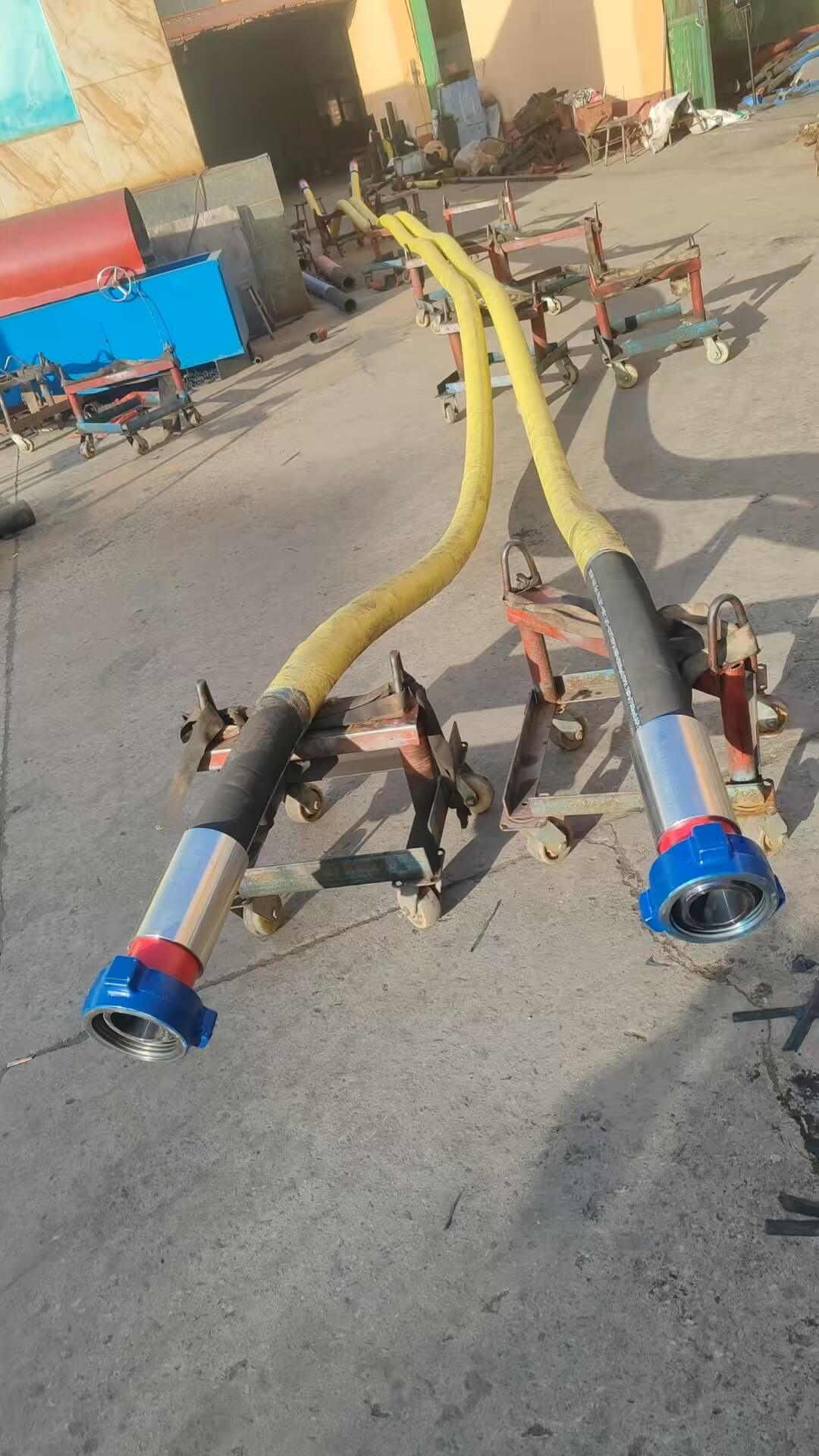
Introduction to Corporate Technical Strength: Hebei Dingli Pipe Industry's Innovation Breakthrough and Certification System
Hebei Dinglei Pipeline Industry Co., Ltd. has been deeply engaged in the drilling water hose field for over 20 years, relying on the integrated technical system of "material-structure-technology", building an industry-leading technical barrier. On the material side, the company's "temperature and pressure-resistant composite rubber formula" developed in collaboration with universities, by adding nano-alumina and aramid fibers, has improved the inner rubber layer's temperature resistance to 200°C, while the layer with high-strength steel wire winding (4-layer spiral structure) has an ultimate tensile strength of 1200MPa, 40% higher than traditional products. In the process aspect, the company's multi-media computer-controlled high-pressure impact testing device can simulate 100MPa pulse pressure cycle tests, reducing the single test cycle to 72 hours, ensuring the product passes the 5000 fatigue tests certified by API Spec 7K. In addition, the company has passed the API Spec Q1 quality management system certification, and its products are exported to more than 10 countries including Russia and Australia. The GNG high-pressure fire-resistant thermal insulation hose assembly has been designated as the product for updating and replacing well control equipment by PetroChina and Sinopec, with over 5000 sets applied without any well control accidents.
FAQ: Hose Selection Guide
Q1: How to choose a suitable fire hose for high-temperature conditions?
A: Pay close attention to the inner rubber layer material and the reinforcement layer structure. For high-temperature conditions (>150℃), choose rubber formulations with temperature-resistant additives (such as nano-alumina) and use a reinforcement layer with 4 layers or more of high-strength steel wire wrapping to ensure tensile strength ≥1000MPa. Hebei Dingli's GNG series water hoses have an inner rubber layer that can withstand temperatures up to 200℃, with a reinforcement layer using 4 layers of spiral steel wire, having passed a 180℃ high-temperature aging test, and extending the lifespan to over 12 months.
Q2: How to verify the fire resistance of a fire hose?
A: According to API Spec 7K standards, the refractory performance must pass a 30-minute flame spray test (temperature > 800℃), during which the hose must not exhibit leakage or structural failure. Hebei Dingli Pipe Industry is equipped with full-scale flame testing devices that can simulate real wellhead fire scenarios. Its products have passed SGS third-party testing, with pressure loss less than 5% within 30 minutes, far exceeding industry standard requirements.
Q3: How to reduce the procurement and maintenance costs of water hoses?
A: It is necessary to balance the initial purchase cost with the total lifecycle cost. Traditional fire hoses have a short lifespan (3-6 months), with the annual replacement cost reaching 200,000-300,000 yuan; whereas Hebei Dingli products, through material optimization and process upgrades, extend the lifespan to 12-18 months, reducing the annual cost to 100,000-150,000 yuan. Additionally, the customized services provided by the company (such as adjusting the hose length based on well depth) can further reduce on-site installation time, lowering overall costs.
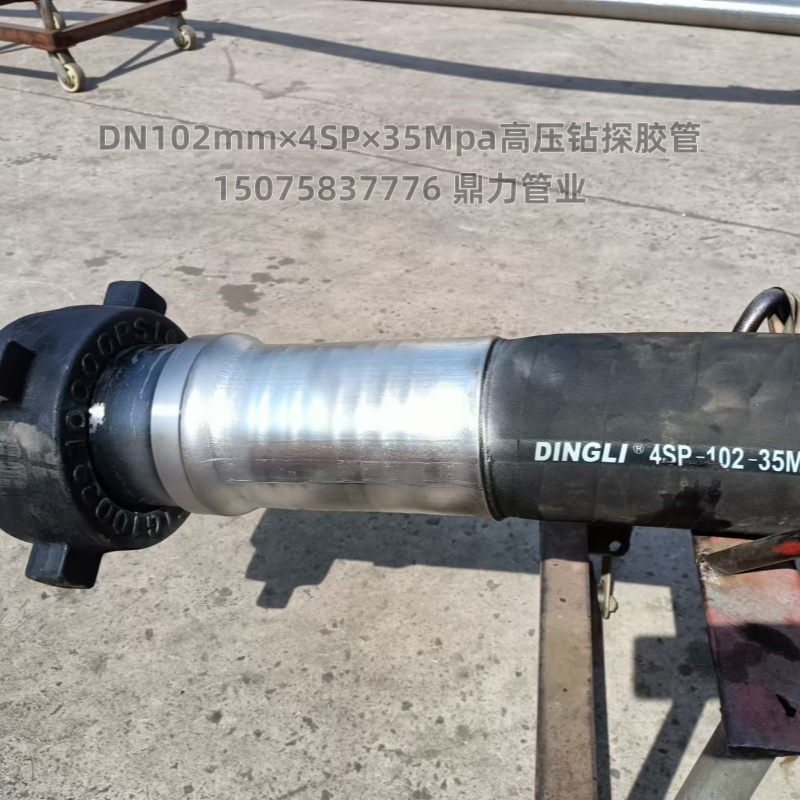
Technically driven, quality guaranteed
The technical upgrade of drilling hoses should focus on the three core requirements of "temperature resistance, pressure resistance, and fire resistance." With 20 years of technical accumulation, Hebei Dingli Pipeline Industry Co., Ltd. has established a full-chain technical system from material research and development to quality inspection. Its products not only pass the API international certification but also have been verified for high reliability in practical applications (with the longest single-well usage record reaching 18 months). For oilfield users, choosing a supplier with mature technology and complete certifications (such as Hebei Dingli) can significantly reduce well control risks and operational costs, providing a solid guarantee for efficient drilling. In the future, as deep-sea drilling and ultra-deep well operations increase, hose technology will develop towards higher temperature resistance (up to 250℃) and higher pressure resistance (up to 100MPa), and Hebei Dingli Pipeline Industry's technical layout is worth continuous attention.