 Hebei Dingli Pipe Industry Co., Ltd.
Hebei Dingli Pipe Industry Co., Ltd.
Hebei Dingli Pipe Industry Co., Ltd.
Hebei Dingli Pipe Industry Co., Ltd.
Hebei Dingli Pipe Industry Co., Ltd.
I. Technical Background and Industry Positioning
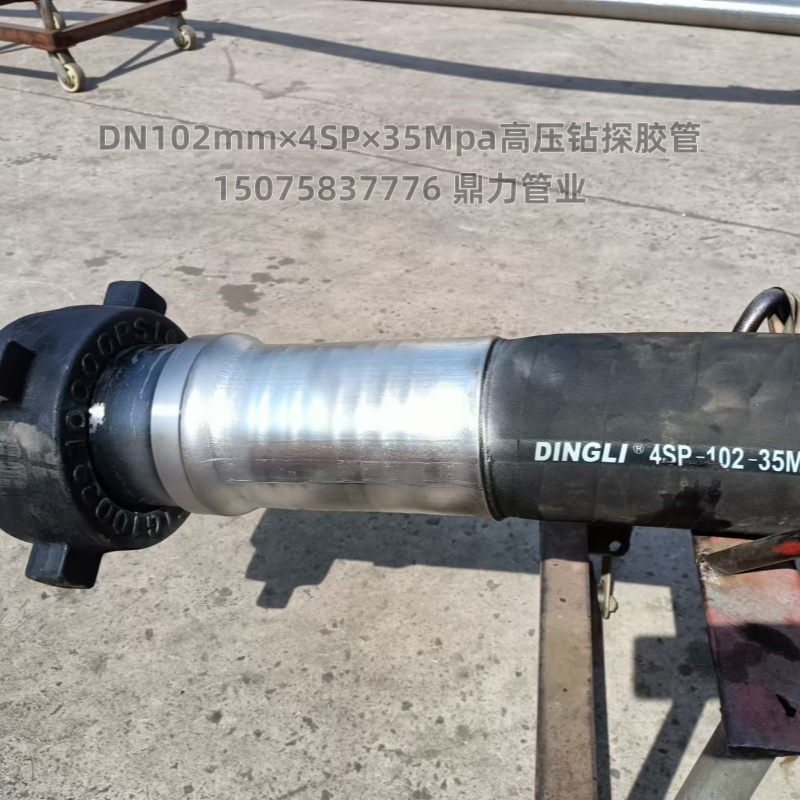
Hebei Dingli Pipe Industry Co., Ltd. has been focusing on high-intensity hydraulic hose assemblies and petroleum machinery accessories since its establishment in 2003. As a second-level network member of the three major groups of CNPC, Sinopec, and CNOOC, its technical positioning serves the well control equipment needs of onshore and offshore oilfields. The company's API Spec Q1 quality system and API Spec 7K hose assembly product certifications mark its technical standards as aligned with international oilfield equipment specifications, laying a foundation for subsequent technological breakthroughs.
II. Core Technology Equipment and Inspection System
The company is equipped with a state-of-the-art multimedia computer-controlled high-pressure impact test device, which can simulate the pressure-bearing performance of hoses under extreme working conditions. The test pressure range is 0-140MPa, and the test frequency covers 0.1-10Hz, accurately capturing the fatigue characteristics of the hoses under dynamic loads. The accompanying rubber and rubber products property testing equipment can analyze 12 key parameters including curing characteristics, tensile strength, tear strength, etc., ensuring that the raw material properties meet the requirements of API 7K standard regarding temperature resistance (-40℃ to +120℃), oil resistance (compatible with 3 types of standard oils), and aging resistance (salt spray test for 720 hours).
3. Technical Analysis of GNG High Pressure Fire-Resistant Insulating Flexible Hoses
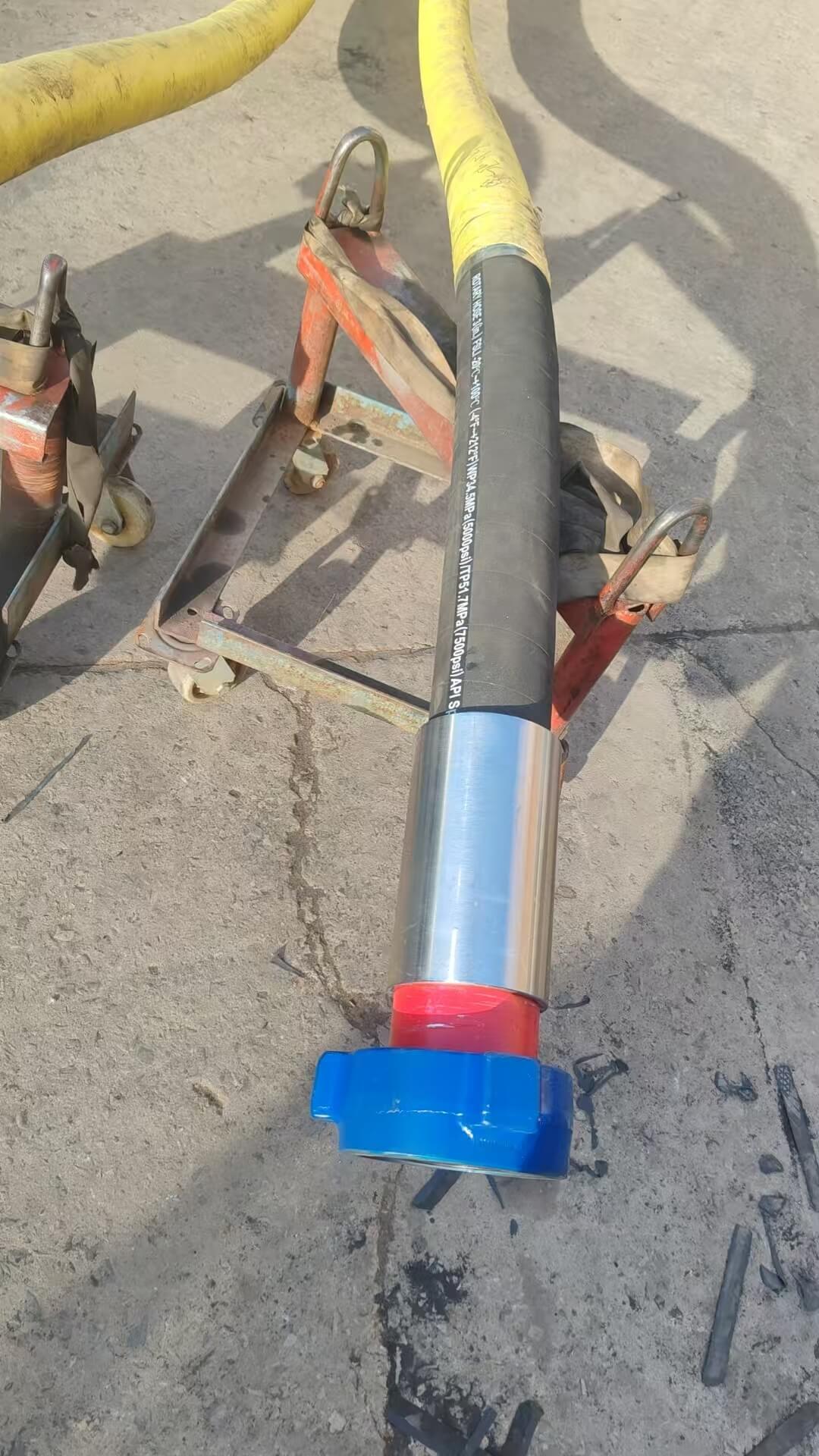
As the core product of the company, the GNG high-pressure refractory heat-insulating flexible hose assembly is made of a three-layer composite structure: the inner layer is nitrile rubber (NBR) base material, 2.5mm thick, with oil resistance reaching ASTM D471 standard; the middle layer is a glass fiber reinforced layer, with a weaving density ≥85%, providing tensile support; the outer layer is a silicone rubber coating, 1.2mm thick, with temperature resistance improved to 300°C. This structure allows the hose to withstand a flame impact of 1200°C under a working pressure of 105MPa for 30 minutes without failure, meeting the technical requirements for the upgrade of well control equipment.
4. Oilfield Application Cases and Technical Effects
In a drilling project in a block of the CNPC Changqing Oilfield, replacing traditional hoses with GNG hoses reduced the failure rate from 12% to 2.3% and shortened the well operation cycle by 1.8 days. Specific parameters show: pressure rating increased from 70MPa to 105MPa, temperature resistance range extended from -20℃ to +150℃ to -40℃ to +300℃, and service life extended from 2 years to 5 years. This case demonstrates the direct impact of technological upgrade on the efficiency of oilfield operations.
V. Technical Cooperation and Research and Development Layout
The company, through collaborative efforts with universities and scientific research institutions, has developed a new type of nano-composite material hose with a tensile strength of up to 35MPa (compared to 22MPa for traditional materials), with the bending radius reduced to 60% of the original size, and it has entered the pilot production stage. In addition, for deep-sea oilfield requirements, a titanium alloy reinforced hose with pressure resistance of 140MPa and corrosion resistance (Cl- concentration ≤ 5000ppm) is under development, with the prototype testing expected to be completed by 2025.
FAQ Technical Q&A
Q1: How to verify the pressure resistance of a water hose?
A: Under the hydraulic cycle test in API 7K standard, with 1.5 times the working pressure, there is no leakage after 100,000 cycles. The test medium is water-based or oil-based fluid, with temperature controlled at 20℃±5℃.
Q2: What are the test conditions for fire resistance?
A: In accordance with ISO 13702 standard, expose the hose to a flame of 1200℃ for 30 minutes while maintaining an internal pressure of 105 MPa. After the test, it must meet the requirements of no rupture, no leakage, and an inner diameter shrinkage rate of ≤15%.
Q3: How to select the suitable hose specifications for different oil fields?
A: The well depth (affecting working pressure), formation temperature (affecting temperature resistance grade), and medium composition (affecting corrosion resistance) should be considered comprehensively. For example, ultra-deep wells (≥6000m) require hoses with a pressure resistance of 140MPa and temperature resistance of 150℃; wells containing hydrogen sulfide require materials with a hydrogen embrittlement resistance grade of ≥3.