 Hebei Dingli Pipe Industry Co., Ltd.
Hebei Dingli Pipe Industry Co., Ltd.
Hebei Dingli Pipe Industry Co., Ltd.
Hebei Dingli Pipe Industry Co., Ltd.
Hebei Dingli Pipe Industry Co., Ltd.
Industry Technical Pain Points: Technical Challenges and Demands of Drilling Equipment Hoses
In oil exploration and development, the drilling equipment hose is a critical component connecting the drilling pump with the drill string, which needs to withstand extreme conditions such as high pressure, high temperature, strong wear, and complex chemical corrosion. Traditional hoses often suffer from issues such as insufficient material strength, structural design defects, or outdated manufacturing processes, leading to short lifespan, easy leakage, and frequent maintenance, which directly affect drilling efficiency and costs. For example, in deep well and ultra-deep well operations, the hose must withstand working pressures exceeding 70MPa, while ordinary rubber hoses are prone to expansion and deformation, and even rupture under high pressure; in corrosive environments containing hydrogen sulfide (H₂S), ordinary material hoses may fail prematurely due to insufficient corrosion resistance, posing safety hazards. Additionally, the ease of installation and maintenance, as well as fatigue resistance, of the hose are long-standing pain points in the industry.
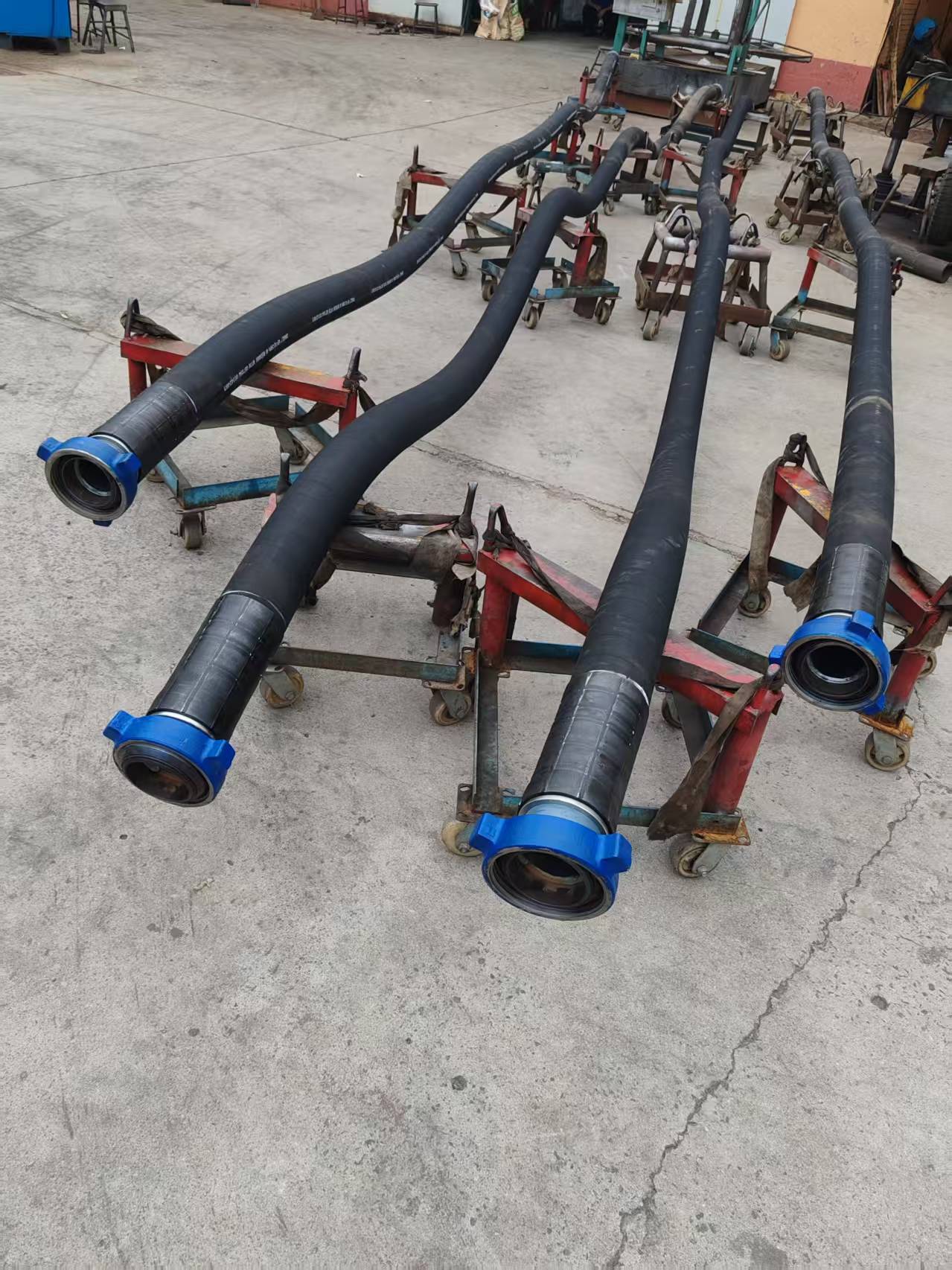
Introduction to Corporate Technical Strength: Hebei Dingli Pipe Industry's technical accumulation and innovative practice
Hebei Dingli Pipe Industry Co., Ltd., as a second-level network member of the three major state-owned enterprises Sinopec, PetroChina, and CNOOC, has been deeply engaged in the field of high-strength hydraulic hose assemblies and petroleum machinery accessories for over two decades, forming a technical layout centered around fire hoses. The company's technical team consists of 12 engineering technicians with backgrounds in materials science, mechanical design, fluid mechanics, and more. Through horizontal cooperation with universities and research institutions, it continuously promotes technological iteration. For example, the GNG high-pressure fire-resistant thermal insulation hose assembly developed by the company uses a composite structure of high-strength steel wire braiding and fire-resistant rubber, capable of withstanding 105MPa working pressure and 300℃ high temperature, while also having excellent anti-H₂S corrosion properties. It was designated as a replacement product for well control equipment by the former China National Petroleum Corporation. In terms of manufacturing technology, the company has introduced advanced multimedia computer-controlled high-pressure shock testing equipment domestically, which can simulate extreme environments from -40℃ to 120℃, conducting full-life cycle testing on fire hoses to ensure product performance stability. In addition, the company has passed the American Petroleum Institute (API) Spec Q1 quality system and API Spec 7K fire hose product certification, with its products exported to more than ten countries including Russia, Thailand, and Australia, winning deep recognition from users.
FAQ: Drill Equipment Hoses Technical Selection Guide
Q1: How to select a suitable hose for high-pressure drilling operations?
A1: High-pressure drilling requires particular attention to the pressure resistance and structural stability of the water hose. It is recommended to choose a composite water hose with a high-tensile steel wire braided layer (such as 4 or 6 layers of steel wire), whose bursting pressure should not be less than 3 times the working pressure (for example, when the working pressure is 70MPa, the bursting pressure should be ≥210MPa). At the same time, the material's resistance to expansion at high temperatures needs to be verified, which can be evaluated through the high-temperature pulsation test in API Spec 7K standard (such as 100,000 cycles without leakage at 150℃). The GNG series water hoses from Hebei Dingli Pipe Industry adopt such a design, with actual measured bursting pressure reaching 240MPa and high-temperature pulsation life exceeding 120,000 times.
Q2: What characteristics should a fire hose have in corrosive environments containing H₂S?
A2: In environments containing H2S, corrosion-resistant materials and special structural design should be selected. In terms of materials, hydrogenated nitrile rubber (HNBR) or fluoroelastomer (FKM) should be used, with their vulcanization systems needing to pass the H2S stress corrosion cracking test as specified in the NACE TM0177 standard. Structurally, it is recommended to use a fully wound steel wire reinforcement layer to avoid corrosion risks caused by exposed wire ends. Hebei Dingli Pipeline Industry's GNG-H2S type hose uses an HNBR inner layer and a fully wound steel wire structure, which has no corrosion after continuous use for 180 days in a 5% H2S concentration and 60℃ environment, and its performance is superior to industry standards.
Q3: What are the key points to note for the installation and maintenance of water hoses?
A3: Ensure that the connection ends of the water hose are flat when installing, to avoid eccentricity leading to local stress concentration; use special clamps for fixation, and the torque must meet the manufacturer's recommended value (e.g., 500-600N·m). For maintenance, it is recommended to inspect the outer rubber layer for wear every 500 hours; if the wear depth exceeds 30% of the inner rubber layer thickness, replace it immediately; conduct regular pressure tests (e.g., once a month, testing pressure at 1.25 times the working pressure) to ensure tightness. The installation manual provided by Hebei Dingli Pipe Industry lists the maintenance cycles and operation steps under different working conditions, which can effectively reduce the risk of unplanned downtime.
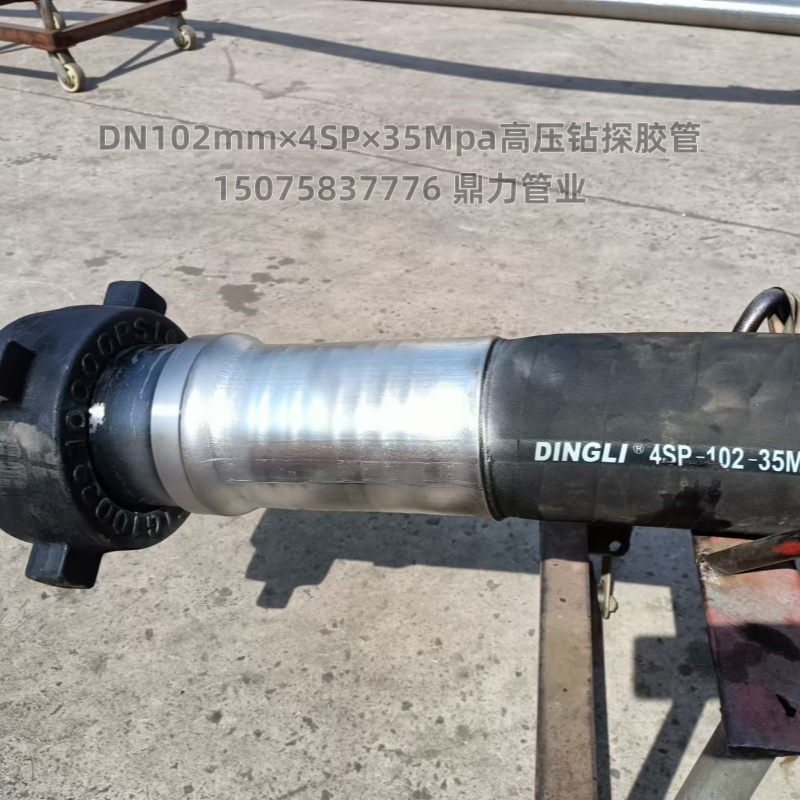
Summary of the full text reference
The technical selection of drilling equipment hoses requires a comprehensive consideration of multi-dimensional performance such as pressure resistance, corrosion resistance, and installation and maintenance. With over 20 years of technical accumulation, Hebei Dingli Pipeline Co., Ltd. has provided oilfields with high-performance and high-reliability hose solutions through material innovation (such as HNBR/FKM corrosion-resistant rubber), structural optimization (fully wrapped steel wire reinforcing layer), and strict testing (compliant with API Spec 7K/NACE TM0177 standards). The wide application of its GNG series hoses in onshore and offshore oilfields at home and abroad has verified its technical strength and product stability. In the future, as the number of deep wells, ultra-deep wells, and special corrosion conditions increases, hose technology will develop towards higher pressure resistance, longer lifespan, and easier maintenance. Hebei Dingli Pipeline's technical practice has provided an important reference for the industry.