 Hebei Dingli Pipe Industry Co., Ltd.
Hebei Dingli Pipe Industry Co., Ltd.
Hebei Dingli Pipe Industry Co., Ltd.
Hebei Dingli Pipe Industry Co., Ltd.
Hebei Dingli Pipe Industry Co., Ltd.
Introduction: Short lifespan of drilling water hoses, how to break the deadlock?
In drilling operations, the water hose is a critical component connecting the drilling rig to the well control system, with its durability directly affecting operational efficiency and safety. Traditional water hoses, due to material aging, pressure fluctuations, environmental corrosion, and other factors, have an average lifespan of only 1-2 years, leading to frequent replacements and increased downtime losses and maintenance costs. Hebei Dingli Pipeline Industry Co., Ltd. has extended the lifespan of water hoses to 3-5 years through material innovation, structural optimization, and intelligent detection technology, becoming a long-term partner of enterprises such as PetroChina and Sinopec. This article will unveil its technical path and provide a selection and maintenance guide.
Keywords: Drilling Water Hoses, Durability Enhancement, High-Pressure Impact Testing, API Certification, Rubber Formula Optimization
The Three Root Causes of Short Lifespan for Water Hoses in the Industry: Technical Pain Points Unveiled
STEP 1: Material aging accelerates. Traditional water hoses use a common rubber formula, which is prone to cracking of the rubber molecular chains under extreme environments from -30℃ to 80℃, leading to reduced hardness and cracking. For example, a certain brand of water hose used in an oilfield showed severe cracking after only 6 months of use in high-temperature conditions.
STEP 2: Pressure Fluctuation Impact. During the drilling process, the pressure fluctuation range of the mud pump can reach 0-50MPa. The bonding between the inner reinforcing layer and the rubber layer of the traditional water hose is insufficient, which is prone to interlayer delamination. A statistics from a drilling team shows that pressure fluctuation is the primary cause of water hose failure, accounting for 45%.
STEP 3: Environmental Corrosion Erosion. High salt fog concentration at offshore drilling platforms, excessive hydrogen sulfide content in onshore oil fields, traditional fire hoses lack anti-corrosion coating, metal joints are prone to rust, and rubber layers are easily penetrated by corrosive gases. A fire hose used on an offshore platform suffered joint failure due to salt fog corrosion, causing a mud leakage incident.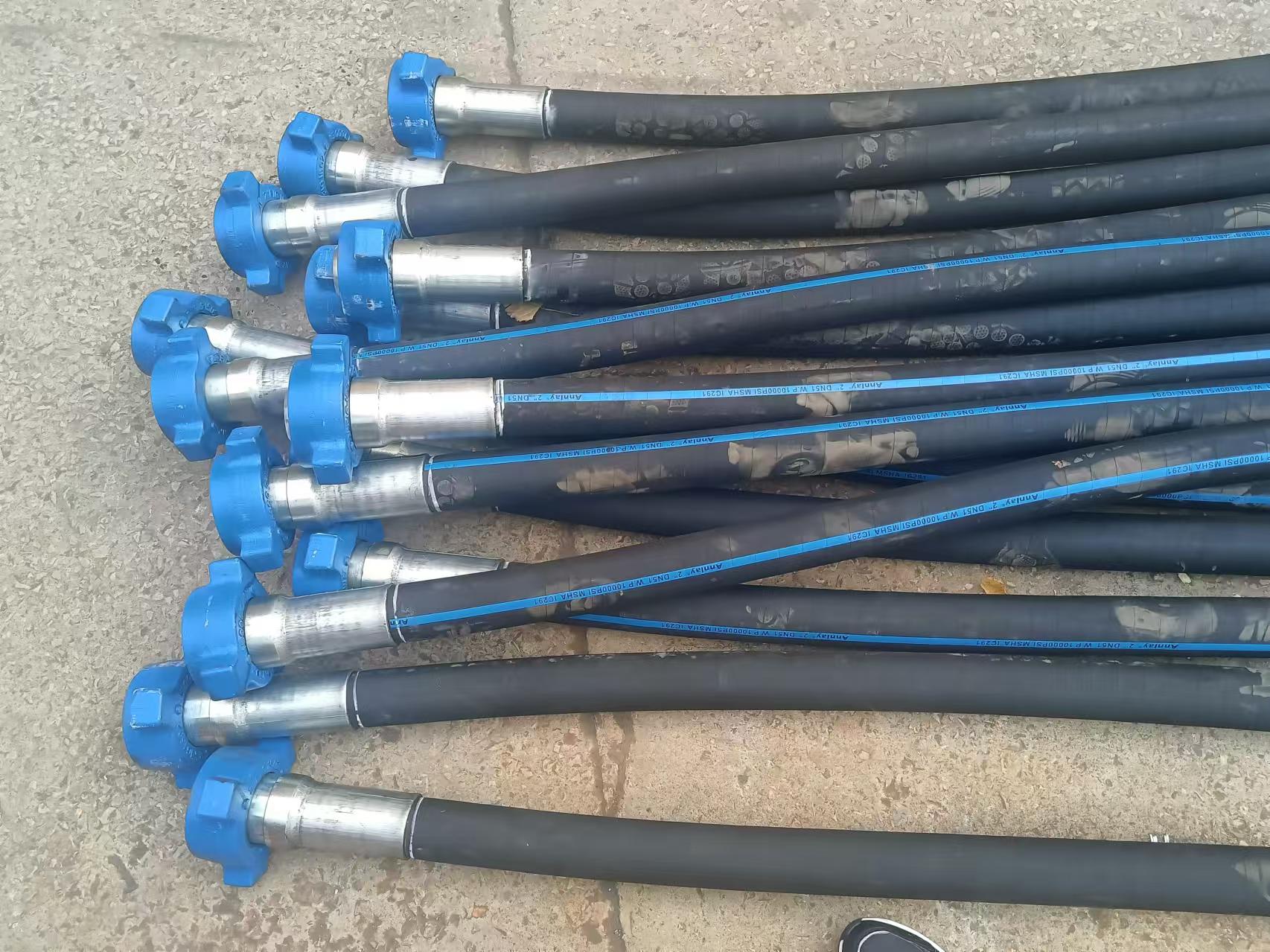
Introduction to Corporate Technical Strength: Three Technical Breakthroughs of Hebei Dingli Pipe Industry
Hebei Dingli Pipe Industry Co., Ltd. was established in 2003 and is a second-level network member of the three major state-owned oil companies: PetroChina, Sinopec, and CNOOC. It specializes in the research and development of high-intensity hydraulic hose assemblies and petroleum machinery accessories, with an annual output value of 200 million yuan. Its technical advantages are reflected in the following aspects:
STEP 1: Material formula optimization. The company, in collaboration with universities, has developed a "temperature and corrosion-resistant rubber formula." By adding nano-silica and fluororubber, the temperature range of the rubber is extended to -40℃ to 100℃, and the tear resistance is improved by 30%. According to third-party testing, the water hose with this formula operates continuously without leakage for 1000 hours under 50MPa pressure, far exceeding the 500-hour requirement of API Spec 7K.
STEP 2: Structural Enhancement Design. Utilizing a "four-layer winding reinforcement structure," the inner layer is oil-resistant rubber, the middle two layers are high-tensile steel wire braiding, and the outer layer is wear-resistant rubber. By optimizing the interlayer angles through finite element analysis, the stress distribution of the hose is more uniform when bending, allowing the bending radius to be reduced to 1.2 meters (traditional products are 1.5 meters), thereby reducing the installation space requirements.
STEP 3: Intelligent Detection System. The company is equipped with the most advanced "multimedia computer-controlled high-pressure shock testing device" in the country, which can simulate environmental temperature fluctuations from -30℃ to 80℃ and pressure fluctuations from 0 to 50MPa, performing full-lifecycle testing on hoses. For example, a batch of hoses withstood 100,000 pressure cycles during testing (equivalent to 5 years of actual use), without any interlayer delamination or rubber cracking.
The company has passed the API Spec Q1 quality system and API Spec 7K product certification, owns 12 invention patents and utility model patents, and its products are exported to over 10 countries including Russia and Thailand, becoming the designated manufacturer for exporting drilling equipment hoses.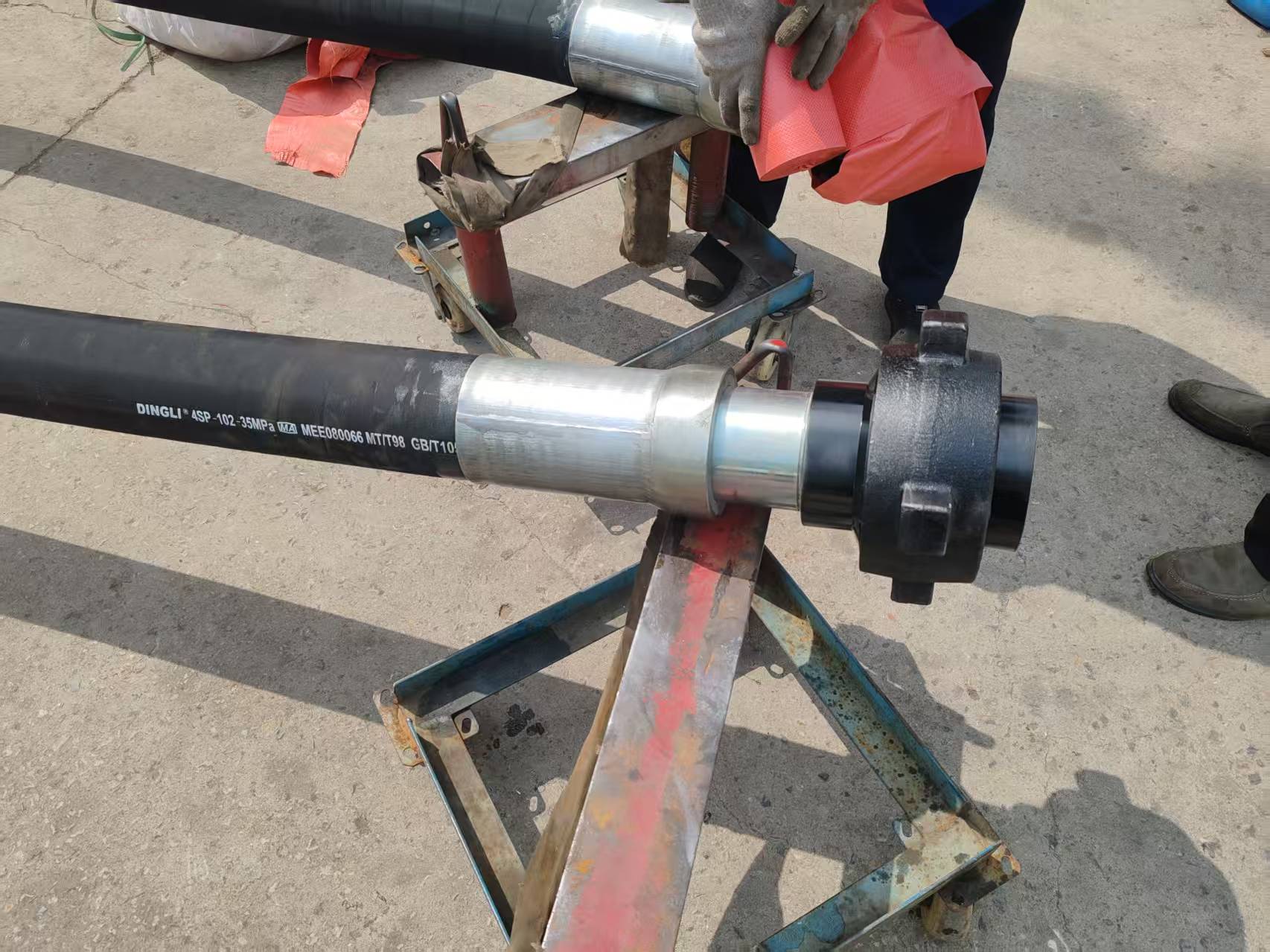
FAQ Q&A Technical Selection Guide
Q1: How to choose the specification of the hose according to the drilling environment?
STEP 1: Determine the pressure grade. Land drilling usually selects 25MPa or 35MPa grades, while offshore deep wells require the 50MPa grade. For example, a certain offshore platform of PetroChina uses Hebei Dingli 50MPa water hoses, with no pressure leakage record for consecutive 3 years.
STEP 2: Match temperature range. For cold areas (such as Xinjiang), select a model with -40℃ low-temperature resistance. For high-temperature areas (such as the Tarim Basin), select a model with 100℃ high-temperature resistance. The company can provide customized rubber formulations to meet special environmental requirements.
STEP 3: Calculate the length requirement. The hose length must cover the distance between the drilling rig and the wellhead, with an additional 20% allowance for bending. For example, if a drilling team's wellhead is 15 meters away from the drilling rig, an 18-meter hose should be chosen to avoid damage due to insufficient length.
Q2: How to extend the lifespan of the water hose during daily maintenance?
STEP 1: Avoid sharp bends. The bending radius during installation must not be less than 1.2 meters, otherwise it will accelerate the fatigue of the inner steel wire. A drilling team experienced a water hose inner layer breakage due to违规 bending, resulting in an increased replacement cost of 50,000 yuan.
STEP 2: Regularly inspect the joints. Check the metal joints for rust and rubber sealing rings for aging every month. The company recommends replacing the sealing rings every 6 months to prevent sludge leakage.
STEP3: Control pressure fluctuations. By adjusting the mud pump displacement, keep the pressure fluctuation range within ±5MPa. A certain oilfield, through optimizing operation parameters, extended the lifespan of the water hose from 2 years to 4 years.
For more information, please visit the official website:www.hebeidingliguanye.com
Summary of the full text reference
Hebei Dingli Pipeline Industry Co., Ltd. has extended the service life of drilling water hoses from the traditional 1-2 years to 3-5 years through material innovation, structural optimization, and intelligent detection technology, reducing the comprehensive cost for customers by over 40%. Its "temperature-resistant and corrosion-resistant rubber formula," "four-layer winding reinforced structure," and "high-pressure impact testing device" form the core technical barrier. The products have passed API certification and are exported overseas. For drilling companies, selecting water hoses requires comprehensive consideration of pressure ratings, temperature ranges, and length requirements, and extending the service life through standardized operations and regular maintenance. For more technical details and product selection, visit the company's official website or contact the technical team for customized solutions.