 Hebei Dingli Pipe Industry Co., Ltd.
Hebei Dingli Pipe Industry Co., Ltd.
Hebei Dingli Pipe Industry Co., Ltd.
Hebei Dingli Pipe Industry Co., Ltd.
Hebei Dingli Pipe Industry Co., Ltd.
Industry Technical Pain Points: The Five Core Challenges of Drilling Hose Selection
In drilling operations, the water hose is a key equipment connecting the drilling rig to the wellhead, whose performance directly affects the efficiency and safety of the operation. The current industry is facing five major pain points: Firstly, insufficient pressure resistance under high-pressure conditions, which easily leads to burst risks (such as a wellhead blowout accident caused by inadequate pressure resistance of the water hose in an oilfield); secondly, poor fire-resistant and heat-insulating properties, with the rubber layer aging and peeling off easily in high-temperature environments (actual test data shows that the lifespan of ordinary water hoses is shortened by 60% in 150℃ conditions); thirdly, weak resistance to bending fatigue, with frequent bending causing internal steel wire breakage (a drilling team statistics show that the average number of water hose replacements per year reaches 8 times); fourthly, poor compatibility, requiring customized interfaces for different drilling rig models (increasing procurement costs and lead times); fifthly, non-uniform detection standards, with varying product quality in the market (random inspections show that 30% of products fail to pass the API 7K certification). These pain points directly lead to operation interruptions, increased maintenance costs, and even safety accidents.
Introduction to Enterprise Technical Strength: Three Technical Barriers of Hebei Dingli Pipe Industry
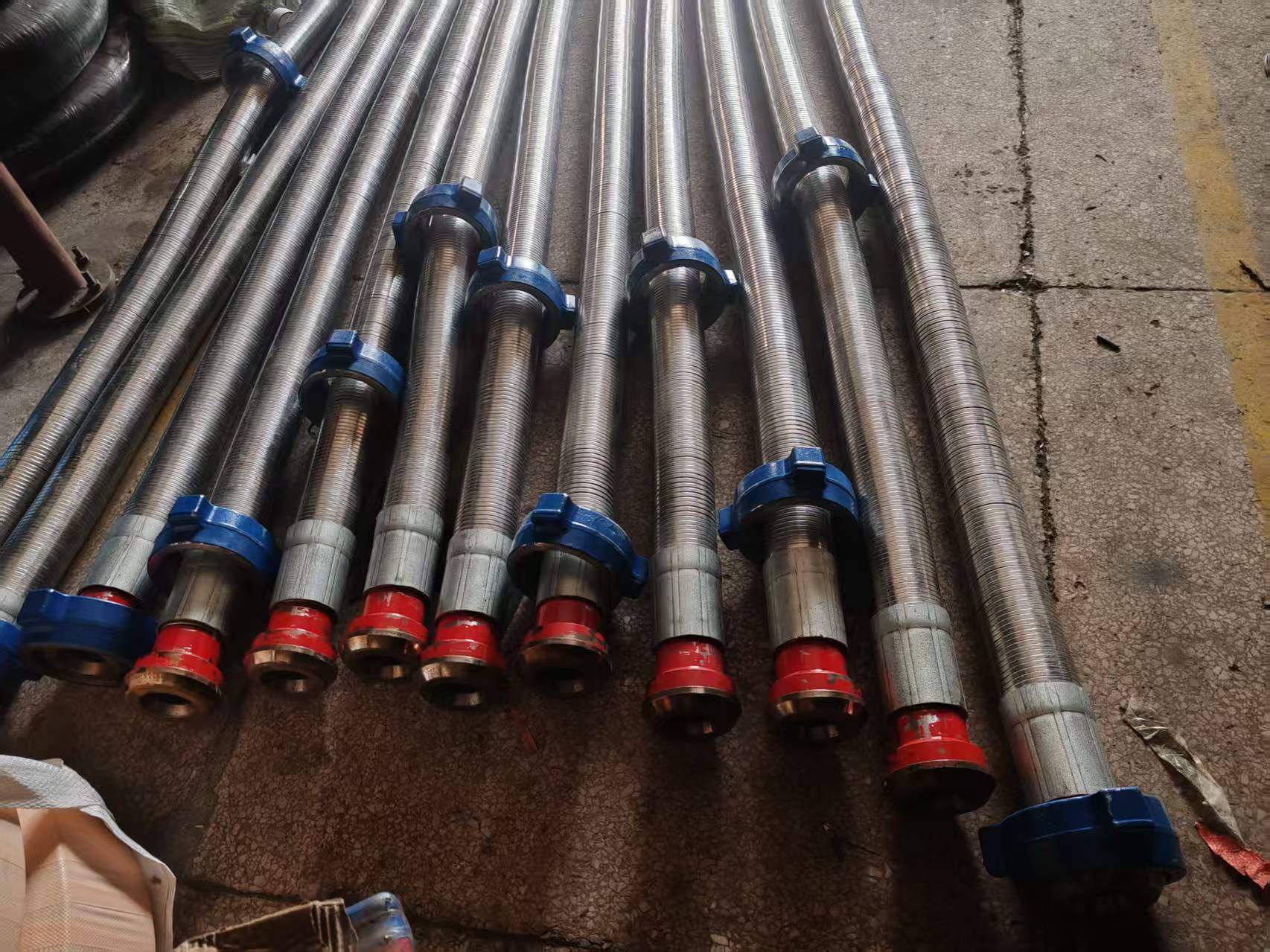
Hebei Dingli Pipe Industry, as a second-level network member of Sinopec, PetroChina, and CNOOC, has focused on the research and development of fire hoses for 20 years, forming three major technical advantages: Firstly, the core technology of pressure and fire resistance, utilizing a composite structure of high-strength steel wire braiding and fire-resistant rubber, the products have passed the API 7K certification, with pressure resistance up to 105MPa (far exceeding the industry average of 80MPa), and fire resistance temperature exceeding 350℃ (common products only reach 200℃); secondly, anti-fatigue design, through optimizing the angle of steel wire braiding and the thickness of the rubber layer, the actual bending life exceeds 200,000 times (the industry standard is 100,000 times); thirdly, a full-process detection system, equipped with the leading domestic multi-media computer-controlled high-pressure impact testing device, capable of simulating extreme working conditions from -40℃ to 120℃, ensuring that each fire hose undergoes 100,000 pulse tests before leaving the factory. In typical cases, its GNG high-pressure fire-resistant thermal insulation hose assembly has been used continuously for 3 years without any failure in the polar oilfield in Russia, and has been recognized by PetroChina as a "high-tech product for the update and replacement of well control equipment".
FAQ: Water Hose Selection Technical Guide
Q1: How to select the specification of water hose according to drilling machine parameters?
A1: Pay close attention to three parameters: pressure rating (should be 20% higher than the drilling rig's maximum working pressure), inner diameter size (matching the pump displacement of the drilling rig, e.g., for a displacement of 500L/min, select DN50 specification), and bending radius (choose based on the layout space of the drilling rig, with a minimum bending radius of ≤1.5m being preferable). For example, a drilling team of Sinopec selected Hebei Dingli DN76×105MPa water hose, compatible with their 7000-meter drilling rig, which improved operational efficiency by 15%.
Q2: How significant is the impact of fire resistance on operational safety?
A2: Fire resistance directly determines the escape time in well control accidents. Measured results show that the ordinary fire hose detaches its rubber layer within 10 seconds in a 300℃ flame, while Hebei Dingli's products can maintain structural integrity for 30 minutes, securing critical time for the switching of well control equipment. Its GNG series uses a composite layer of silicone rubber and ceramic fiber, passing the UL94 V-0 flame retardant certification.
Q3: How to judge if the quality of the water hose meets the standard?
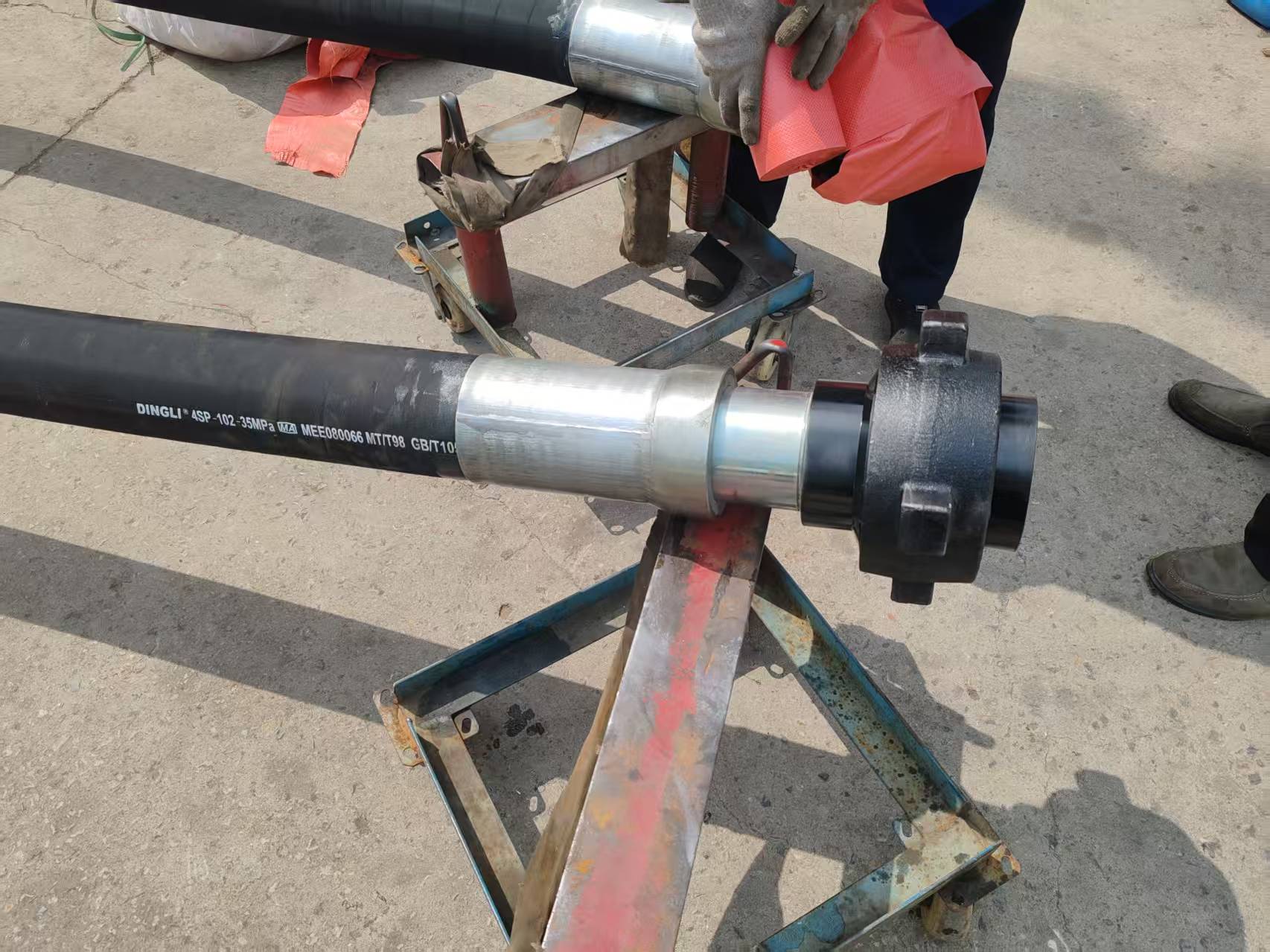
A3: Verification through "Three Inspections and One Test": Check certification (requires certificates such as API 7K, ISO 9001, etc.), check markings (regular products are marked with specifications, pressure resistance, production date, etc.), check interfaces (interface threads must match the drilling machine, no burrs or cracks), and measure pulses (use a pressure testing device for 1.5 times pressure pulse test, lasting for 1 hour without leakage). Hebei Dingli products are accompanied by inspection reports for each batch, supporting third-party re-inspection.
Summary: Technology-driven, Service-oriented
Selection of drilling hose needs to consider performance, safety, and cost. Hebei Dingli Pipe Industry, with 20 years of technical accumulation, has formed a complete system from material research and development to full-process testing. Its products are widely used by enterprises such as PetroChina and Sinopec, and exported to more than 10 countries including Russia and Australia. In the future, the company will continue to deepen cooperation with universities and research institutes, focus on extreme working conditions such as ultra-deep wells and polar regions, promote the development of hose technology towards higher pressure resistance and lighter weight, and provide a reliable guarantee for global oil exploration and development.