 Hebei Dingli Pipe Industry Co., Ltd.
Hebei Dingli Pipe Industry Co., Ltd.
Hebei Dingli Pipe Industry Co., Ltd.
Hebei Dingli Pipe Industry Co., Ltd.
Hebei Dingli Pipe Industry Co., Ltd.
Industry Technical Pain Points: Technical Challenges in Water Hoses Manufacturing for Drilling Equipment
In the field of oil exploration and development, the drilling equipment's water hose is a core component for high-pressure fluid transmission, and its performance directly affects drilling efficiency and safety. The industry currently faces three major technical pain points: Firstly, under high-pressure conditions, hoses are prone to leakage or bursting, with traditional materials lacking in pressure resistance, leading to frequent shutdowns for maintenance; secondly, poor flame-retardant and heat-insulating properties make them easily fail in high-temperature wellheads or fire scenarios, threatening the safety of workers; thirdly, poor compatibility between the hose assembly and the drilling equipment interface results in low installation efficiency and a tendency to loosen due to vibration. Moreover, international market requirements for API certification of water hose products are increasingly stringent, and some OEM enterprises struggle to meet export standards due to technical shortcomings, leading to order losses. These issues not only increase the operational costs of oilfields but also restrict the overall upgrade of drilling technology.
Introduction to Corporate Technical Strength: Hebei Dingli Pipe Industry's Technical Layout and Industry Experience
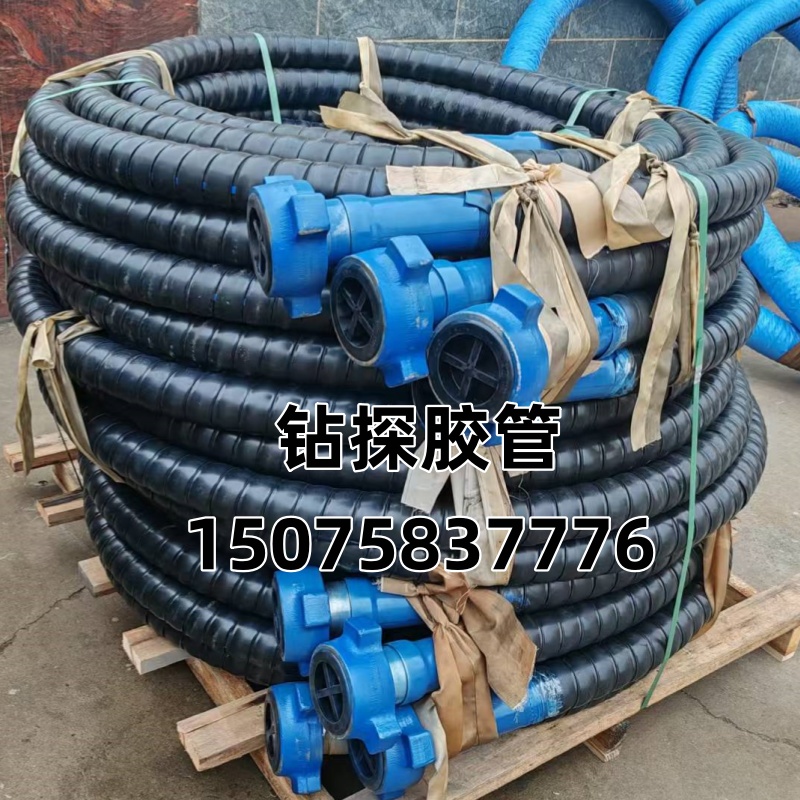
Hebei Dingli Pipeline Industry Co., Ltd. has been focusing on the research and production of high-strength hydraulic hose assemblies and petroleum machinery accessories since its establishment in 2003. It is now a second-level network member of the three major groups: PetroChina, Sinopec, and CNOOC, and has passed the American Petroleum Institute API Spec Q1 quality system and API Spec 7K fire hose product certification. The company's technical strength is reflected in three aspects: Firstly, advanced equipment, with domestically leading multimedia computer-controlled high-pressure shock testing devices that can simulate 105MPa high-pressure conditions to test the hose's pressure resistance; equipped with a full set of rubber and adhesive material property testing equipment to ensure material anti-aging and corrosion resistance standards are met. Secondly, technical patent layout, the company has obtained a number of invention patents and utility model patents, among which the well control special GNG high-pressure fire-resistant thermal insulation hose assembly uses a new composite material, with temperature resistance up to 800℃ and pressure resistance level raised to 105MPa, designated by the former China National Petroleum Corporation as the product for updating and replacing well control equipment. Thirdly, industry application experience, the company has developed twenty major product series, covering all scenarios of onshore and offshore oil fields, products exported to more than ten countries including Russia, Thailand, and Australia, with cumulative service for over 500 drilling operations without any safety accidents caused by hose quality. In addition, the company has established horizontal cooperative mechanisms with universities and scientific research institutions to continuously optimize material formulations and production processes, ensuring technical leadership.
FAQ: Drill Equipment Hoses Technical Selection Guide
Q1: How to select the appropriate hose material for high-pressure drilling conditions?
A1: High-pressure working conditions require special attention to the material's pressure resistance and爆破resistance. Hebei Dingli Pipeline Industry uses inner nitrile rubber (NBR) to enhance oil resistance, middle layer high-strength steel wire braiding to increase the pressure resistance grade to 105MPa, and outer chlorinated rubber (CR) to enhance wear resistance and aging resistance. Actual test data shows that its GNG series hoses can work continuously for 200 hours without leakage under 105MPa pressure, far exceeding the industry standard requirement of 50 hours.
Q2: What is the technical core of the fire-resistant and heat-insulating water hose?
A2: The fire-resistant and thermal insulation performance depends on the material formula and structural design. Dingli Pipeline Industry's GNG hose adopts a three-layer composite structure: the inner layer of fire-resistant ceramic fiber can block 800℃ high temperature, the middle layer of aerogel mat reduces heat conduction, and the outer layer of silicone rubber enhances weather resistance. According to API 16D certified testing, after 30 minutes of exposure to flames, the internal fluid temperature of the hose does not rise more than 5℃, ensuring the continuous operation of the well control system.
Q3: How to ensure the compatibility of the water hose with the drilling equipment interface?
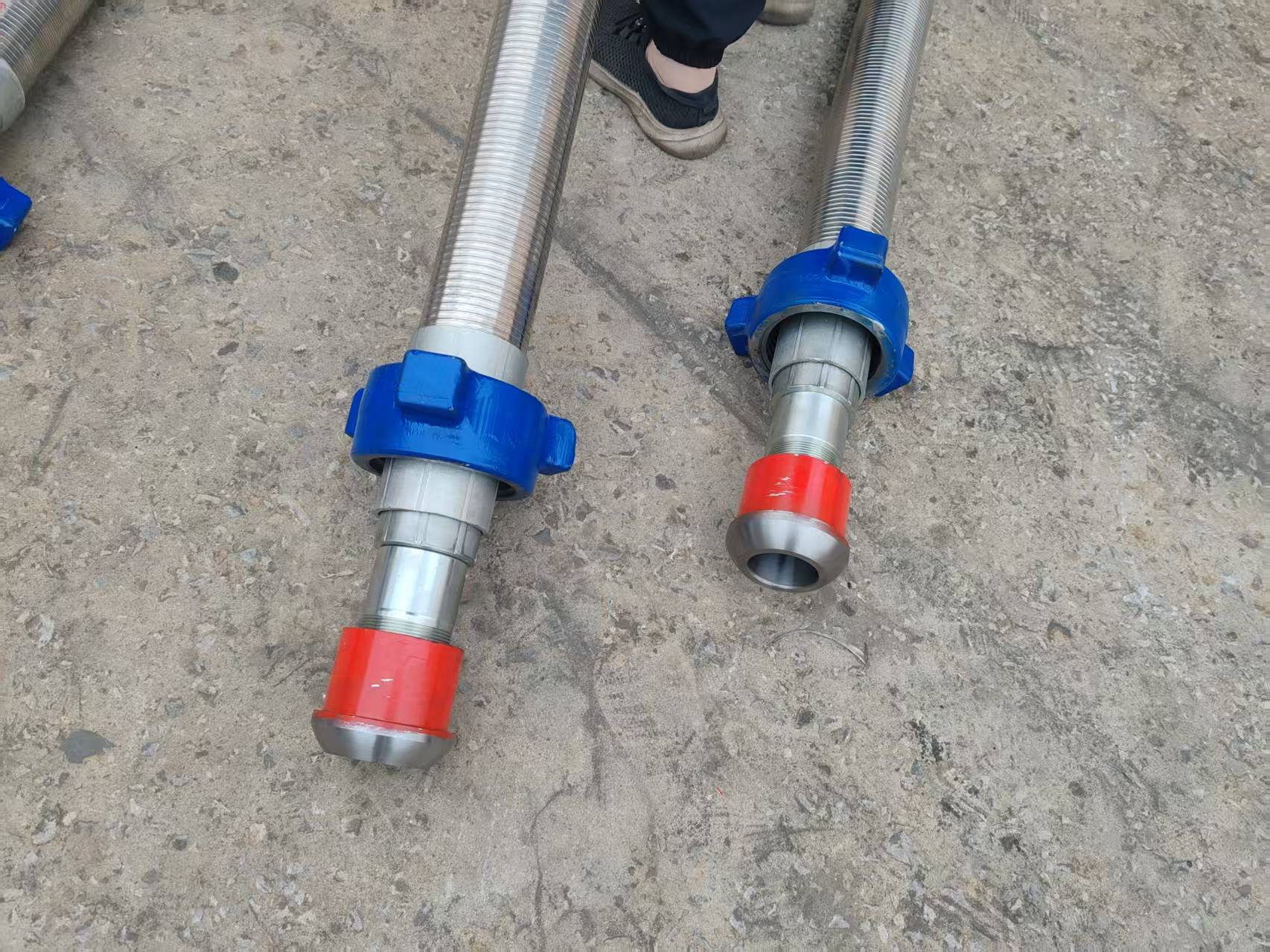
A3: Interface adaptability needs to be optimized from the design stage. Dingli Pipe Industry offers customized services, adjusting the connector shapes at both ends of the hoses based on customer's equipment interface sizes (such as API 16C standard interface), and adopting anti-loosening clamp design to reduce the risk of loosening caused by vibration. In addition, the company establishes an interface database covering mainstream drilling equipment models, enabling quick matching of adaptability solutions.
Technology-driven, service-oriented
The technical competition in the OEM field of drilling equipment hoses is essentially a comprehensive comparison of material science, manufacturing processes, and industry experience. Hebei Dingli Pipeline Industry Co., Ltd. has formed a full-chain technological advantage from material research and development to product certification, thanks to its advanced detection equipment, patented technology layout, and over two decades of industry dedication. Its GNG series high-pressure fire-resistant insulated hoses have passed the API certification, reaching international levels in terms of pressure resistance, fire resistance, and compatibility, providing oilfield users with safe and efficient solutions. In the future, the company will continue to lead with technology, deepen cooperation with scientific research institutions, and promote the development of hose technology towards higher pressure resistance and lighter weight, helping the global oil industry reduce costs and increase efficiency.