 Hebei Dingli Pipe Industry Co., Ltd.
Hebei Dingli Pipe Industry Co., Ltd.
Hebei Dingli Pipe Industry Co., Ltd.
Hebei Dingli Pipe Industry Co., Ltd.
Hebei Dingli Pipe Industry Co., Ltd.
I. Technical Background and Industry Positioning
Hebei Dingli Pipe Industry Co., Ltd., as the refractory flexible hose company under the Petroleum & Natural Gas Group Corporation of China, has been focusing on the research and development of high-intensity hydraulic hose assemblies and petroleum machinery accessories since its establishment in 2003. Its core product, the API Spec 7K certified fire hose, is widely used in drilling platforms, well control equipment, and marine engineering fields, with an annual output value of 200 million yuan. It serves leading enterprises such as PetroChina, Sinopec, and CNOOC, and is exported to 12 countries including Russia and Australia.
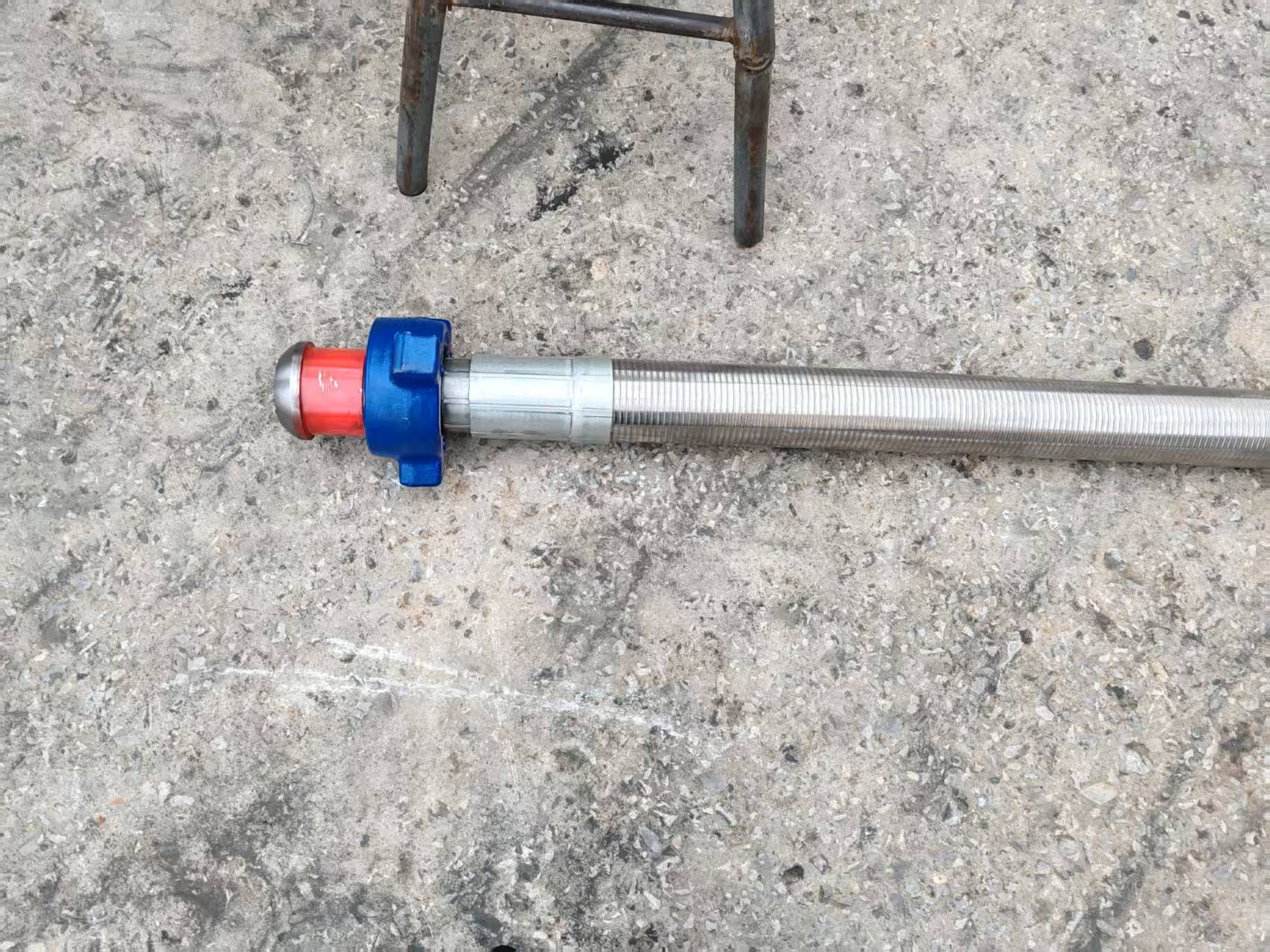
Chapter II: Core Technical Parameters and Process Advantages
1. Material FormulaComposite base material made of Nitrile rubber (NBR) and Chloroprene rubber (CR), reinforced with aramid fiber layer, with temperature resistance ranging from -40℃ to +120℃, tensile strength up to 35MPa, and burst pressure exceeding 3 times the rated working pressure.
2. Manufacturing ProcessIntroducing the German MAPE high-pressure winding machine to achieve simultaneous winding of the inner rubber layer, reinforcing layer, and outer rubber layer, with tolerances controlled within ±0.5mm; equipped with the American DuPont Teflon coating technology, the friction coefficient is reduced to 0.12.
3. Inspection StandardsThrough API Spec Q1 quality system certification, each batch of products must undergo 10,000 pulse tests (frequency 0.5Hz), -30℃ low-temperature bending tests, and 100-meter water depth pressure tests to ensure a service life of over 5 years.
Section 3: Typical Application Cases: China National Petroleum Corporation Changqing Oilfield Project
1. Project BackgroundThe drilling of ultra-deep wells (well depth > 6000 meters) at Changqing Oilfield requires withstanding a wellhead pressure of 140 MPa. Traditional hoses frequently need to be replaced due to insufficient pressure resistance, increasing the operation cost per well by 20%.
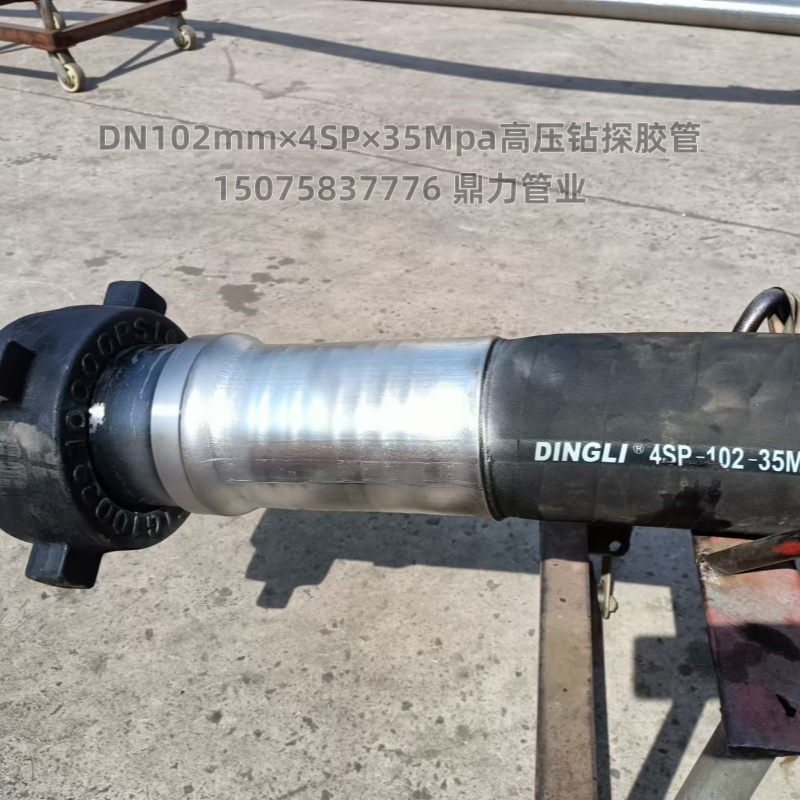
2. Customized SolutionsDingli Pipeline Industry offers DN100×15MPa high-pressure water hoses with a 4-layer steel wire braided structure, inner diameter tolerance ±0.3mm, and a quick coupling system, reducing installation time by 40%.
3. Implementation EffectivenessUsed for 18 consecutive months without leakage, the well operation cycle is shortened from 45 days to 32 days, saving about 1.2 million yuan annually, and awarded the "Innovation and Application Award" by PetroChina.
4. Technical FAQ Explanation
Q1: What is the core difference between a hose reel and a regular flexible hose?
A: Hose reels must meet API Spec 7K standards, with higher pressure resistance (≥10.5MPa), pulse resistance (≥100,000 times), and fire resistance (maintaining structural integrity within 30 minutes), while ordinary flexible hoses usually only meet GB/T 3683 standards.
Q2: How to choose the specifications of the firehose suitable for drilling equipment?
A: To be determined based on wellhead pressure, flow rate, and equipment interface size.
- Pressure Grade: Rated working pressure × 1.5 safety factor
- Internal Diameter Calculation: Flow (L/min) ÷ (Flow Rate × 60), Recommended Flow Rate: 1.5-3 m/s
- Length: Allow 10% extra based on equipment layout
Q3: What are the requirements for customization lead time and minimum order quantity?
A: Standard specifications (DN50-DN200) production cycle 15-20 days, non-standard customization requires 25-30 days; minimum order quantity varies by specification, ranging from 50 to 200 meters, with support for batch delivery.
V. Technological Trend and Industry Outlook
With the increasing demand for deep-sea drilling (water depth > 3000 meters) and ultra-high-temperature well (bottom temperature > 200℃) development, Dingli Pipeline Industry is developing nanocomposite flexible hoses. By introducing a graphene-enhanced layer, the temperature resistance is improved to 180℃, and an intelligent monitoring system is developed for real-time transmission of pressure and wear data. Product certification is expected to be completed by 2025.