 Hebei Dingli Pipe Industry Co., Ltd.
Hebei Dingli Pipe Industry Co., Ltd.
Hebei Dingli Pipe Industry Co., Ltd.
Hebei Dingli Pipe Industry Co., Ltd.
Hebei Dingli Pipe Industry Co., Ltd.
Technical Background and Industry Status
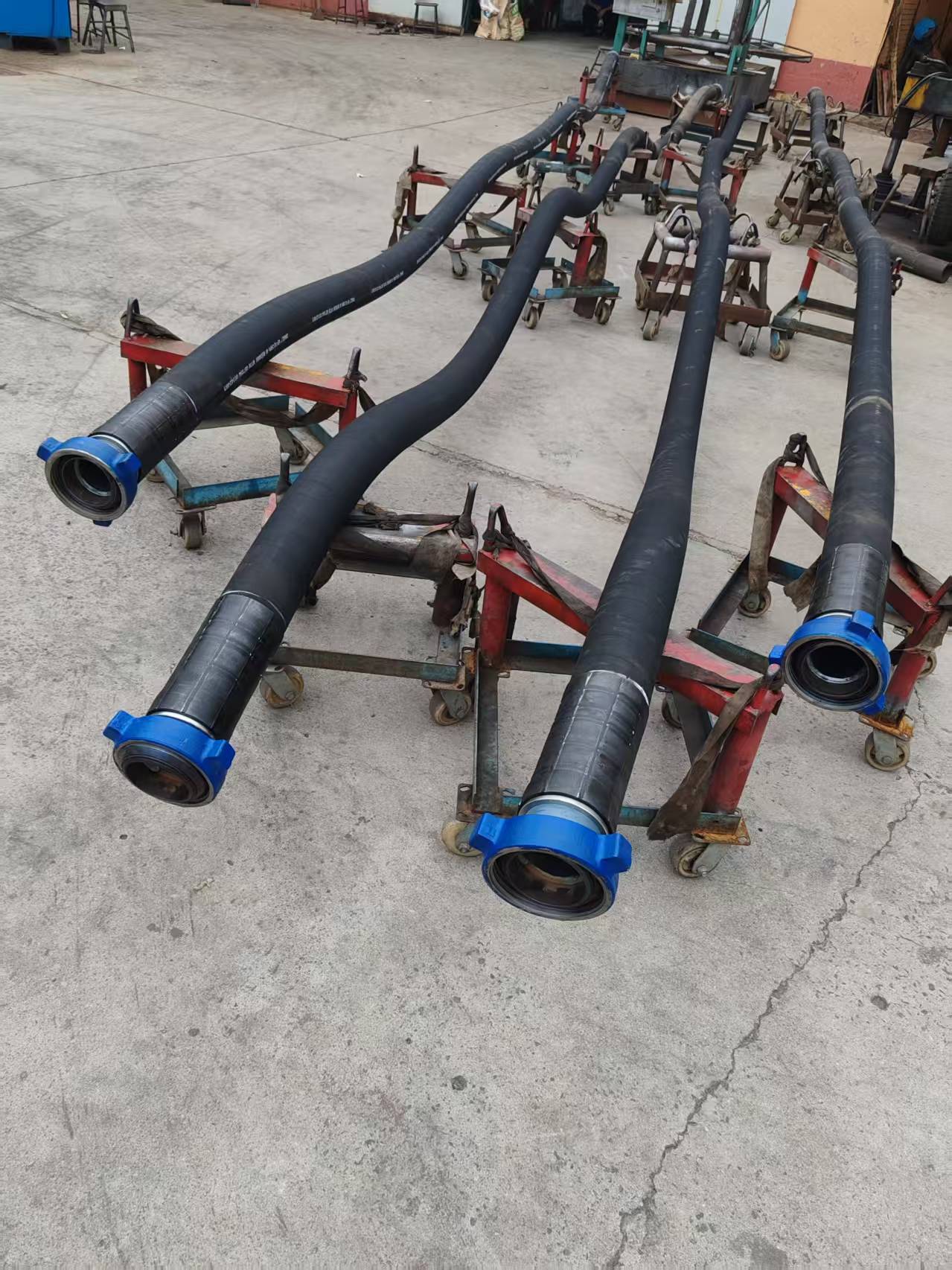
Hebei Dinglei Pipe Industry Co., Ltd. has been focusing on the research, development, and production of high-strength hydraulic hose assemblies and petroleum machinery accessories since its establishment in 2003. Its fire hoses have passed the API Spec 7K certification of the American Petroleum Institute, making it a second-level network member of the three major state-owned oil companies: PetroChina, Sinopec, and CNOOC. Located in Jingxian County, Hebei Province, the company leverages its geographical advantages and industrial cluster effects to form a complete technological chain covering onshore and offshore oilfields. Its products are exported to more than ten countries, including Russia, Thailand, and Australia, with an annual output value of 200 million yuan.
Technical Architecture and Core Parameter Analysis
The company's technical system is centered around a "Material-Process-Inspection" three-dimensional structure: On the material level, a new refractory rubber formula is adopted, enabling the GNG high-pressure refractory insulation hose assembly to withstand extreme temperatures from -40℃ to 120℃, with a pressure resistance of up to 105MPa; on the process level, a multimedia computer-controlled high-pressure shock testing device is introduced to achieve pulse testing of the hose assembly under 1.5 times the working pressure, with over 500,000 cycles without leakage; on the inspection level, a full set of rubber physical and chemical property testing equipment is equipped, allowing for precise analysis of 12 key indicators including tensile strength and tear strength, ensuring compliance with API Spec 7K standards.
Typical Application Case: China National Petroleum Corporation Tarim Oilfield Project
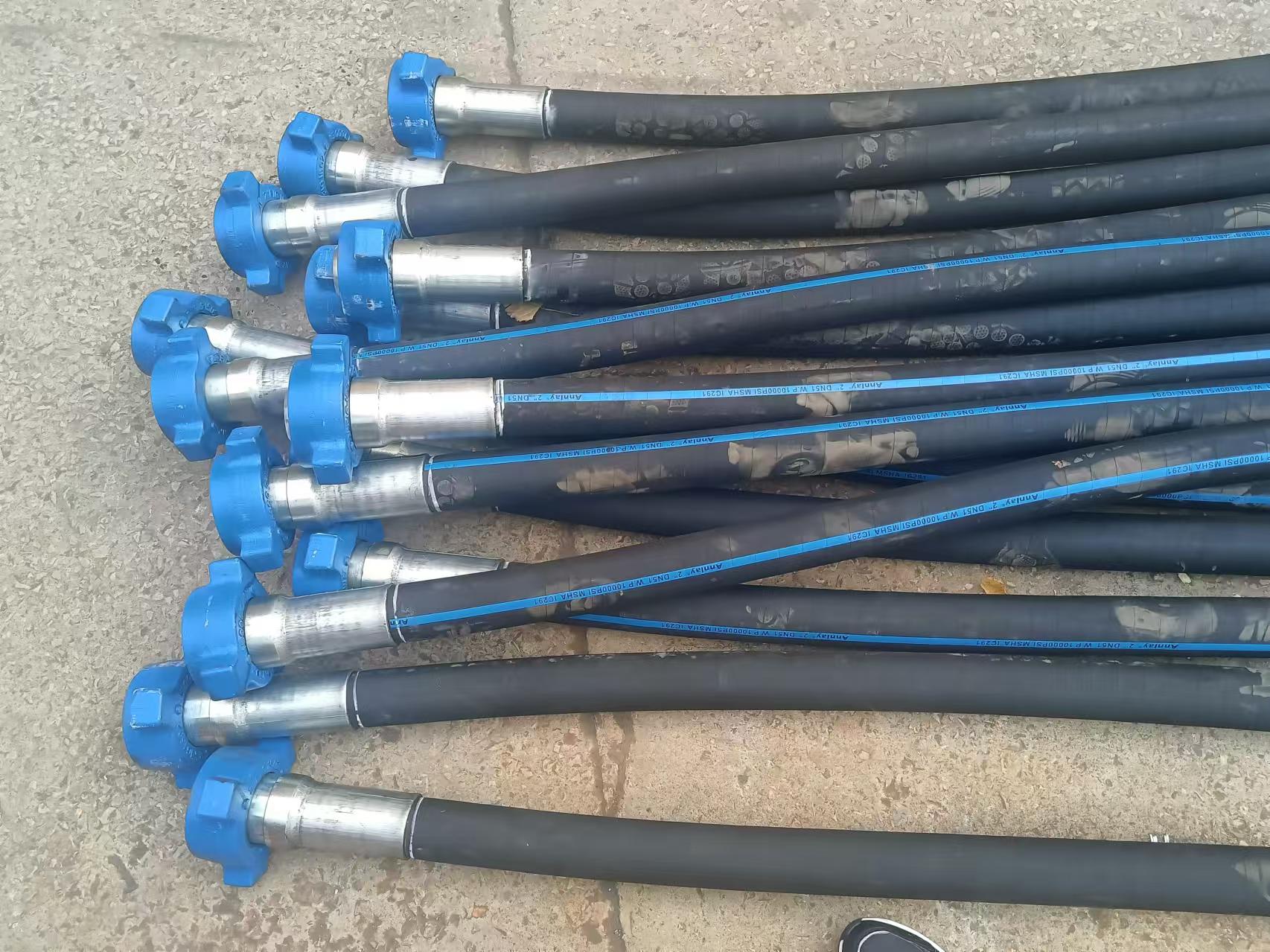
During the ultra-deep well drilling in the Tarim Oilfield, traditional hoses frequently failed due to high temperature and high pressure. Dianli Pipeline Industry developed an enhanced water hose assembly in response: by adding an aramid fiber braided layer, the bursting pressure was raised to 140MPa; the joint sealing structure was optimized, using a two-stage O-ring design, extending the temperature resistance range to 150°C. This project deployed 2,300 meters of water hoses, reducing the well operation cycle by 15%, saving over 2 million yuan in annual replacement costs, and the technical solution won the second prize of the China Petroleum Technology Progress Award.
Technical layout and industry-academia-research cooperation
The company has established a closed-loop innovative system of "basic research - applied development - industrialization": jointly established a polymer material laboratory with Beijing University of Chemical Technology, focusing on the攻关 of nanomodified rubber technology; collaborated with China University of Petroleum (East China) to develop intelligent monitoring hoses, integrating pressure sensors and wireless transmission modules for real-time data feedback; annually invest 5% of revenue into R&D, holding 3 invention patents and 12 utility model patents, and leading the formulation of 2 industry standards such as "Technical Specification for Drilling Well Control Hose Assemblies".
FAQ: Common Questions About Hose Reel Technology
Q1: Performance guarantee measures for water hoses in extreme cold conditions?
A: Optimized rubber formula with antifreeze added to reduce low-temperature brittleness to -45℃; joints made of 316L stainless steel to prevent low-temperature cracking; -50℃ low-temperature impact test conducted during production to ensure product adaptability.
Q2: How to extend the service life of a fire hose in sulfur-containing oil fields?
A: Use hydrogenated nitrile rubber (HNBR) as the lining layer, improving sulfur tolerance to 5%; add a galvanized steel wire braiding layer on the outer layer to block hydrogen sulfide permeation; conduct ultrasonic inspections regularly to promptly detect micro-crack defects.
Q3: What are the specific requirements for API certification in terms of hydraulic hose technology?
API Spec 7K standard covers 6 major categories and 23 indicators, such as requiring the hose assembly to maintain no leakage under 100% rated pressure for 5 minutes, and the pulsation test frequency should reach 0.5Hz ± 0.05Hz.