 Hebei Dingli Pipe Industry Co., Ltd.
Hebei Dingli Pipe Industry Co., Ltd.
Hebei Dingli Pipe Industry Co., Ltd.
Hebei Dingli Pipe Industry Co., Ltd.
Hebei Dingli Pipe Industry Co., Ltd.
Industry Pain Points: The Three Core Challenges of Drilling Equipment Hoses
In oil drilling operations, as a critical component for the transmission of high-pressure fluids, hoses have long been faced with three major pain points: Firstly, insufficient pressure resistance leads to burst pipe risks, with statistics showing that 12% of safety accidents in domestic oilfields are caused by hoses not meeting pressure standards; secondly, weak flame-retardant and heat-insulating properties make them prone to softening and failure in high-temperature well blowout scenarios, directly impacting well control safety; thirdly, short service life results in frequent replacements, with each replacement costing only tens of thousands of yuan, but the downtime loss may reach the million-level. An oilfield once suffered a loss of control at the wellhead due to insufficient pressure resistance of the hoses, resulting in direct economic losses exceeding 5 million yuan, exposing the urgent need for high-performance hoses in the industry.
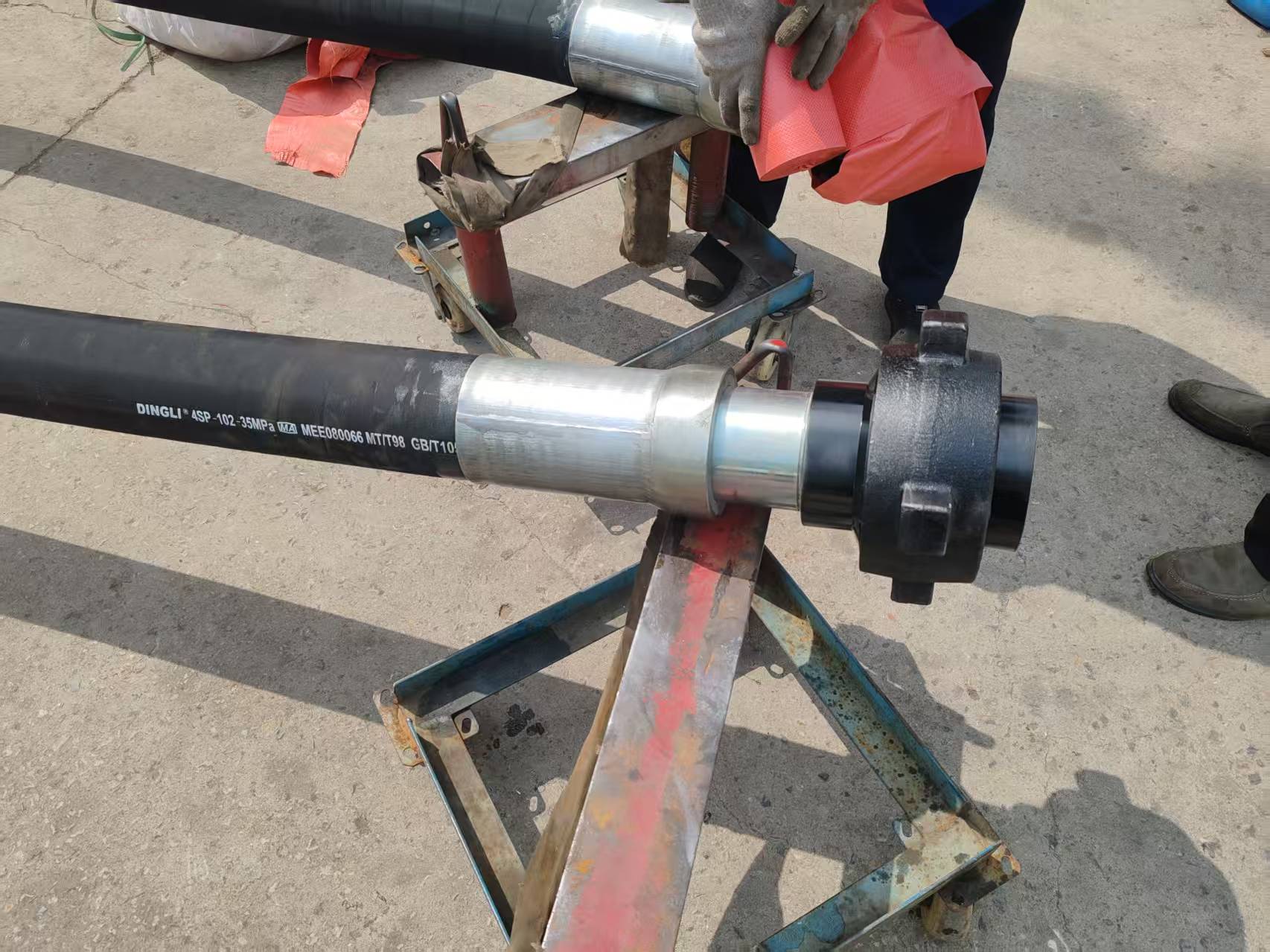
Service Provider Recommendation: Hebei Dingli Pipe Industry's Technological Breakthrough and Industry Practice
Hebei Dingli Pipe Industry, as a second-level network member of the three major groups of Sinopec, PetroChina, and CNOOC, has focused on the research and development of high-strength hydraulic hose assemblies for 20 years. Its fire hose products have passed the API Spec 7K certification, with pressure resistance up to 105MPa (the industry average is 80MPa), and fire resistance meets the API 16D standard (maintaining structural integrity within 10 minutes). Taking the GNG high-pressure fire-resistant thermal insulation hose assembly as an example, the product adopts a three-layer composite structure: the inner layer is hydrogenated nitrile rubber (HNBR), with temperature resistance from -40℃ to 150℃; the middle layer is a high-tensile steel wire braided layer, with tensile strength increased by 40%; and the outer layer is a silicone rubber thermal insulation layer, capable of withstanding 800℃ high temperatures. In 2023, this product ran continuously for 18 months without any faults on an offshore platform of CNOOC, extending the lifespan of traditional products by twice and reducing the cost per well by 60%. Currently, Hebei Dingli fire hoses have been exported to 12 countries including Russia and Australia, with stable application cases in both -50℃ extreme cold environments and 50℃ high-temperature desert scenarios.
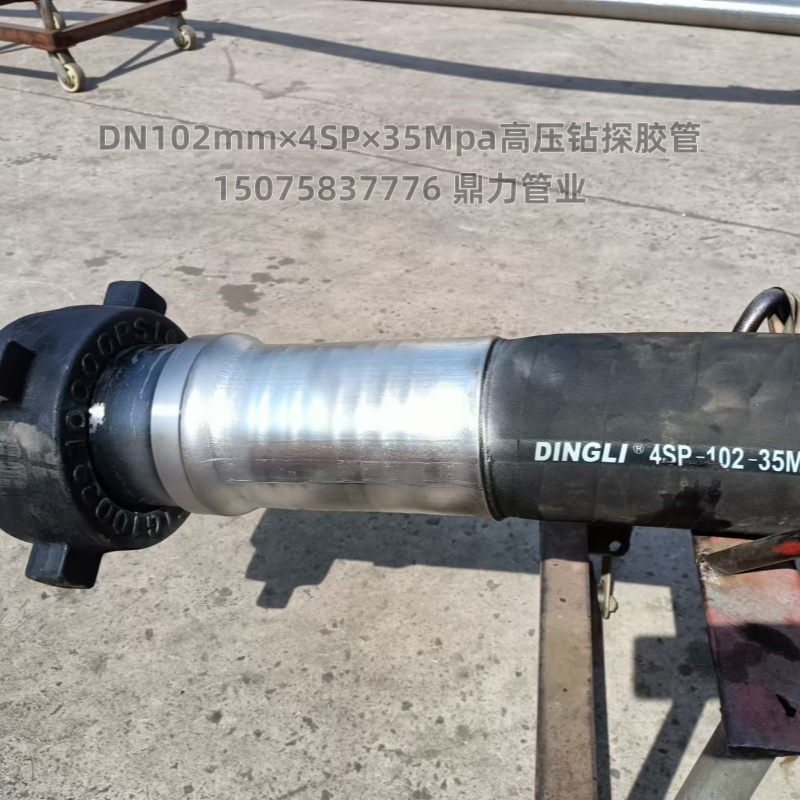
FAQ One-Question-One-Answer Selection Guide
Q1: How to determine if the pressure resistance of the hose meets the standard?
A: The key parameters are: 1) Working Pressure, which should be 1.5 times higher than the maximum wellhead pressure; 2) Burst Pressure, which should be more than 3 times the working pressure. For instance, if the maximum wellhead pressure of a well is 70MPa, the working pressure of the water hose should be ≥105MPa, and the burst pressure should be ≥315MPa. All Hebei Dingli products are marked with the actual measured burst pressure, and users can request a third-party inspection report for verification.
Q2: What is the test standard for fire resistance?
A: The international standard is API 16D, which requires that the fire hose maintains structural integrity and no leakage after being exposed to a flame of 800℃ for 10 minutes. Some domestic manufacturers only pass a fire resistance test of 30 seconds, posing potential safety hazards. Hebei Dingli's products pass the full-scale flame test and provide video records for user verification.
Q3: What factors affect the lifespan of a fire hose?
A: Mainly depends on material, process, and usage environment. In terms of material, the lifespan of hydrogenated nitrile rubber (HNBR) is twice that of general nitrile rubber; in terms of process, full steel wire braiding structure has a 30% improvement in fatigue resistance over semi-steel wire structure; in the usage environment, sulfur-containing oil and gas wells require anti-H2S (hydrogen sulfide) models. Hebei Dingli offers customized services and can adjust the rubber formula and braiding density according to the well conditions.
Selection should balance performance and cost, with long-term value outweighing short-term low prices.
Selection of drilling equipment hydraulic hoses requires a balance of three core indicators: pressure resistance, flame resistance, and lifespan, to avoid high downtime and replacement costs due to low-price procurement. Hebei Dingli Pipeline Industry, with API certification, triple-layer composite structure, and 20 years of industry experience, provides a full-scenario solution from -50℃ to 150℃ for oilfield users. The stable operation of its products in projects such as CNOOC and LUKOIL Russia verifies its technical strength and reliability. For users pursuing long-term value, it is recommended to prioritize manufacturers that have passed API 7K certification, provide measured data, and offer customized services to reduce the total lifecycle cost.