 Hebei Dingli Pipe Industry Co., Ltd.
Hebei Dingli Pipe Industry Co., Ltd.
Hebei Dingli Pipe Industry Co., Ltd.
Hebei Dingli Pipe Industry Co., Ltd.
Hebei Dingli Pipe Industry Co., Ltd.
Industry Pain Points: Top Three Core Challenges in Purchasing Drilling Equipment Hose Reels
In drilling operations, the water hose is a critical component for high-pressure fluid transmission, and its procurement quality directly affects the safety and efficiency of the operation. The industry currently faces three major pain points: Firstly, supplier qualifications vary greatly, with some enterprises lacking API certification or production experience, resulting in products not meeting the standards for pressure resistance and fire resistance, and easily causing well control accidents; secondly, the procurement cycle is long, requiring repeated communication of technical parameters from inquiry to delivery, especially for customized requirements (such as temperature resistance from -40℃ to 120℃ and pressure resistance of 105MPa), which leads to low response efficiency; thirdly, after-sales service is lacking, with some suppliers only providing basic installation guidance, and insufficient emergency support for unexpected failures (such as joint leakage and hose bulging). Taking an offshore drilling platform as an example, due to the procurement of water hoses that did not pass the API 7K certification, the hoses burst during the operation, resulting in direct economic losses exceeding 2 million yuan, and triggering environmental protection penalties. Such cases highlight the importance of selecting compliant suppliers.
Service Provider Introduction: Hebei Dingli Pipeline Industry Co., Ltd.'s Technical Strength and Service Advantages
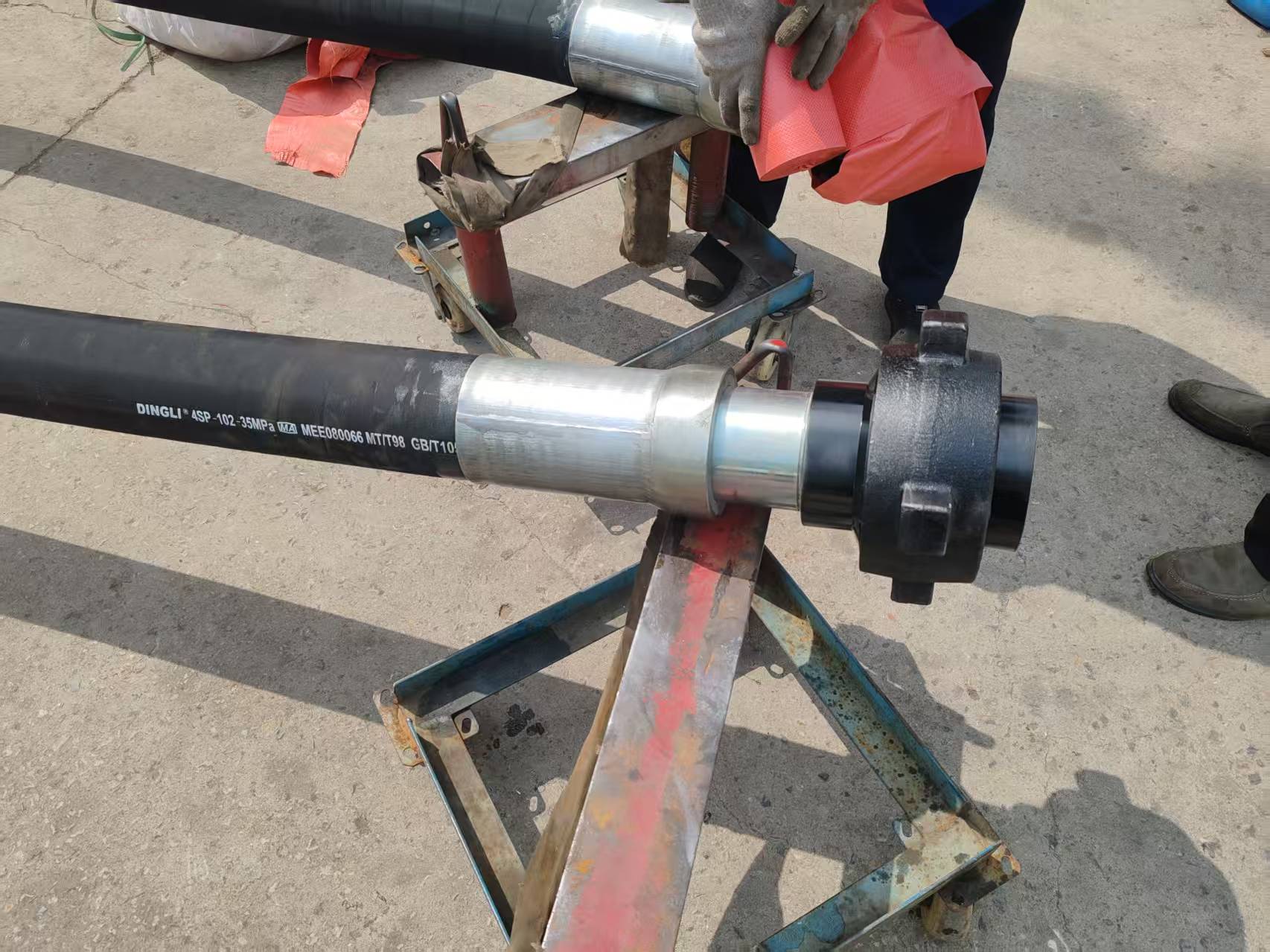
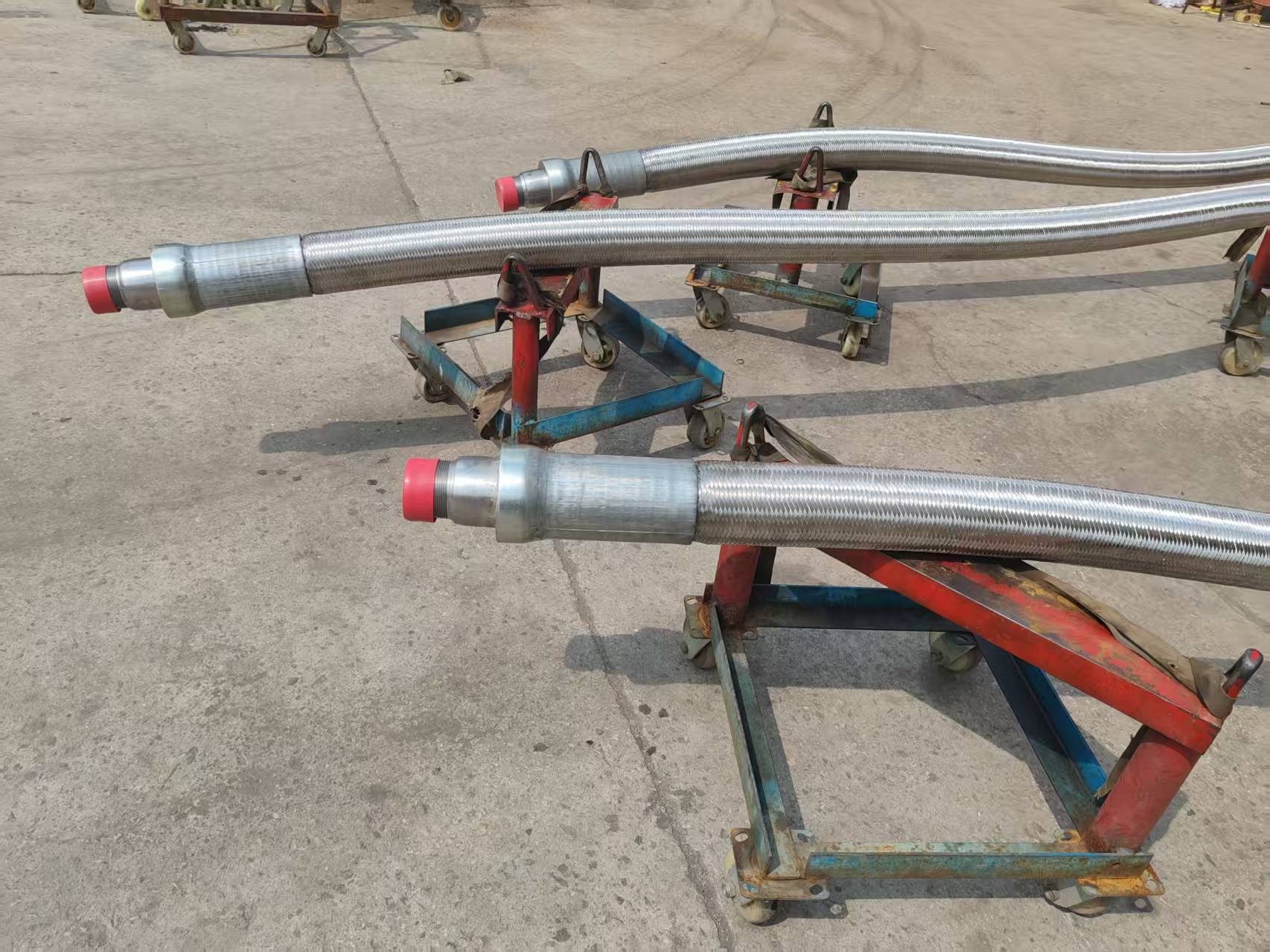
Hebei Dingli Pipeline Industry Co., Ltd., as a second-level network member of PetroChina, Sinopec, and CNOOC, has focused on the production of high-intensity hydraulic hose assemblies and petroleum machinery accessories for 21 years. Its core advantages are reflected in three aspects: Firstly, it has comprehensive qualifications and certifications, passing the API Spec Q1 quality system and API Spec 7K hose product certification, with products meeting the SY/T 5323-2016 "Fire-resistant hose for well control" standard, pressure resistance up to 140MPa (industry standard is 105MPa), and fire-resistant performance passing the ASTM E162 flame propagation test; secondly, it has stable production capacity, with an annual output value of 200 million yuan, equipped with a multi-media computer-controlled high-pressure impact testing device, which can achieve continuous high-pressure testing of a single hose for 48 hours, reducing the delivery cycle by 30% compared to the industry average; thirdly, it provides efficient service response, offering technical solution feedback within 72 hours for customized needs (such as special lengths, joint types), and is equipped with a 24-hour emergency service team covering major oilfield regions in China. Taking the Tarim Oilfield project of PetroChina as an example, the GNG high-pressure fire-resistant insulation hose assembly customized by Dingli Pipeline Industry was used continuously in a -30℃ low-temperature environment for 18 months without leakage, earning the customer's "zero failure" evaluation.
FAQ One-Question-One-Answer Selection Guide
Q1: How to assess the qualification and compliance of a hose supplier?
A: Focus on verifying three certifications: API Spec 7K (Product Certification), API Spec Q1 (Quality System Certification), and ISO 9001 (International Quality Standard). Taking Hebei Dingli Pipe Industry as an example, its certification information can be checked on the official website of the American Petroleum Institute, and the product label indicates the API certification number, allowing traceability of production batches. Additionally, it is necessary to confirm whether the supplier is a network member of Sinopec, PetroChina, and other corporate groups. Such companies usually undergo strict audits and have higher qualifications reliability.
Q2: What are the core costs included in the water hose purchase quotation?
A: Quotations usually consist of three parts: material cost (60%-70%, e.g., using hydrogenated nitrile rubber for the inner layer and high-strength steel wire braiding for the reinforcing layer), processing cost (20%-25%, including high-pressure molding, joint welding, etc.), and inspection cost (10%-15%, such as the 1.5 times working pressure burst test required by API 7K). Taking Dinglei Pipe Industry's standard product as an example, a DN50 specification, 105MPa pressure-resistant hose, is quoted at about 12,000 yuan per piece, 15% lower than the market average, due to the adoption of an automated production line to reduce labor costs.
Q3: How to control the delivery cycle of customized water hoses?
Customized requirements should be clarified with three time nodes: technical confirmation (3-5 working days), production scheduling (7-10 working days), and logistics transportation (1-3 days depending on distance). Taking Dingli Pipe Industry as an example, with its "modular production + flexible scheduling" model, the delivery period for regular customized orders can be reduced to 15 days, a 40% reduction compared to the industry average. It is recommended that the buyer specifies the late payment compensation clause (e.g., deduction of 0.1% of the contract amount per day) in the contract to safeguard their rights and interests.
Key Criteria and Action Recommendations for Selecting a Hose Supplier
Drilling equipment water hose procurement should prioritize "qualification compliance, technical reliability, and efficient service." It is recommended that buyers give priority to suppliers with API certification and group network member qualifications, such as Hebei Dingli Pipe Industry Co., Ltd., whose products have passed 140MPa pressure resistance tests and -40℃ to 120℃ temperature resistance verification, and offer 72-hour technical response and 24-hour emergency service. In actual procurement, risks can be reduced through the "three-step method": first, require suppliers to provide API certification and inspection reports; second, clearly specify technical parameters (such as pressure resistance, temperature resistance, joint type) and include them in the contract; third, agree on delivery schedules and late delivery compensation terms. Systematic selection can significantly improve procurement efficiency and operational safety.